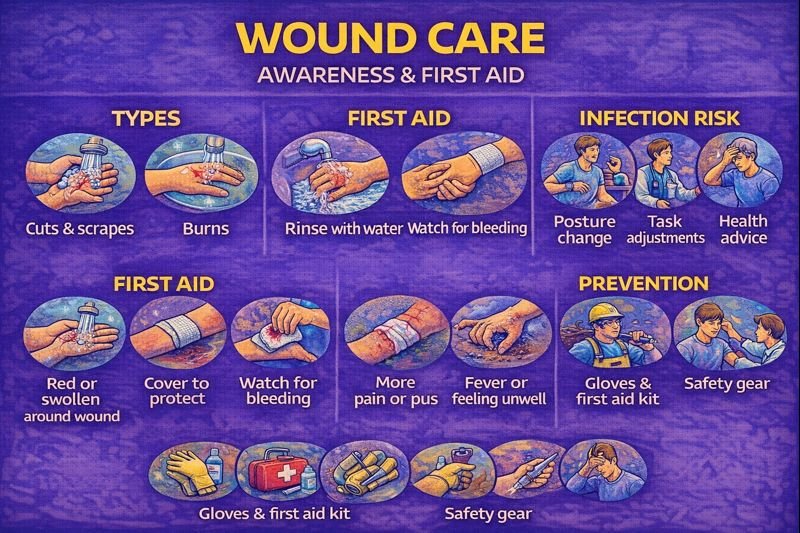
 Wounds are common injuries and can range from very minor scrapes to deeper cuts or punctures. Pain levels vary depending on the type, location, and severity of the injury. Burns, blisters, scrapes, and cuts tend to be the most painful. Even wounds that don’t hurt much—such as punctures—can still be serious and require medical attention.
Wound awareness and early first aid help reduce discomfort, infection risk, and complications at home, work, or during recreational activities.
Mild Scenario Example
A child scrapes their knee while playing outside. The skin is broken, bleeding slightly, and painful when touched. Cleaning and covering the scrape reduces the risk of infection and helps it heal.
Common Symptoms
-
Pain or tenderness at the site
-
Bleeding or oozing
-
Redness or swelling
-
Skin break or visible tissue
Complication Signs to Watch For
Seek medical attention if any of these appear:
-
Worsening redness or warmth
-
Increased pain
-
Pus or cloudy drainage
-
Fever or feeling unwell
-
Red streaks away from the wound (possible spreading infection)
First Aid for Minor Wounds
-
Control bleeding
-
Apply direct pressure with a clean cloth or bandage.
-
Elevate the injured area if possible.
-
-
Clean the wound
-
Rinse under running water to remove dirt and debris.
-
Avoid harsh substances like iodine, peroxide, or strong soap, as they can irritate tissue.
-
-
Protect the wound
-
Apply a thin layer of antibiotic ointment (if suitable for the person).
-
Cover with a sterile dressing or bandage.
-
Change dressings daily or if soiled.
-
-
Pain relief
-
Over-the-counter options such as acetaminophen or ibuprofen may help with discomfort.
-
Rest and avoid friction on the wound.
-
When Extra Care Is Needed
Call a doctor or seek medical assessment if:
-
The wound is deep, gaping, or jagged
-
Bleeding does not stop after applying pressure
-
The injury was caused by an animal or human bite
-
A foreign object is embedded (do not remove it)
-
The wound was caused by a rusty or contaminated item (possible tetanus exposure)
Tetanus Considerations
Deep or dirty wounds may require a tetanus booster. If unsure when your last booster was, consult a healthcare provider.
Burns and Blisters
Burns and blisters are a type of wound and may require slightly different first aid:
-
Cool the burn under running water
-
Do not pop blisters
-
Cover lightly and monitor for infection
Prevention Tips
-
Use protective equipment at work and during activities
-
Maintain safe play and recreational environments
-
Keep tetanus vaccinations up to date
-
Store sharp tools and equipment safely
FAQs
Can a small wound become infected?
Yes. Even minor cuts can develop infection if not cleaned and covered properly.
Should wounds always be covered?
Covering helps protect the area, reduce contamination, and support healing.
Do all puncture wounds need medical care?
Many punctures carry a higher risk of tetanus and infection; medical advice is recommended.
How long does healing usually take?
Most minor wounds improve within a few days and fully heal in 1–2 weeks, depending on location and type.
Educational Note
This content is for general first aid education and does not replace assessment or care from a qualified health professional.
About The Author

Mark Kascha
Certified First Aid Instructor Trainer with 30+ years of real-world experience, including lifeguarding, workplace emergency response, and first aid program development across Canada. Has worked with WorkSafeBC, WSIB, and Manitoba Health.
👉 [View full credentials]🔗 View LinkedIn Profile
Last reviewed: March 2026