
Electrical Shock Injuries: How They Happen, Risks, and Safety Awareness
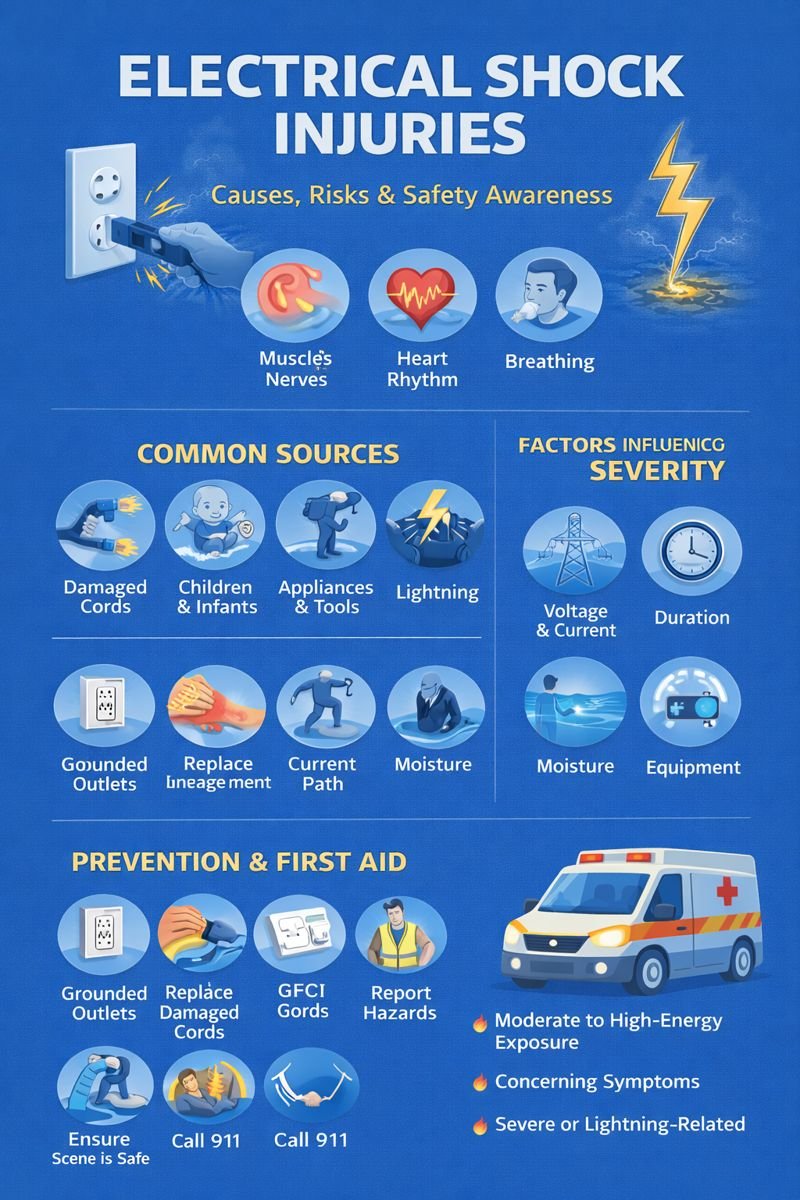 An electrical shock injury occurs when an electric current passes through the body. Shock may result from household circuits, workplace equipment, damaged cords, or—in rare cases—from lightning. Electrical injuries range from mild to severe and may affect multiple body systems.
Workplace, home, and first aid relevance (Canada)
Electrical hazards are present in homes, schools, offices, construction sites, food service settings, and industrial environments. Young children may also be at risk if electrical outlets or appliances are within reach. First aid responders do not provide advanced electrical care but can help recognize hazards, ensure scene safety, and activate emergency services when needed.
Scenario story
While plugging in a laptop at work, Sam noticed a frayed cord and small sparks. Sam avoided touching the cord, unplugged the device at the wall after ensuring the breaker was off, and reported the hazard to maintenance. A nearby co-worker reminded Sam that damaged cords can cause shock injuries and should be tagged out until replaced.
How electrical current interacts with the body
Electricity travels through closed circuits, moving from one point to another through conductive material. The human body conducts electricity, meaning that if current enters at one point and exits at another, a shock can occur.
Electricity may affect:
-
Muscles and nerves
-
Heart rhythm
-
Skin or soft tissue
The effects vary widely depending on the circumstances.
Common situations where electrical shocks can occur
Electrical shock may happen when:
-
A person touches a metal object connected to a live circuit while also grounded
-
Someone contacts exposed wiring or damaged appliance cords
-
Both wires of a charged electrical circuit are touched at once
-
Infants or toddlers place metal objects into outlets or appliance cords
-
Lightning discharges energy into the ground or nearby structures (rare but possible)
Household appliances, extension cords, and power tools are common sources if insulation is worn or damaged.
Factors that influence injury severity
The outcome of an electrical shock depends on several factors including:
-
Voltage and current
-
Duration of contact
-
Path of current through the body
-
Type of current (AC/DC)
-
Moisture or wet surroundings
-
Overall health of the person
-
Protective equipment or footwear
Wet environments increase conductivity and may raise risk.
Potential effects of electrical shock
Electrical shock can affect the body in different ways:
-
Muscle spasms and difficulty letting go of an energized object
-
Neurological effects due to sensitivity of the nervous system
-
Cardiac or respiratory disruption with high-energy shocks
-
Thermal or electrical burns at entry or exit points
-
Injuries from sudden movement, such as falls or joint injuries
Severe electrical shocks may require emergency medical assessment. Lightning strikes are rare but can involve extremely high voltage.
Prevention and safety considerations
-
Use grounded outlets and avoid overloading circuits
-
Replace damaged cords or appliances promptly
-
Keep electrical equipment away from water
-
Store appliances and cords out of reach of children
-
Use GFCI outlets in bathrooms, kitchens, and outdoor spaces when possible
-
Wear appropriate PPE in workplaces with electrical hazards
-
Pause work and report any unusual buzzing, sparks, or overheating
During thunderstorms, Canadian safety guidance recommends seeking shelter and avoiding tall isolated structures.
First aid awareness
First aid responders should:
-
Ensure the scene is safe before approaching
-
Avoid touching the person if they are still in contact with an electrical source
-
Disconnect power safely if possible (breaker preferred over pulling cords)
-
Call emergency services for moderate or severe exposure, or if the person shows concerning symptoms
Electrical injuries may not always appear serious immediately, so professional assessment may be advised in uncertain situations.
FAQ
Can small household currents still cause injury?
Yes. Household electricity can cause muscle spasms, burns, or other effects if conditions are right.
Are children at higher risk of electrical injuries?
Young children and infants may explore outlets or cords with hands or mouths, so prevention measures are important.
Is lightning considered an electrical shock?
Lightning involves extremely high voltage. Although lightning strikes are rare, they are a form of electrical injury.
Do electrical injuries always show burns?
No. Some electrical effects involve nerves, heart rhythm, or muscles without obvious skin damage.
When should someone seek medical attention after a shock?
After moderate or high-energy exposure, loss of consciousness, confusion, persistent symptoms, or when unsure about severity.
Educational note
This content supports public safety, first aid awareness, and prevention and does not replace professional emergency assessment when required.
About The Author

Mark Kascha
Certified First Aid Instructor Trainer with 30+ years of real-world experience, including lifeguarding, workplace emergency response, and first aid program development across Canada. Has worked with WorkSafeBC, WSIB, and Manitoba Health.
Last reviewed: March 2026