Many everyday products are useful when handled properly but harmful when misused, mixed, or inhaled. Awareness helps prevent accidental poisonings at home, in workplaces, and around children or pets.
First Aid & Workplace Relevance
Canadian homes, garages, workshops, and vehicles may store cleaning supplies, fuels, pesticides, and other chemicals. Workplaces—especially childcare settings, schools, salons, cleaning services, and maintenance crews—benefit from labelling, safe storage, and emergency contact information such as local Poison Control resources.
Scenario
During a spring cleanup, a family member began cleaning a bathroom with multiple cleaning products. They noticed a strong smell and felt dizzy. A trained first aid rescuer recognized that chemical fumes might be involved, moved them to fresh air, and checked for breathing difficulty. The household contacted Poison Control for guidance and ventilated the room before continuing. No further symptoms developed.
Examples of Common Household Poisons
 1. Cleaning Products
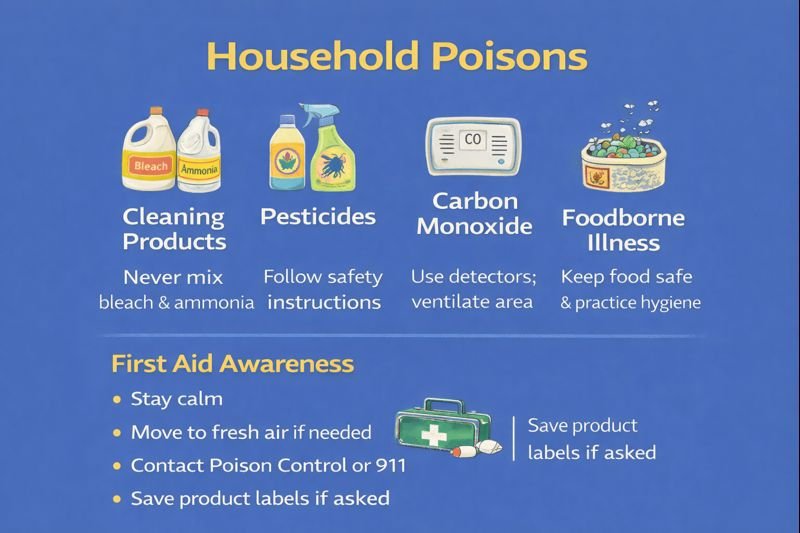
Products like bleach and ammonia are often safe separately but dangerous if mixed. Combining them can create toxic gases. Keeping containers labelled and stored safely reduces risk.
2. Pesticides & Insect Treatments
Certain pesticide products—including garden sprays and lice shampoos—contain chemicals that may be harmful if swallowed, inhaled, or absorbed through skin. Following manufacturer instructions and safety warnings is important.
3. Carbon Monoxide (CO)
Carbon monoxide is an odorless, colourless gas produced by engines, heaters, and appliances. It can accumulate in enclosed spaces such as garages or cabins. CO detectors are widely recommended in Canadian homes.
4. Foodborne Illness
Food poisoning often causes nausea, vomiting, stomach pain, or diarrhea. Most cases are mild, but dehydration can occur if fluids are not replaced over time. Safe food storage and preparation reduce risk.
First Aid Awareness
If poisoning is suspected, public health recommendations emphasize:
-
Staying calm
-
Moving the person to fresh air for inhaled exposures
-
Gently flushing eyes with clean water for exposures involving splashes
-
Contacting Poison Control or emergency services for guidance
-
Bringing product labels or names if responders ask for them
Poison Control centres provide instructions tailored to the substance involved.
Emergency Assessment & Monitoring
Hospitals monitor vital signs such as breathing, temperature, blood pressure, and pulse. Treatment varies depending on the substance and the amount involved. Early intervention improves outcomes.
Prevention & Everyday Safety Tips
To reduce risk of accidental poisoning:
-
Keep products in original containers with labels
-
Store chemicals out of reach of children and pets
-
Ventilate areas when using fumes or sprays
-
Avoid mixing chemical products
-
Install CO detectors and test them regularly
-
Follow food safety guidelines during cooking and storage
FAQ
Can mixing cleaning products be dangerous?
Yes. Some combinations—such as bleach and ammonia—can produce toxic gases.
How does carbon monoxide poisoning happen?
CO builds up when engines or fuel-burning appliances operate without ventilation.
Is food poisoning considered a household poisoning?
Foodborne illness is caused by bacteria or toxins in food. Most cases are mild, but dehydration can occur.
Should induced vomiting be used for poisoning?
No. Inducing vomiting is not recommended for most exposures. Poison Control can provide appropriate guidance.
Is Poison Control only for emergencies?
Poison Control offers guidance for urgent concerns and questions about prevention.
Educational Note
This material promotes awareness of common household poisons, encourages prevention, and highlights the value of Poison Control and emergency services. It does not replace professional advice or clinical assessment.
About The Author

Mark Kascha
Certified First Aid Instructor Trainer with 30+ years of real-world experience, including lifeguarding, workplace emergency response, and first aid program development across Canada. Has worked with WorkSafeBC, WSIB, and Manitoba Health.
👉 [View full credentials]🔗 View LinkedIn Profile
Last reviewed: March 2026