Gastroenteritis is a stomach and intestinal infection that commonly causes vomiting and diarrhea in children. Some children also develop fever or stomach cramping.
Vomiting usually resolves within 1–3 days, while diarrhea can last 5–7 days, sometimes up to 2 weeks.
Watch for Signs of Dehydration
While the infection itself is usually short-lived, dehydration can be more serious. Recognizing symptoms early helps caregivers take appropriate steps.
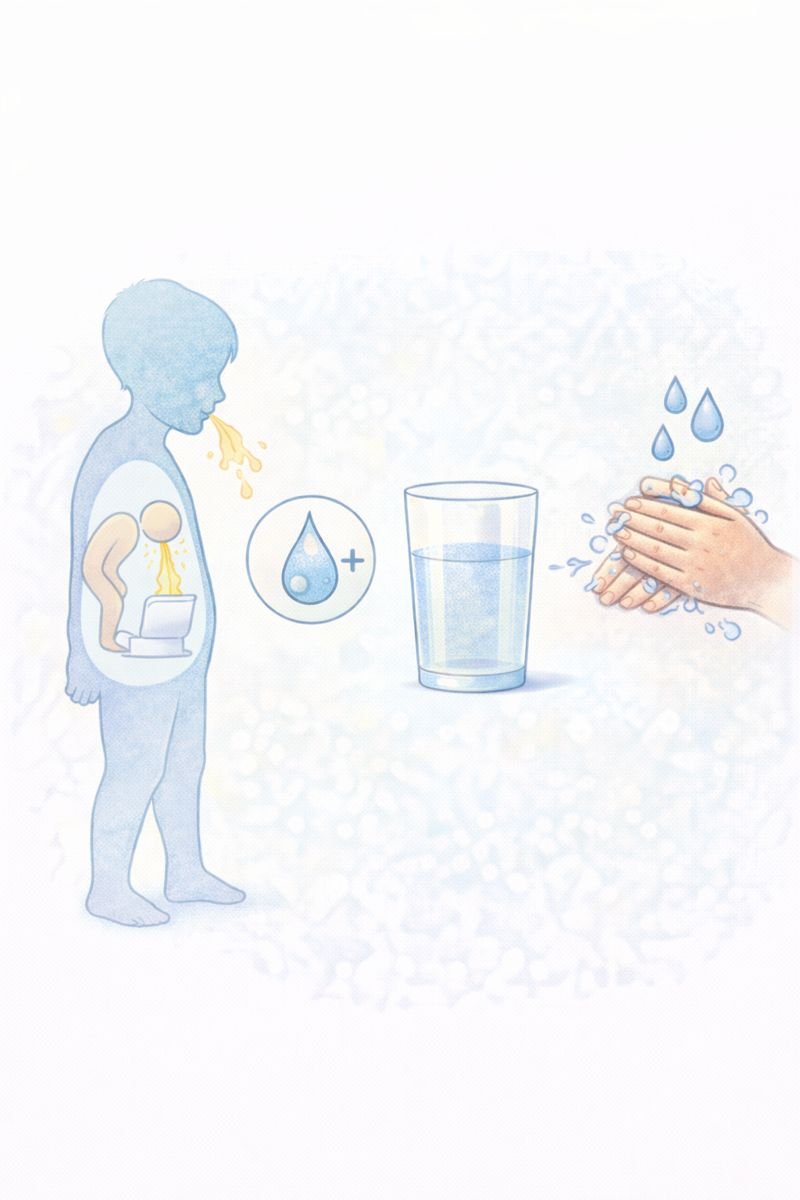 Possible dehydration signs include:
-
Fewer tears when crying
-
Dry lips, mouth, or eyes
-
Sunken eyes
-
Irritability or unusual fussiness
-
Cold hands or feet
-
Fewer wet diapers or less urination
-
Pale or blotchy skin
-
Rapid breathing
-
Sunken fontanelle (soft spot in infants)
A healthcare provider should be contacted promptly if dehydration is suspected.
Signs a More Serious Illness Could Be Present
Some early symptoms of gastroenteritis overlap with other serious conditions. Seek medical attention if a child has:
-
Fever of ≥39°C (if older than 3 months) or ≥38°C (if younger than 3 months)
-
Very fast breathing or shortness of breath
-
Stiff neck
-
Confusion or unusual behaviour
-
Bulging or protruding fontanelle
-
Blood or mucus in stools
-
A red or blotchy rash that doesn’t fade when pressed with a clear glass
-
Green vomit
-
Severe stomach pain
-
Diarrhea lasting longer than a week
-
Vomiting lasting more than 3 days
-
Worsening dehydration despite fluids or oral rehydration solutions
Immediate medical care or emergency services may be required for these symptoms.
Hygiene & Prevention Strategies
Gastroenteritis spreads easily, especially in childcare and family environments. Prevention includes:
-
Encouraging children to wash hands after toileting and before eating
-
Handwashing after changing diapers or cleaning washrooms
-
Cleaning toilets, potties, and bathroom surfaces with disinfectant
-
Avoiding the sharing of towels, washcloths, utensils, or cups
-
Keeping children home for at least 48 hours after vomiting or diarrhea stops
These steps help reduce spread in schools, daycare settings, workplaces, and households.
First Aid & Public Health Awareness in Canada
Gastroenteritis is typically managed at home, but recognizing dehydration and knowing when to seek care are important caregiving skills. First aid programs through St. Mark James Training teach parents, educators, and childcare providers how to identify red flags, support hydration, and maintain hygiene practices. Many Canadian facilities pair first aid with CPR/AED training to strengthen overall readiness for health emergencies.
Educational Disclaimer
This article provides public education for Canadians and does not replace medical assessment. Seek healthcare advice if symptoms worsen, persist, or involve dehydration or other serious signs.
About The Author

Mark Kascha
Certified First Aid Instructor Trainer with 30+ years of real-world experience, including lifeguarding, workplace emergency response, and first aid program development across Canada. Has worked with WorkSafeBC, WSIB, and Manitoba Health.
👉 [View full credentials]🔗 View LinkedIn Profile
Last reviewed: March 2026