
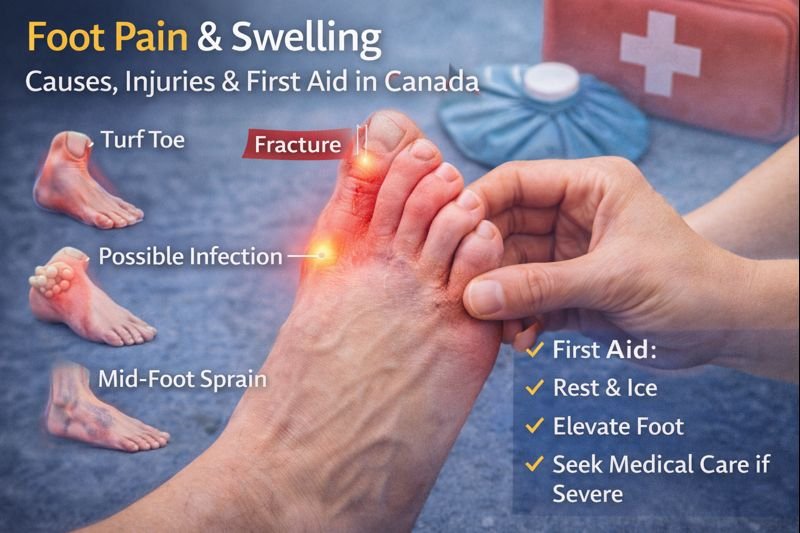
 Foot pain and swelling are extremely common because every step places significant stress on the bones, muscles, and ligaments of the feet. Symptoms can affect any area—from the heel to the toes—and may be caused by acute injury, repetitive strain, or overuse.
In Canada, these injuries are frequently seen in workplace settings, sports, and recreational activity. Understanding early signs and basic first aid can prevent complications.
Fractures & Stress Fractures
The foot contains 26 bones, and any of them can fracture. Symptoms may include:
-
Immediate or sudden pain
-
Swelling
-
Bruising around the injury site
-
Difficulty bearing weight
Fractures require prompt medical attention, especially if deformity, severe swelling, or inability to walk is present.
Stress fractures develop gradually from repetitive impact (running, marching, jumping). They typically begin as a dull ache that eases at rest but worsen over time, eventually causing disabling pain and localized swelling.
Plantar Fasciitis & Heel Bone Bruising
The plantar fascia is a thick ligament spanning from the heel to the ball of the foot. With repetitive strain, it can become inflamed—leading to sharp heel pain with first steps in the morning.
Long-term irritation can result in heel spurs or bruising from repeated impact (e.g., prolonged standing or running on hard surfaces).
Other Causes of Foot Pain & Swelling
Turf Toe
Caused by intense upward flexion of the big toe joint—common on artificial turf. Symptoms include pain, swelling, and reduced mobility.
Mid-Foot Sprains
Often from falls, twisting injuries, or sports. Look for swelling, bruising, and pain with weight-bearing.
Puncture Wounds
Stepping on nails or sharp objects can cause localized swelling and introduce debris or bacteria. These require cleaning, tetanus consideration, and medical assessment.
Deep Cuts (Lacerations)
After bleeding is controlled with pressure, deep cuts may require sutures to prevent infection and improve healing.
First Aid Considerations (Canadian Guidelines)
Basic first aid management includes RICE:
✔ Rest — avoid weight-bearing
✔ Ice — 10–15 min intervals
✔ Compression — elastic wrap if tolerated
✔ Elevation — above heart level
Seek urgent medical care if:
-
Severe pain or deformity
-
Inability to walk
-
Signs of infection (redness, heat, pus)
-
Injury from workplace hazards
-
Numbness, tingling, or foot turns blue/pale
Workplace Note: Foot injuries are common in construction, manufacturing, and warehouse environments. CSA-approved safety footwear and employer first aid kits can help prevent complications.
Canadian Health & Emergency Context
If symptoms worsen, call your provincial health line (e.g., 811), or for emergencies dial 911. Access to podiatry and orthopedic specialists varies across provinces.
Medical & Safety Disclaimer (Required)
This article is for educational purposes only and is not a substitute for professional medical assessment, diagnosis, or treatment. Always seek medical care for serious injuries or if symptoms worsen. First aid recommendations follow recognized Canadian guidelines but are not workplace certification training.
About The Author

Mark Kascha
Certified First Aid Instructor Trainer with 30+ years of real-world experience, including lifeguarding, workplace emergency response, and first aid program development across Canada. Has worked with WorkSafeBC, WSIB, and Manitoba Health.
👉 [View full credentials]🔗 View LinkedIn Profile
Last reviewed: March 2026