 Food safety concerns with tomatoes
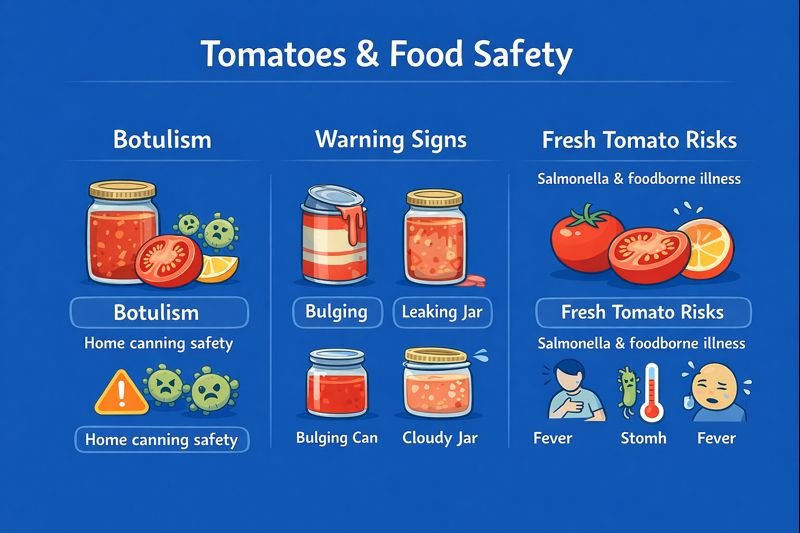
Fresh tomatoes are safe to eat for most people, but—like many fresh fruits and vegetables—they can become contaminated with pathogens such as E. coli or Salmonella during farming, handling, or preparation. Historical outbreaks originally linked to tomatoes have later been traced to other produce, highlighting how complex foodborne illness investigations can be. Another food-safety concern involving tomatoes is botulism, particularly when tomatoes are canned at home using methods that create low-acid, low-oxygen environments where the bacterium can produce toxins.
Canadian first aid & workplace relevance
Foodborne illness impacts homes, food-service settings, and workplace cafeterias. Many Canadian workplaces also offer potlucks, garden programs, or home-based canning exchanges, making food-safety awareness helpful for preventing illness.
Scenario: Home garden canning exchange
An employee brought home-canned tomato sauce to a workplace potluck. When opening a jar, a coworker noticed the lid seal had failed and the sauce looked cloudy. With basic food-safety awareness, the jar was discarded and the batch was not served. No one became ill, and the group discussed safe canning practices for future exchanges.
Botulism and home canning (educational overview)
Clostridium botulinum bacteria and their spores exist naturally in soil. Spores can survive in foods that are low in acidity and lack oxygen. If the environment is suitable, spores may produce toxins.
Tomatoes are mildly acidic, but acidity can vary with ripeness and variety. Canning methods that increase acidity and properly heat-process the product reduce the conditions for toxin formation.
Commercially canned tomato products undergo regulated processing, but improper seals or damage to containers can still create safety concerns.
Home canning considerations (non-prescriptive)
Educational guidance for safer canning generally includes:
-
Ensuring adequate acidity (e.g., bottled lemon juice or food-grade citric acid in tested recipes)
-
Using clean glass jars and proper lids
-
Heat-processing jars according to tested canning instructions
-
Discarding products if seals fail or if containers show signs of damage
Food-safety organizations recommend using tested recipes because acidity and processing times impact safety.
Warning signs to watch for
Signs that canned tomato products should be discarded include:
-
Broken or failed seals
-
Bulging, leaking, or punctured cans
-
Cloudiness, off-odours, or gas bubbles
-
Rusting or incorrectly welded seams
-
For glass jars, no “pop” when opening (loss of vacuum seal)
These signs apply to both home-canned and commercially canned products.
Salmonella and fresh tomatoes
Fresh tomatoes may occasionally be linked with Salmonella outbreaks. Contamination can occur in fields, packing facilities, transportation, or kitchens. Cooking tomatoes reduces the risk, while washing and proper storage support food hygiene.
Recognizing the symptoms of foodborne illness—such as nausea, stomach discomfort, vomiting, diarrhea, fever, or fatigue—helps individuals decide when to seek care or workplace support.
(Educational only — not diagnostic or prescriptive.)
Prevention & workplace considerations
Safer handling practices may include:
-
Washing produce before use
-
Separating raw foods from ready-to-eat foods
-
Safe temperature storage in lunchrooms or cafeterias
-
Using tested canning methods for home preserves
-
Discarding canned products with damaged packaging
Food-service staff and workplace recreation committees often review food-safety guidelines for potlucks or shared meals.
FAQ
Can tomatoes cause botulism?
Botulism is rare but possible in home-canned tomatoes if acidity and processing are not adequate. Commercial products have regulated processing but still require intact seals.
Are fresh tomatoes more risky than cooked tomatoes?
Cooking can reduce bacterial contamination. Most fresh tomatoes are safe to eat when handled and stored properly.
What symptoms are linked with foodborne illness?
Symptoms vary but may include nausea, stomach upset, vomiting, diarrhea, fatigue, or fever. Severity depends on the person and the pathogen.
Do canned foods expire?
Canned foods have shelf-life limits. Damaged or expired cans are more likely to have compromised seals or quality.
Educational note
This post supports public education on food safety, home canning awareness, and recognizing potential foodborne illness. Safe food-handling skills contribute to community and workplace wellbeing.
About The Author

Mark Kascha
Certified First Aid Instructor Trainer with 30+ years of real-world experience, including lifeguarding, workplace emergency response, and first aid program development across Canada. Has worked with WorkSafeBC, WSIB, and Manitoba Health.
👉 [View full credentials]🔗 View LinkedIn Profile
Last reviewed: March 2026