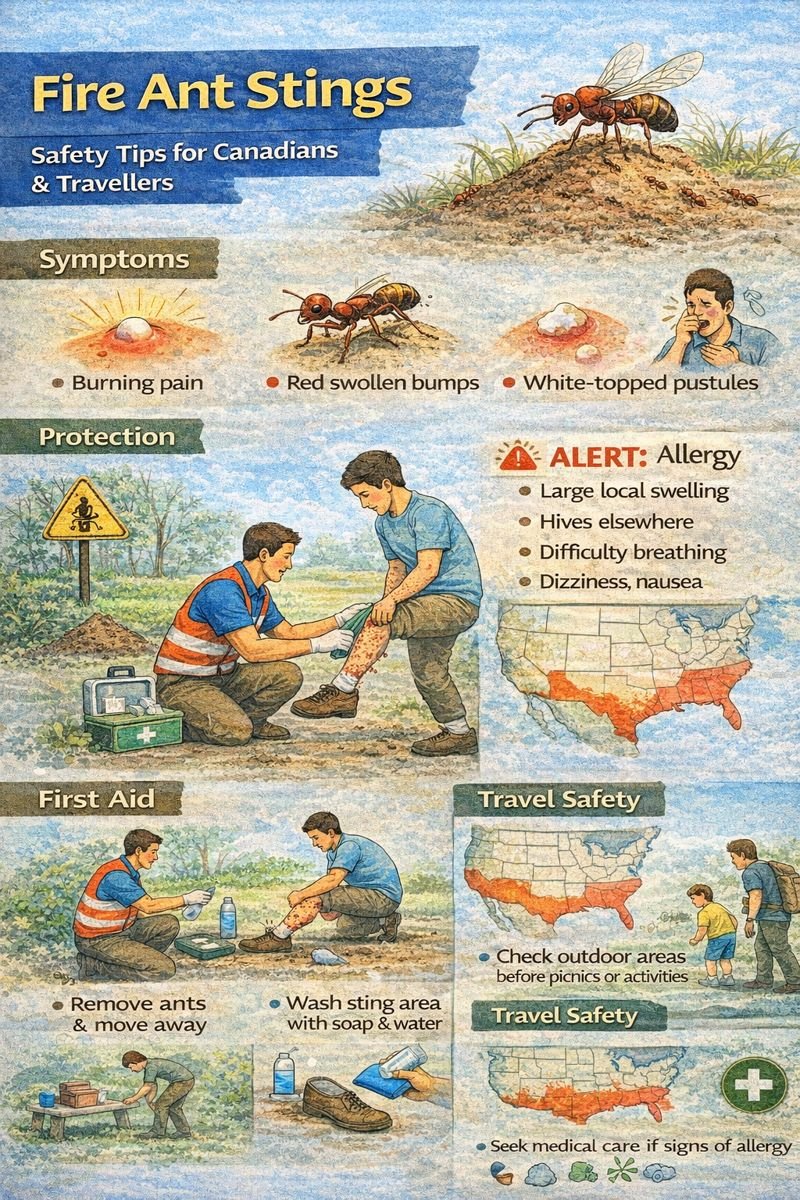
 Fire ants are aggressive insects that can bite and sting. Their venom can cause burning pain and distinct skin reactions. Most stings are localized, but multiple stings or venom allergies can lead to more serious reactions. Fire ants are not widespread in Canada, but Canadians may encounter them while travelling, relocating, or working in certain southern U.S. regions.
First Aid & Workplace Relevance
Although fire ants are uncommon in Canadian climates, Canadians may encounter them during travel, cross-border work, summer camps, or imported landscaping materials. Outdoor workers, grounds crews, and families living in warm travel destinations benefit from awareness of mound behavior, sting symptoms, and prevention.
Scenario
During a volunteer park cleanup while travelling in the southern U.S., a participant stepped near an ant mound and noticed several ants on their ankle. A trained first aid rescuer helped brush the ants off quickly, moved the participant away from the mound, and rinsed the area with clean water. The participant developed several red bumps and a mild burning sensation but no signs of allergy. The team flagged the area and continued with extra caution.
Sting Characteristics & Symptoms
Fire ants can bite to anchor, then sting to deliver venom.
Commonly reported symptoms include:
-
Burning or stinging sensation at the site
-
Red, raised bumps
-
Itching or irritation
With certain imported fire ant species, the sting site can form a white-topped pustule within a day. This is often considered characteristic of imported fire ant stings.
More noticeable symptoms may include:
-
Larger local swelling
-
Hives elsewhere on the body
-
Dizziness, nausea, or breathing difficulty (can indicate allergic reaction or anaphylaxis)
Prevention & Environmental Awareness
People reduce sting risk by:
-
Avoiding disturbance of ant mounds
-
Checking the ground before sitting, gardening, or picking up objects
-
Wearing closed footwear, socks, and long pants in known fire ant areas
-
Supervising children in fire ant regions, especially in parks and playgrounds
Studies suggest socks can reduce the number of ants reaching skin and may prevent some stings.
Individuals with known venom allergies often carry prescribed emergency medications and share allergy plans with companions.
First Aid Awareness
Public first aid education focuses on:
-
Removing ants quickly and moving away from the mound
-
Gently washing the area with soap and water
-
Using cool compresses to reduce discomfort and swelling
-
Monitoring for allergic symptoms or unusual reactions
Emergency medical care is recommended if the person shows signs of anaphylaxis such as trouble breathing, throat swelling, hives away from the sting site, or feeling faint. Multiple stings may also warrant medical attention.
Travel Safety Tips for Canadians
Fire ants are more common in:
-
U.S. southeastern states
-
Parts of Texas, California, and the Gulf Coast
-
Certain tropical or subtropical regions
When travelling:
-
Check outdoor areas before picnics or activities
-
Wear socks/shoes instead of sandals in grassy areas
-
Ask local staff about hazard signage or seasonal issues
FAQ
Are fire ants found in Canada?
They are not common due to climate but can occasionally appear through imports. Encounters are more frequent when Canadians travel south.
Why do fire ant stings form white pustules?
Imported fire ant venom can produce a pustule within a day. This reaction is considered characteristic of certain species.
Can fire ants cause anaphylaxis?
Yes. Some individuals have venom allergies and may experience anaphylaxis, which requires emergency care.
Do fire ants sting more than once?
Yes. Fire ants can deliver multiple stings in rapid succession.
What clothing helps reduce stings?
Socks, closed footwear, and long pants can reduce ants accessing the skin.
Educational Note
This information promotes awareness of fire ant stings, allergy considerations, first aid, and prevention in Canadian and travel settings. It supports calm decision-making and timely medical follow-up when needed.
About The Author

Mark Kascha
Certified First Aid Instructor Trainer with 30+ years of real-world experience, including lifeguarding, workplace emergency response, and first aid program development across Canada. Has worked with WorkSafeBC, WSIB, and Manitoba Health.
👉 [View full credentials]🔗 View LinkedIn Profile
Last reviewed: March 2026