
A cough is a normal reflex that helps clear the throat and airways when irritated by dust, mucus, or other particles. When coughing lasts longer than eight weeks, it is considered chronic cough. Chronic cough can be associated with conditions such as postnasal drip, asthma, or respiratory infections.
First Aid & Workplace Relevance (Canada)
Chronic cough may affect communication, sleep, physical comfort, and participation at work or school. It can also prompt discussions about air quality, fragrance sensitivity, or environmental triggers in shared spaces.
Scenario (Mild & Realistic)
A call-centre worker developed a lingering cough after a winter cold. While the cough was harmless, talking all day made it more noticeable, so the supervisor allowed brief hydration breaks until symptoms improved.
Common Symptoms of Chronic Cough
 Symptoms can vary, but may include:
-
Wheezing
-
Shortness of breath
-
Throat irritation or “dripping” sensation
-
Heartburn
-
Occasionally small streaks of blood in mucus
Symptoms depend on the underlying cause and may fluctuate throughout the day.
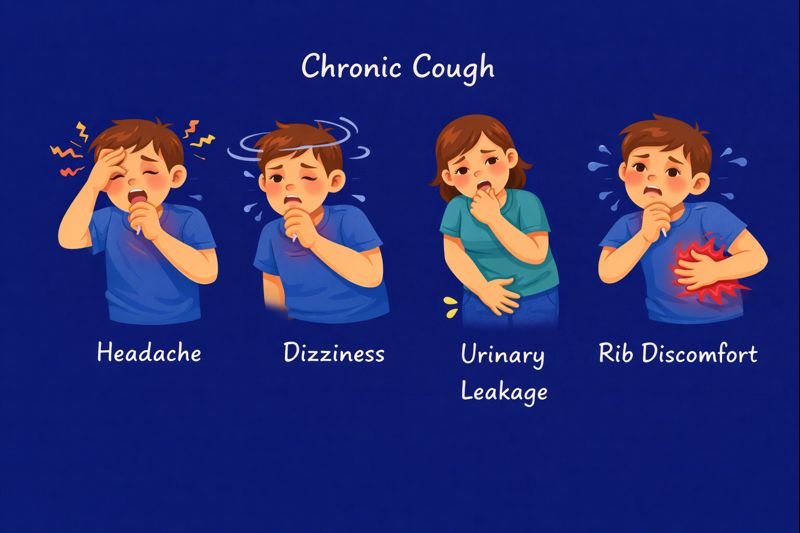
Possible Effects of Excessive Coughing
Headache
Repeated coughing can create pressure in the head and neck, sometimes leading to tension-style headaches. They may feel dull or tight and can last minutes to several hours.
Dizziness or Light-Headedness
Rapid coughing can briefly change airflow and pressure in the chest, which may cause dizziness, sensation of imbalance, or a short moment of light-headedness. These symptoms usually ease once coughing settles.
Urinary Leakage (Stress Incontinence)
Persistent coughing can put pressure on the bladder, occasionally causing small leaks of urine during laughing, coughing, or lifting. This is more common among individuals who have experienced pregnancy, pelvic floor changes, or chronic respiratory conditions.
Rib Discomfort or Irritation
Strong or repetitive coughing may strain chest muscles or ribs. In rare cases, especially when bone strength is reduced, small rib injuries can occur and cause localized pain, tenderness, or swelling.
Prevention & Workplace Considerations
Workplaces can support individuals experiencing chronic cough by:
-
Providing hydration breaks
-
Reviewing indoor air quality and ventilation
-
Reducing exposure to dust, cold air, or fragrances
-
Encouraging flexible communication and pacing
These strategies do not replace healthcare assessment but can help reduce discomfort during daily tasks.
FAQ (Educational)
Is chronic cough always caused by the lungs?
Not necessarily. It can be related to the throat, stomach acid, allergies, or airway sensitivity.
Can chronic cough affect sleep?
Yes. Many people notice coughing more at night or when lying down.
Is coughing up small amounts of blood always serious?
Blood in mucus should be assessed by a health professional, as it can have various causes.
Can chronic cough improve over time?
Yes. Depending on the cause, cough patterns may improve naturally or after managing contributing factors.
Educational Note
This post supports general first aid and public health awareness. Chronic cough can have many causes, and healthcare professionals can help identify contributing factors and guide management as needed.
About The Author

Mark Kascha
Certified First Aid Instructor Trainer with 30+ years of real-world experience, including lifeguarding, workplace emergency response, and first aid program development across Canada. Has worked with WorkSafeBC, WSIB, and Manitoba Health.
👉 [View full credentials]🔗 View LinkedIn Profile
Last reviewed: March 2026