
What Is Cubital Tunnel Syndrome?
Cubital tunnel syndrome occurs when the ulnar nerve becomes compressed or irritated as it passes through a narrow space on the inside of the elbow, known as the cubital tunnel. The ulnar nerve is responsible for sensation in the little finger and part of the ring finger, as well as controlling several muscles in the hand and forearm.
Pressure, repeated bending, or prolonged leaning on the elbow can flatten or stretch this nerve over time. As compression continues, symptoms may become more frequent and persistent.
First Aid and Workplace Relevance in Canada
Cubital tunnel syndrome is relevant in many Canadian workplaces and daily activities, especially those involving repetitive elbow bending, prolonged desk work, tool use, musical instruments, or manual labour. Jobs that require leaning on hard surfaces or sustained arm positions can increase risk.
First aid awareness helps individuals recognize early nerve-related symptoms, adjust activities, and reduce strain before long-term nerve damage occurs.
A Simple, Realistic Scenario
An office worker notices tingling in their little finger after long days resting their elbows on a desk. At night, the sensation wakes them up. Remembering first aid training, they modify their workstation, avoid leaning on their elbows, and seek assessment when weakness develops during gripping tasks.
Common Symptoms
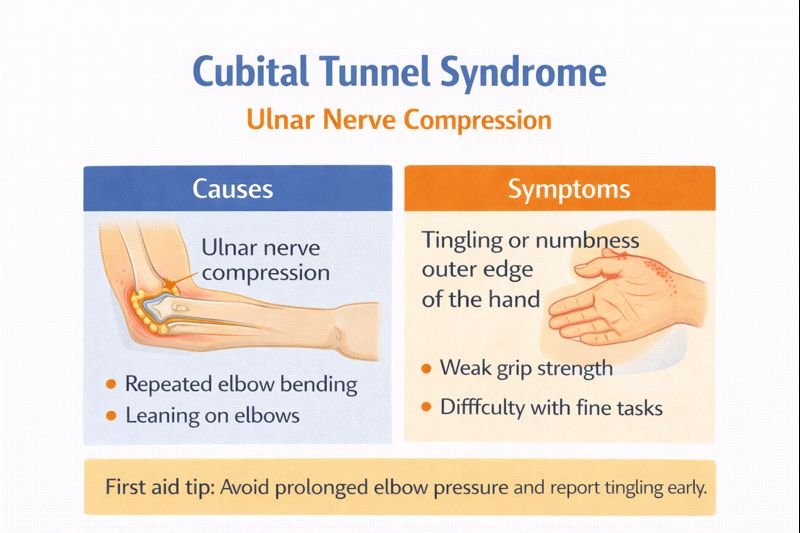 Symptoms often come and go at first and may worsen over time. They can include:
-
Tingling or numbness along the outer edge of the hand
-
Sensations affecting the little finger and part of the ring finger
-
Weak grip strength
-
Difficulty with fine motor tasks
-
Occasional elbow discomfort
-
Partial clawing of the ring and little fingers
Symptoms frequently worsen at night, particularly if the elbow remains bent during sleep. With prolonged compression, muscle wasting in the hand or forearm may occur.
Causes and Contributing Factors
The ulnar nerve passes between two bony structures at the elbow—the medial epicondyle (commonly called the “funny bone”) and the olecranon. In this narrow area, the nerve is vulnerable to pressure and stretching.
Common causes of compression include:
-
Repeated elbow bending and straightening
-
Leaning on elbows for extended periods
-
Changes in elbow alignment
-
Joint conditions affecting the elbow
-
Tight connective tissue bands
-
Swelling following injury or fracture
-
Nerve movement or slipping over the bone during motion
Cubital tunnel syndrome may also develop after fractures of the elbow bones due to swelling, bleeding, or bone displacement compressing the nerve.
First Aid and Early Management
From a first aid perspective, early care focuses on reducing pressure on the nerve.
General first aid measures may include:
-
Resting from aggravating activities
-
Avoiding prolonged elbow pressure
-
Modifying work or hobby positions
-
Using cold therapy to help reduce discomfort
-
Keeping the elbow in a more neutral position
Early adjustments can help limit symptom progression.
Treatment and Management Considerations
Management depends on symptom severity and duration.
Common approaches may include:
-
Activity modification
-
Temporary splinting to limit elbow bending
-
Symptom monitoring over time
In cases where symptoms persist or worsen, further medical management may be considered to relieve pressure on the nerve.
Prevention and Workplace Safety Tips
Preventive strategies include:
-
Avoiding resting elbows on hard surfaces
-
Adjusting desk and workstation height
-
Taking regular breaks from repetitive elbow movements
-
Maintaining neutral arm positions when possible
-
Reporting numbness or weakness early
Ergonomic awareness plays an important role in prevention.
Frequently Asked Questions
Why does cubital tunnel syndrome affect the little finger?
The ulnar nerve supplies sensation to the little finger and part of the ring finger.
Why are symptoms worse at night?
Many people sleep with their elbows bent, increasing nerve compression.
Is cubital tunnel syndrome always painful?
Pain may be mild or absent; numbness and tingling are often more noticeable.
Can repeated elbow pressure cause nerve damage?
Yes. Ongoing compression can lead to weakness and muscle wasting over time.
How does first aid training help with nerve compression injuries?
First aid education improves early recognition and promotes activity changes before symptoms worsen.
Educational Note
This article is intended for general public education and workplace first aid awareness in Canada. It does not replace medical assessment, diagnosis, or individualized treatment for nerve-related conditions.
About The Author

Mark Kascha
Certified First Aid Instructor Trainer with 30+ years of real-world experience, including lifeguarding, workplace emergency response, and first aid program development across Canada. Has worked with WorkSafeBC, WSIB, and Manitoba Health.
👉 [View full credentials]🔗 View LinkedIn Profile
Last reviewed: March 2026