
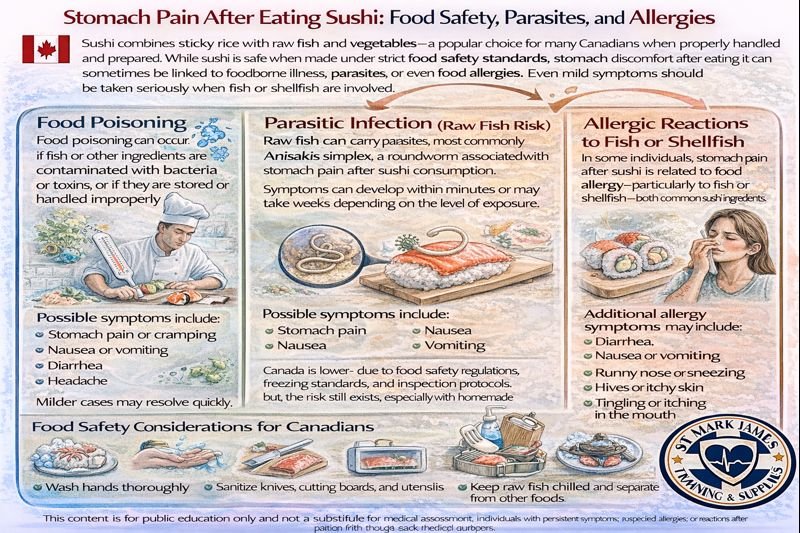
 Sushi combines sticky rice with raw fish and vegetables — a popular choice for many Canadians when properly handled and prepared. While sushi is safe when made under strict food safety standards, stomach discomfort after eating it can sometimes be linked to foodborne illness, parasites, or even food allergies.
Even mild symptoms should be taken seriously when fish or shellfish are involved.
Food Poisoning
Food poisoning can occur if fish or other ingredients are contaminated with bacteria or toxins, or if they are stored or handled improperly.
Possible symptoms include:
-
Stomach pain or cramping
-
Nausea or vomiting
-
Diarrhea
-
Headache
-
Weakness
Milder cases may resolve quickly, but fish-related food poisoning warrants medical attention in some situations, especially if symptoms worsen or persist.
Parasitic Infection (Raw Fish Risk)
Raw fish can carry parasites, most commonly Anisakis simplex, a roundworm associated with stomach pain after sushi consumption. Symptoms can develop within minutes or may take weeks depending on the level of exposure.
Possible symptoms include:
-
Stomach pain
-
Nausea
-
Vomiting
Parasites are far less common in Canada than in some regions due to food safety regulations, freezing standards, and inspection protocols, but the risk still exists, especially with homemade or improperly sourced raw fish.
Allergic Reactions to Fish or Shellfish
In some individuals, stomach pain after sushi is related to food allergy, particularly to fish or shellfish — both common sushi ingredients.
Additional allergy symptoms may include:
-
Diarrhea
-
Nausea or vomiting
-
Runny nose or sneezing
-
Hives or itchy skin
-
Tingling or itching in the mouth
Those who suspect food allergy can benefit from allergy testing to determine specific sensitivities.
Food Safety Considerations for Canadians
Most sushi sold in Canadian restaurants and retailers is subject to strict food safety standards designed to limit contamination, parasites, and cross-contact with allergens.
When preparing sushi at home:
✔ Wash hands thoroughly
✔ Sanitize knives, cutting boards, and utensils
✔ Keep raw fish chilled and separate from other foods
✔ Source from trusted seafood suppliers
✔ Be cautious with known allergies — people allergic to one fish are often allergic to others
Sushi, Allergies & Workplace/Training Context
Food safety knowledge overlaps with Canadian first aid, food safety certification, and workplace standards. Restaurants, schools, long-term care facilities, and workplaces that handle food require appropriate training to reduce risk and ensure safety. CPR/AED and emergency response training create broader preparedness when reactions or illness occur unexpectedly.
Disclaimer
This content is for public education only and not a substitute for medical assessment. Individuals with persistent symptoms, suspected allergies, or reactions after eating fish should seek medical guidance.
About The Author

Mark Kascha
Certified First Aid Instructor Trainer with 30+ years of real-world experience, including lifeguarding, workplace emergency response, and first aid program development across Canada. Has worked with WorkSafeBC, WSIB, and Manitoba Health.
👉 [View full credentials]🔗 View LinkedIn Profile
Last reviewed: March 2026