
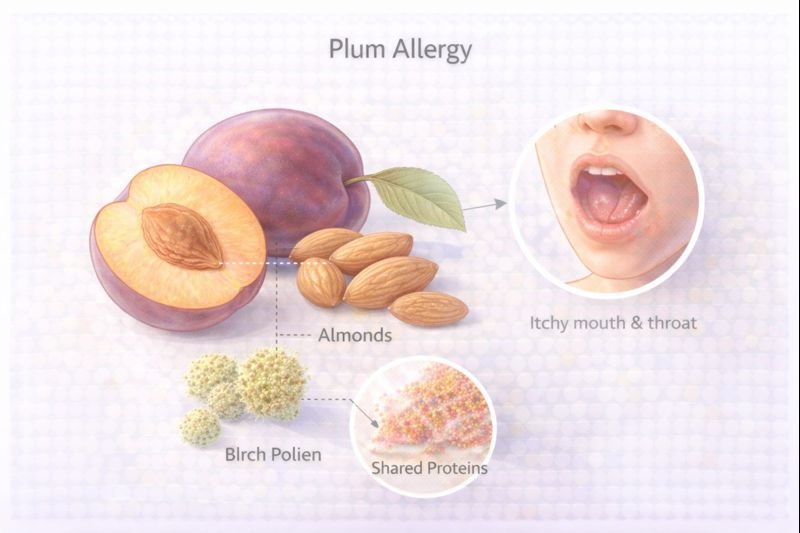
 Plum allergy is uncommon but can cause significant reactions — including oral allergy syndrome and, in rare cases, anaphylaxis. In Canadian households, restaurants, cafeterias, and food-handling workplaces, awareness of fruit allergens and cross-reactivity is increasingly important for both safety and prevention.
Education disclaimer: The information provided here is for learning purposes only and is not a substitute for medical care, diagnosis, or emergency treatment. In any suspected life-threatening reaction, call 911 immediately.
What Causes a Plum Allergy?
Plums belong to the same botanical family as peaches, nectarines, cherries, apricots, prune plums and almonds. Individuals who react to birch pollen often develop cross-reactions to these fruits due to similarities in protein structure — a condition called birch-fruit syndrome or oral allergy syndrome (OAS).
Common triggers include:
-
Eating raw plums
-
Handling or peeling plums
-
Exposure to plum-containing foods (salads, desserts, beverages)
Some individuals tolerate cooked or baked plums because heat breaks down allergenic proteins.
Symptoms of Plum Allergy
Mild to Moderate Symptoms
-
Itchy mouth or tongue
-
Tingling lips
-
Mild throat irritation
-
Sneezing or runny nose
-
Watery eyes
-
Mild skin redness or itching
Severe Allergic Symptoms (Anaphylaxis)
-
Swelling of face, mouth, tongue or throat
-
Difficulty breathing or wheezing
-
Chest tightness
-
Drop in blood pressure
-
Dizziness or fainting
-
Sudden anxiety or sense of impending danger
If anaphylaxis is suspected, epinephrine (EpiPen or equivalent auto-injector) is the first-line treatment. Call 911 after administration.
Diagnosis & Medical Follow-Up
Plum allergy may be assessed through:
-
Skin prick testing
-
Allergy-specific blood tests
-
Food elimination diet
-
Supervised food challenge (specialized clinics)
Discuss any suspected food reactions with a physician or allergy specialist.
Management & Avoidance Strategies
At present, the primary management strategy for plum allergy is avoidance of raw plum and related fruits. Additional strategies include:
✔ Reading labels carefully
✔ Asking about ingredients when dining out
✔ Avoiding cross-contamination in kitchens
✔ Carrying antihistamines for mild reactions (per medical guidance)
✔ Carrying epinephrine for diagnosed anaphylaxis risk
Individuals with birch-pollen allergy may also react to:
-
Apples
-
Pears
-
Cherries
-
Apricots
-
Bananas
-
Melons
-
Carrots
-
Celery
-
Hazelnuts
Relevance to Food Safety & Canadian Workplaces
Food-related allergic reactions frequently occur in:
-
Restaurants and cafeterias
-
Childcare facilities
-
Camps and schools
-
Food-processing and catering environments
-
Hospitality and tourism
-
Long-term care and healthcare settings
Training in:
-
Food safety handling
-
Cross-contamination prevention
helps reduce risk to workers, customers and children.
First Aid & Emergency Response in Anaphylaxis
Workplaces and public settings should be prepared to respond to allergic emergencies:
Key emergency skills include:
-
Recognizing anaphylaxis early
-
Knowing when — and how — to administer epinephrine
-
Calling 911
-
Monitoring breathing and circulation
-
Performing CPR if required while awaiting EMS
-
Understanding AED access and activation
First aid, CPR and AED training across Canada reinforces these skills and is increasingly recommended in environments with food exposure.
Living With Plum Allergy
For most people, plum allergy is manageable once identified. Schools, families and workplaces can support affected individuals through:
-
Allergy action plans
-
Clear communication
-
Proper training
-
Safe food practices
About The Author

Mark Kascha
Certified First Aid Instructor Trainer with 30+ years of real-world experience, including lifeguarding, workplace emergency response, and first aid program development across Canada. Has worked with WorkSafeBC, WSIB, and Manitoba Health.
👉 [View full credentials]🔗 View LinkedIn Profile
Last reviewed: March 2026