
 What is diarrhea?
Diarrhea refers to loose or watery bowel movements that occur more frequently than usual. It is a symptom, not a condition on its own, and can have many causes. Most episodes resolve within a few days, while prolonged cases may require medical evaluation.
Workplace & Canadian relevance
Digestive discomfort can affect hydration, focus, and participation in work, school, and recreation. Awareness of triggers and food hygiene is relevant for travellers, food handlers, outdoor workers, and anyone managing sensitive digestion.
Scenario: Travel-related digestive upset
After returning from an overseas work trip, a traveller experienced loose stools for two days. They focused on hydration, rested, and monitored symptoms, contacting a healthcare professional when the episode lasted longer than expected.
Common causes of diarrhea (educational overview)
Diarrhea can result from:
-
Viral infections
-
Travel exposure to unfamiliar microbes
-
Medication effects
-
Food intolerance or sensitivity
-
Chronic digestive conditions
Viral gastroenteritis (“stomach bug”) may involve vomiting, mild fever, or fatigue.
Highly processed foods & digestive irritation
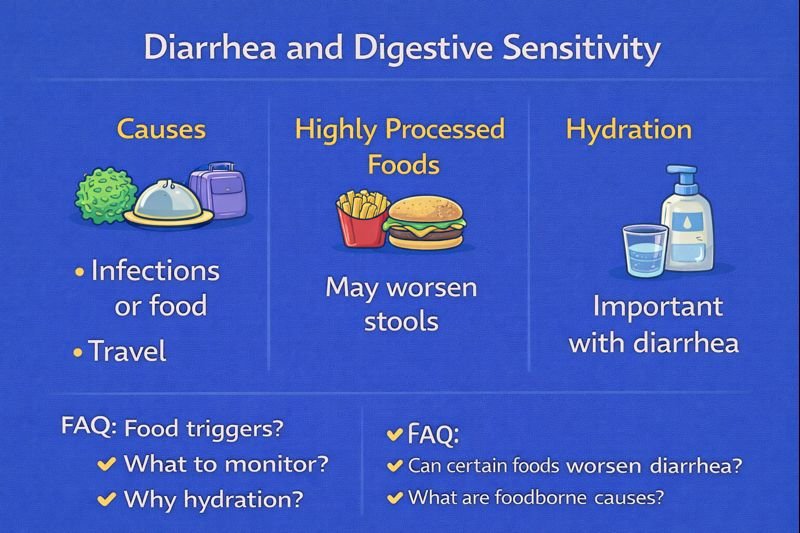
Highly processed foods that are high in fat, salt, sugars, or additives do not cause diarrhea by themselves, but some individuals may experience loose stools or discomfort after consuming them. These foods can be harder to digest during active episodes of diarrhea or digestive sensitivity.
People vary widely in tolerance — some may have no issues, while others notice stomach upset, bloating, or urgency after fast foods or rich meals.
Foodborne illness & travel
Foodborne illness occurs when contaminated food or drinks carry harmful bacteria, viruses, or parasites. Traveller’s diarrhea can occur when the body encounters new microbes not commonly found at home.
Symptoms may include:
-
Loose stools
-
Nausea or cramping
-
Fatigue
-
Reduced appetite
Duration varies depending on cause.
Diet & digestive sensitivity (non-prescriptive awareness)
During episodes of diarrhea, some individuals find that certain foods or beverages worsen discomfort. For example:
-
High-fat or fried foods
-
Spicy foods
-
Dairy (for lactose-sensitive individuals)
-
Large meals
-
High caffeine or alcohol intake
Others may notice improvement by eating smaller meals, avoiding irritants, and staying hydrated. Because triggers vary, individuals often monitor patterns over time.
Hydration & monitoring
Loose stools may increase fluid loss. Many people focus on hydration with sips of water or other familiar fluids. Severe dehydration, especially in children or older adults, can be serious and warrants medical assessment.
When to seek medical assessment
Evaluation may be useful when:
-
Diarrhea lasts more than a few days
-
There is blood in stool
-
High fever develops
-
Signs of dehydration appear
-
Symptoms follow travel or questionable food exposure
-
Symptoms interfere with work, school, or daily life
FAQ
Is diarrhea usually serious?
Most episodes are mild and short-lived, but persistent or severe symptoms warrant assessment.
Can certain foods trigger diarrhea?
Yes. Triggers vary widely depending on digestion, tolerance, and underlying conditions.
Why does travel sometimes cause diarrhea?
Exposure to new microbes or food handling practices can temporarily overwhelm the digestive system.
Do children get dehydration faster?
Yes. Children are more vulnerable to fluid loss and may require closer monitoring.
Educational note
This post supports digestive health and public awareness. Persistent, severe, or travel-related symptoms may benefit from evaluation by a healthcare professional.
About The Author

Mark Kascha
Certified First Aid Instructor Trainer with 30+ years of real-world experience, including lifeguarding, workplace emergency response, and first aid program development across Canada. Has worked with WorkSafeBC, WSIB, and Manitoba Health.
👉 [View full credentials]🔗 View LinkedIn Profile
Last reviewed: March 2026