
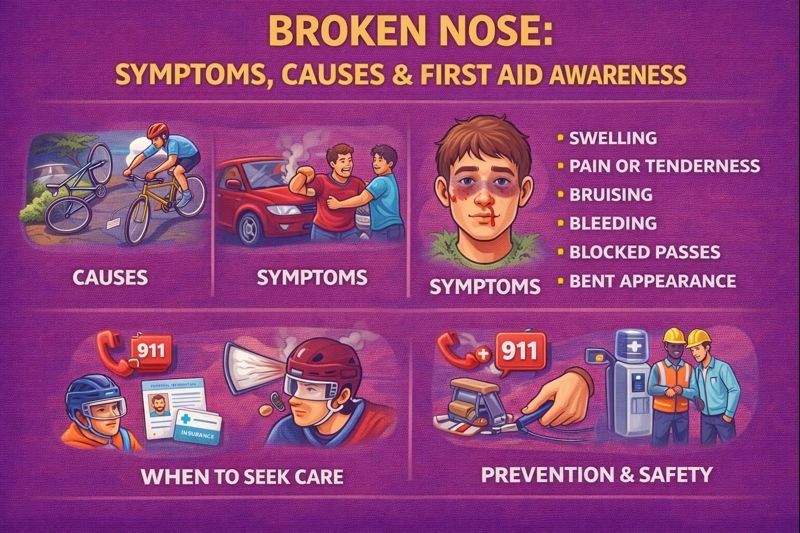
 A broken nose is a break in the cartilage or bone of the nose, often involving the bridge or the septum. The injury is typically caused by direct impact to the face.
Why it matters in Canada & everyday settings
Broken noses occur in sports, workplaces, schools, playgrounds, motor vehicle incidents, and recreational activities. First aid awareness helps people recognize symptoms, reduce discomfort, and determine when medical assessment is needed.
Scenario
During a basketball game at school, a player was accidentally struck in the face by an elbow. Their nose swelled quickly and became tender. A coach applied a cold pack and arranged for a caregiver to take the student for medical assessment.
Common causes
Broken noses are often linked to:
-
Sports involving contact or rapid movement
-
Falls
-
Motor vehicle incidents
-
Cycling or skating accidents
-
Physical altercations
-
Accidental collisions during play
Symptoms of a broken nose
Symptoms may include:
-
Swelling around the nose and eyes
-
Pain or tenderness
-
Bruising under the eyes or across the bridge of the nose
-
Blocked nasal passages
-
A bent or crooked appearance
-
A rubbing or grating sensation when moving the nose
Not all symptoms appear immediately; swelling may develop over several hours.
When to seek urgent medical care
Medical attention is recommended if:
-
Bleeding does not slow or stop
-
Breathing through the nose becomes difficult
-
Clear fluid drains from the nose
-
The nose appears significantly misshapen
-
There is concern for a septal haematoma (swelling inside the septum)
-
A head or neck injury is suspected
Suspected head or neck injuries require caution and minimal movement until assessed by professionals.
Who is at higher risk?
Risk increases among individuals who:
-
Play contact sports without protective equipment
-
Cycle, skate, or ski without helmets
-
Ride in vehicles without seatbelts
-
Work in environments with accidental impact hazards
-
Participate in physical altercations
Diagnosis
Healthcare professionals may:
-
Examine the nose and facial structures
-
Check for swelling, bruising, and breathing changes
-
Request imaging (X-ray or CT) if other facial injuries are suspected
-
Reassess once swelling decreases to determine long-term changes
First aid awareness for suspected broken nose
Early steps focus on comfort and reducing swelling:
-
Applying cold packs wrapped in cloth can help reduce swelling
-
Sitting upright may make breathing easier and discourage swelling
-
Forward-leaning posture during a nosebleed helps blood drain away from the airway
Pain management and medication decisions should be directed by health professionals or caregivers, as dosing and product selection vary by age and individual needs.
Recovery & follow-up
Most broken noses heal without long-term issues. Follow-up care may address:
-
Breathing difficulty
-
Cosmetic concerns
-
Ongoing blockage or recurrent nosebleeds
Health professionals can provide long-term recommendations if symptoms persist.
Prevention & workplace/sport considerations
Prevention strategies include:
-
Helmets and face shields for high-impact sports
-
Seatbelts in motor vehicles
-
Safe environments for school sports and recreation
-
Conflict avoidance and de-escalation education
-
Employer safety programs for impact-prone tasks
FAQ
Can a broken nose heal on its own?
Many mild fractures heal without major intervention, though medical assessment helps identify complications.
Do all broken noses bleed?
No. Some injuries cause swelling without significant bleeding.
Is bruising under the eyes always a sign of a break?
Not always. Bruising can occur with impact injuries even without a fracture.
How soon should someone be assessed?
Early assessment can help identify complications. Some follow-up exams are delayed until swelling decreases.
Can sports equipment prevent broken noses?
Protective equipment such as face shields or helmets can reduce risk in contact sports.
Educational note
This information supports general injury awareness and first aid education. Health professionals and emergency services can guide assessment and care for suspected fractures or associated injuries.
About The Author

Mark Kascha
Certified First Aid Instructor Trainer with 30+ years of real-world experience, including lifeguarding, workplace emergency response, and first aid program development across Canada. Has worked with WorkSafeBC, WSIB, and Manitoba Health.
👉 [View full credentials]🔗 View LinkedIn Profile
Last reviewed: March 2026