Egg Allergy in Children: Symptoms, Risks, and First Aid Awareness in Canada
Egg allergy is one of the most common food allergies in Canadian children. Reactions usually appear within minutes to a few hours after eating eggs or foods containing egg. Symptoms can range from mild hives to serious breathing problems. In rare cases, egg allergy can lead to anaphylaxis, a life-threatening reaction that requires urgent medical help.
Many children outgrow egg allergy before adolescence, but some continue to react into adulthood.
Why Egg Allergy Matters at Home, School, and Work
 Eggs are used in many everyday foods, so egg allergy is especially important for:
-
Parents and caregivers
-
Childcare and school staff
-
Coaches and camp leaders
-
Food service workers
-
Health and safety personnel
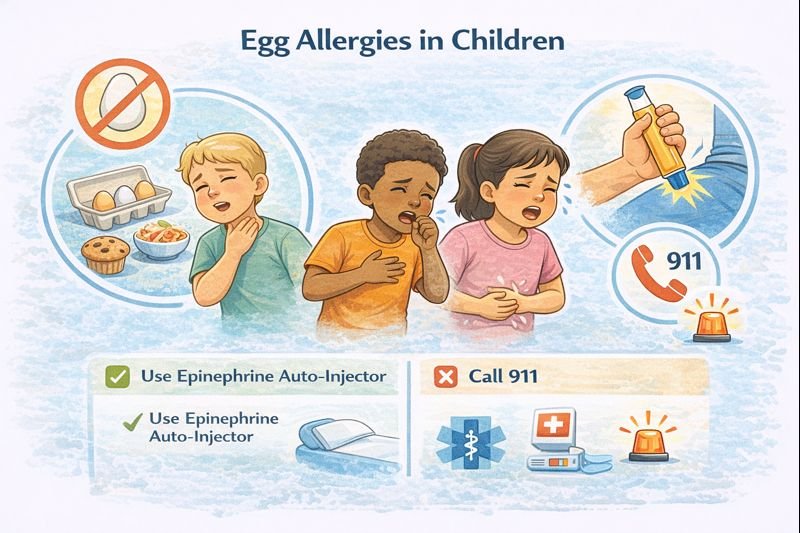
First aid and allergy awareness training help Canadians recognize early symptoms, respond quickly, and support emergency care when needed. This includes knowing how to use an epinephrine auto-injector and when to call 911.
Common Symptoms of Egg Allergy
Symptoms vary from child to child and can appear soon after eating eggs or egg-containing foods.
Possible symptoms include:
-
Skin: hives, redness, or itching
-
Nose and eyes: runny nose, nasal congestion, itchy or watery eyes
-
Chest and breathing: coughing, chest tightness, wheezing (similar to asthma)
-
Digestive system: nausea, vomiting, stomach pain, or cramps
Even mild symptoms need to be taken seriously, especially if the person has reacted before.
Signs of Anaphylaxis (Severe Allergic Reaction)
Anaphylaxis is a medical emergency. Symptoms may include:
-
Trouble breathing or noisy breathing
-
Swelling of lips, tongue, or throat
-
Feeling faint, weak, or like “something is very wrong”
-
Chest tightness or severe wheezing
-
Fast heartbeat or sudden drop in blood pressure
-
Severe abdominal pain, vomiting, or diarrhea
-
Pale or bluish skin, or loss of consciousness
Anyone who may be experiencing anaphylaxis requires immediate epinephrine and emergency medical care (call 911 in Canada).
What Causes Egg Allergy?
Egg allergy occurs when the immune system treats egg proteins as harmful. When eggs are eaten, the body releases chemicals such as histamine, which produce allergy symptoms.
-
Both egg whites and egg yolks contain allergenic proteins.
-
Allergy to egg whites is more common, but some people react to both parts.
Because eggs are used as ingredients in many baked and packaged foods, checking labels and communicating with caregivers, schools, and restaurants is essential.
Managing Egg Allergy Day to Day
Avoiding Triggers
The main strategy is avoiding eggs and egg-containing foods, which may include baked goods, sauces, and some processed items. Some children can tolerate eggs baked into foods, but this should only be tested under medical guidance.
Medications and First Aid Steps
-
Antihistamines can help with mild skin or nasal symptoms, as directed by a healthcare provider.
-
Individuals at risk for severe reactions should have an epinephrine auto-injector available at all times.
-
In a serious reaction, epinephrine is the first-line treatment, followed by calling 911 and monitoring until EMS arrives.
Allergy action plans, often provided by physicians or allergists, give clear written instructions for families, schools, and workplaces.
Growing Out of Egg Allergy
Many children eventually outgrow egg allergy, but this varies. Regular follow-up with a healthcare provider or allergist can help determine if and when food challenges should be considered, always under professional supervision.
Disclaimer
This article is for public education only and does not replace professional medical advice, diagnosis, or treatment. Anyone with suspected food allergies or signs of anaphylaxis should seek care from a qualified healthcare provider and follow local emergency procedures.