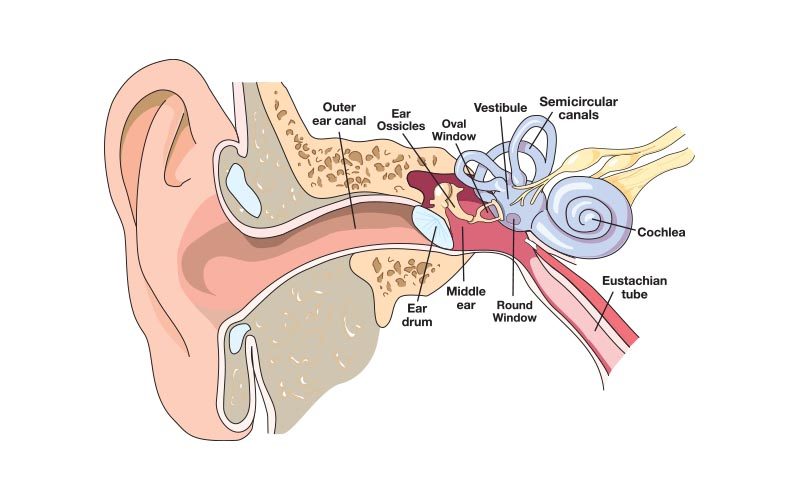
Barotrauma refers to pain or injury to the eardrum caused by sudden changes in air pressure. The eardrum separates the outer ear canal from the middle ear and is highly sensitive to pressure differences.
Barotrauma commonly occurs during:
-
Air travel (especially during takeoff and landing)
-
Scuba diving
-
Rapid elevation changes (mountain travel)
In Canada, barotrauma is frequently reported by travelers, divers, and individuals flying with colds, sinus infections, or seasonal allergies.
How Barotrauma Develops
The Eustachian tube connects the middle ear to the back of the nose and throat. Its role is to equalize air pressure on both sides of the eardrum by allowing air to move in and out of the middle ear.
When air pressure changes suddenly and the Eustachian tube cannot open properly—due to:
-
Infection
-
Allergies
-
Congestion from a cold or flu
-
Scarring or inflammation
air becomes trapped in the middle ear. This pressure imbalance can cause:
-
Ear pain or fullness
-
Temporary hearing loss
-
Bruising of the eardrum
-
Bleeding or rupture of the eardrum (severe cases)
If pressure differences are extreme, delicate inner ear structures such as the oval window may rupture, allowing inner ear fluid to leak into the middle ear and cause dizziness or balance problems.
Signs and Symptoms of Barotrauma
-
Ear pain or pressure
-
Muffled or reduced hearing
-
Full or blocked sensation in the ear
-
Ringing in the ear (tinnitus)
-
Dizziness (in severe cases)
-
Bleeding from the ear (rare but serious)
Immediate Management of Barotrauma
If pressure changes cause discomfort or pain, pressure can often be equalized using simple techniques.
When External Pressure Is Decreasing
(e.g., airplane ascent)
-
Yawn
-
Swallow repeatedly
-
Chew gum
-
Breathe with your mouth open
These actions help open the Eustachian tube and release trapped air.
When External Pressure Is Increasing
(e.g., airplane descent or underwater diving)
-
Pinch the nose shut
-
Keep the mouth closed
-
Gently blow through the nose
This technique (Valsalva maneuver) forces air through the Eustachian tube to equalize pressure. Blowing should be gentle to avoid injury.
Prevention of Barotrauma
-
Avoid flying or diving while experiencing a cold, sinus infection, or severe allergies
-
Use a decongestant 30–60 minutes before ascent or descent if travel cannot be avoided
-
Practice pressure-equalization techniques early and often during flights
-
Children may benefit from drinking, breastfeeding, or sucking on a pacifier during takeoff and landing
Why Barotrauma Matters in First Aid Training
Barotrauma is usually mild, but severe cases can lead to:
-
Permanent hearing damage
-
Eardrum rupture
-
Balance disturbances
First aid and CPR training in Canada emphasizes early recognition, safe pressure-relief techniques, and knowing when medical assessment is required, especially for children, divers, and frequent travelers.
Important Disclaimer
Educational Information Only
This article is intended for general first aid education and awareness in Canada. It does not replace professional medical advice. Anyone experiencing severe ear pain, hearing loss, dizziness, or bleeding from the ear should seek prompt medical evaluation.
About The Author

Mark Kascha
Certified First Aid Instructor Trainer with 30+ years of real-world experience, including lifeguarding, workplace emergency response, and first aid program development across Canada. Has worked with WorkSafeBC, WSIB, and Manitoba Health.
Last reviewed: March 2026