
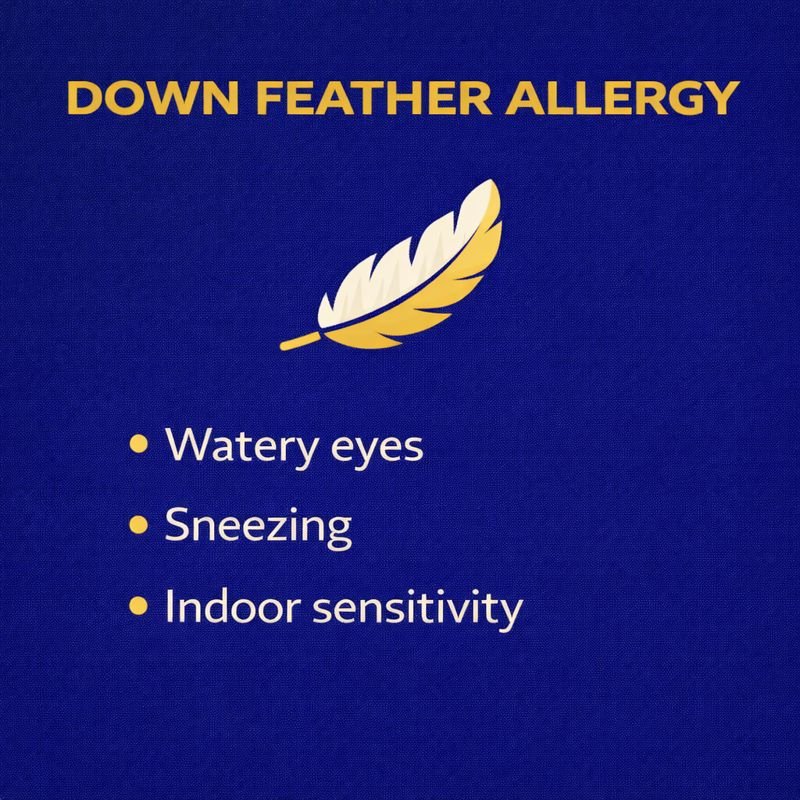
Some individuals experience allergy symptoms when exposed to down feathers, often found in pillows, comforters, jackets, and other bedding or outdoor gear. Down feathers come from birds and can trigger reactions in people who are sensitized to bird-related allergens or indoor airborne particles.
Home & workplace relevance (Canada)
Down products are common in homes, hotels, camps, and outdoor workplaces. Indoor air quality and bedding choices can influence comfort for people with respiratory or skin sensitivities.
Scenario story
When Maya moved into a student residence, she noticed watery eyes and sneezing at night. After changing to synthetic pillows and washing the bedding, her symptoms eased. Maya later learned that the pillows contained down feathers.
Possible causes & mechanisms
 Allergies involve the immune system reacting to specific substances. In sensitized individuals, proteins from birds or feather materials may trigger symptoms. Exposure can occur through:
-
Bedding (pillows, duvets/comforters)
-
Jackets or winter gear
-
Bird handling in farms or aviaries
-
Household dust containing feather particles
Some people react to birds directly, others to indirect feather exposure.
Common symptoms
Symptoms can vary from mild to bothersome and may include:
-
Watery or itchy eyes
-
Runny or congested nose
-
Sneezing
-
Coughing or airway irritation
-
Skin itchiness or localized rash
Individuals with asthma or existing respiratory conditions may experience increased sensitivity to indoor allergens.
Indoor air & respiratory considerations
Feather particles can become airborne, especially when bedding is shaken or compressed. Over time, irritation may contribute to eczema or chronic nasal symptoms in susceptible individuals. Sudden or severe breathing difficulty should be medically assessed, as it may relate to asthma or an allergic reaction.
Prevention & environmental control
People who react to down feathers may:
-
Replace down bedding with synthetic alternatives
-
Use washable pillow and duvet covers
-
Wash bedding regularly in warm water
-
Reduce dust accumulation in bedrooms
-
Consider air filtration systems for indoor environments
Choices vary by household and response to exposure.
Assessment & healthcare considerations
If symptoms persist, worsen, or are unclear, healthcare professionals may:
-
Review symptom patterns and triggers
-
Ask about home environment and bedding materials
-
Evaluate whether bird allergy, dust allergy, or asthma is involved
-
Discuss management and avoidance strategies when appropriate
FAQ
Is down the same as feathers?
Down refers to soft inner feathers. Some products use down, others use quills, synthetic fill, or blends.
Are down allergies common?
Less common than cat, dog, dust mite, or pollen allergies, but recognized in indoor allergen clinics.
Can down trigger asthma?
Feather particles may worsen asthma in some individuals. Healthcare providers guide asthma-specific management.
Can synthetic pillows solve the issue?
Many people notice improvement with synthetic alternatives, though responses vary.
Is testing required?
Testing is considered when symptoms persist or diagnosis is uncertain and is guided by healthcare professionals.
Educational note
This content supports indoor allergen awareness for homes and workplaces and does not replace clinical assessment, diagnosis, or individualized treatment planning.
About The Author

Mark Kascha
Certified First Aid Instructor Trainer with 30+ years of real-world experience, including lifeguarding, workplace emergency response, and first aid program development across Canada. Has worked with WorkSafeBC, WSIB, and Manitoba Health.
👉 [View full credentials]🔗 View LinkedIn Profile
Last reviewed: March 2026