 Food allergies can range from mild to serious, and reactions may occur unexpectedly. A food allergy first aid kit helps families and workplaces stay prepared, especially when eating away from home, travelling, or attending school, camp, or social events.
Why it matters in Canada & workplaces
Food allergies are common in homes, childcare settings, schools, restaurants, camps, and workplaces where shared snacks or potlucks occur. Preparedness reduces stress and supports early recognition of reactions until professional care is available.
Scenario (mild & realistic)
During a school field trip, a student with a known food allergy felt itchy and uncomfortable after a snack. A teacher checked the student’s medical information card, contacted the parents, and followed the student’s allergy response plan. The situation was managed calmly and the student recovered.
What to include in a food allergy first aid kit
Kits can be customized for individuals and may include:
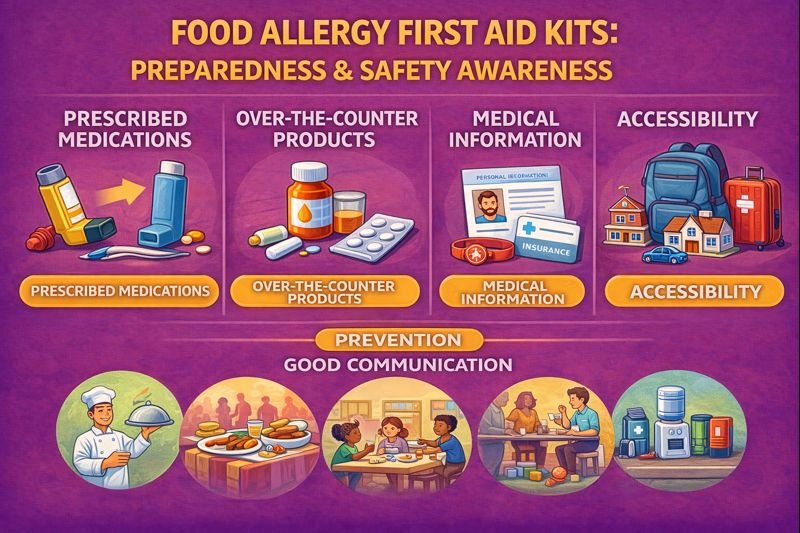
1. Prescribed allergy medications
Health professionals may prescribe medications such as epinephrine auto-injectors or asthma inhalers for those with diagnosed allergies. Travellers often carry these in a personal bag for accessibility. Check expiry dates and storage guidance provided by pharmacies or health professionals.
2. Over-the-counter allergy products
Some caregivers include oral antihistamines based on guidance from health professionals. Forms may vary (liquid, tablet, etc.) depending on age and individual needs.
3. Medical information sheet
Useful information may include:
-
Known allergens
-
Usual allergy symptoms
-
Current medications
-
Allergy response plan
-
Emergency contacts
-
Doctor and pharmacy contact information
-
Insurance details (for travel)
Updating information regularly helps responders avoid delays during emergencies.
4. Documentation for childcare & school settings
Many Canadian schools and camps request allergy management forms and provide structured plans for food safety, communication, and emergency response.
Storage & accessibility
For allergy kits to be effective:
-
Keep kits in locations where they can be reached quickly (home, school, workplace, travel bags, vehicles)
-
Avoid temperature extremes if storing items in vehicles or outdoors
-
Assign responsibility for carrying kits during travel or outings
Prevention & daily awareness
While careful food labelling, sanitation, and avoidance reduce risk, accidental exposure can still occur at:
-
Restaurants or takeout environments
-
Group meals and potlucks
-
Cultural or travel settings
-
Schools and childcare programs
-
Shared kitchens and workplaces
Communication about allergies helps others support safe meal planning.
FAQ
Why carry multiple allergy kits?
Families often keep kits at home, school, work, or in vehicles to avoid being caught without supplies during unexpected situations.
Do food allergies only affect children?
No. Adults can have lifelong allergies or develop new allergies later in life.
Are symptoms always the same?
Not always. Reactions vary from mild to serious and may change over time. Health professionals can help create a personalized plan.
Is a medical ID bracelet helpful?
Many individuals with allergies choose medical ID bracelets or cards to provide key information to responders.
Do travel plans affect allergy preparedness?
Yes. Different cuisines and languages may increase exposure risk. Carrying medical information and response plans is particularly helpful during travel.
Educational note
This information supports general allergy preparedness and first aid awareness. Health professionals can provide individualized advice, prescribe medications, or develop response plans based on personal allergy history.
About The Author

Mark Kascha
Certified First Aid Instructor Trainer with 30+ years of real-world experience, including lifeguarding, workplace emergency response, and first aid program development across Canada. Has worked with WorkSafeBC, WSIB, and Manitoba Health.
👉 [View full credentials]🔗 View LinkedIn Profile
Last reviewed: March 2026