
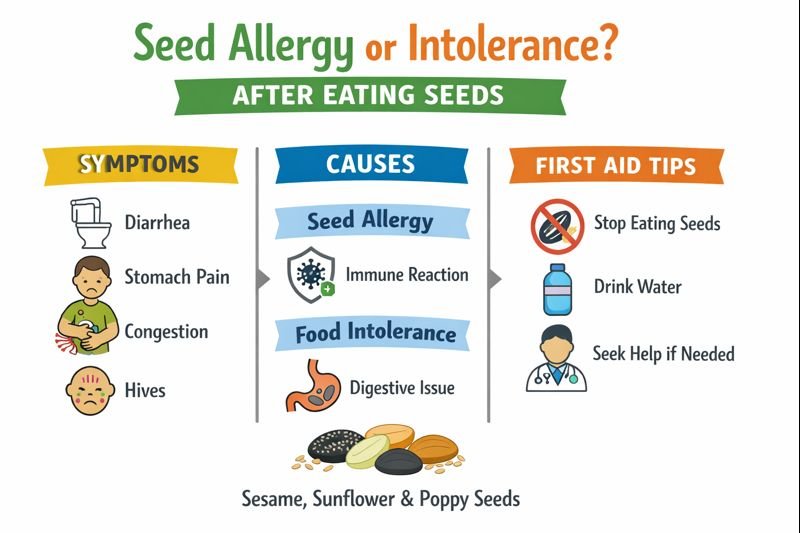
 Understanding Diarrhea After Consuming Seeds
Experiencing diarrhea after eating foods that contain seeds—such as sesame, poppy, or sunflower seeds—can sometimes signal a food sensitivity or allergy. While occasional digestive upset can happen for many harmless reasons, repeated symptoms after specific foods may deserve attention and general first aid awareness, especially in shared environments like workplaces, schools, or care facilities.
First Aid & Workplace Relevance in Canada
In Canadian workplaces, food allergies and sensitivities are part of overall health and safety awareness. Staff rooms, catered meetings, and shared kitchens can expose individuals to common allergens. Basic first aid knowledge helps coworkers recognize early symptoms and respond calmly, such as encouraging the person to stop eating the trigger food and seek appropriate assistance if symptoms progress. Awareness also supports inclusive practices, like clear food labelling and respectful communication about dietary needs.
A Short Realistic Scenario
During a team lunch at an office, a staff member notices stomach cramps and diarrhea shortly after eating a salad topped with sesame seeds. Remembering basic first aid training, a colleague suggests they rest, drink water, and avoid further exposure to the food. The individual later decides to speak with a healthcare professional to better understand their reaction and plan future precautions. The situation remains calm and manageable because early awareness and supportive action were present.
Symptoms to Watch For
Digestive symptoms related to seed reactions can include:
-
Diarrhea
-
Stomach cramps or abdominal discomfort
-
Nausea or vomiting
When an allergy is involved, additional symptoms may sometimes appear, such as:
-
Nasal congestion or sinus pressure
-
Skin irritation or hives
-
Coughing or wheezing
-
Facial swelling or throat discomfort
Not everyone experiences the same signs, and severity can vary.
Causes and Mechanisms
Seed Allergy
A seed allergy occurs when the immune system mistakenly identifies certain seed proteins as harmful. The body may release chemicals such as histamine, which can lead to swelling and inflammation in different tissues, including the digestive tract. Sesame seed is one of the more commonly reported seed allergens in Canada, but reactions can also occur with poppy, sunflower, or other seeds.
Food Intolerance
Food intolerance is different from an allergy because it does not involve the immune system. Instead, it relates to difficulty digesting certain components of food. Intolerances may cause:
-
Bloating
-
Gas
-
Abdominal discomfort
-
Diarrhea
Unlike allergies, intolerances typically do not cause breathing problems, skin reactions, or widespread swelling.
First Aid Awareness and General Management
For mild digestive discomfort after eating seeds:
-
Stop eating the suspected trigger food.
-
Drink water to stay hydrated.
-
Rest and monitor symptoms.
If symptoms are repeated, unusual, or involve breathing difficulty, swelling, or widespread rash, it is generally wise to seek professional assessment. Some individuals with known severe allergies may carry prescribed emergency medication; coworkers should only assist if they have been trained and the individual requests help.
Prevention and Workplace Considerations
-
Encourage clear labelling of shared foods and potluck dishes.
-
Maintain clean food preparation surfaces to reduce cross-contact.
-
Respect coworkers’ allergy disclosures.
-
Include allergy awareness in workplace first aid and safety orientations.
-
Promote hydration and balanced meals to reduce general digestive upset.
Frequently Asked Questions
Can seeds really cause digestive problems?
Yes. For some people, certain seeds can trigger digestive discomfort due to either an allergy or an intolerance. The body’s response and severity can differ from person to person.
How is an allergy different from an intolerance?
An allergy involves the immune system and may affect multiple body systems, while an intolerance is related to digestion and usually stays limited to gastrointestinal symptoms.
Should someone stop eating all seeds after one reaction?
Not necessarily. Occasional discomfort can have many causes. Repeated or concerning reactions are a good reason to seek professional guidance and observe patterns.
What role does first aid awareness play?
First aid awareness helps people recognize early symptoms, remain calm, avoid further exposure, and know when to encourage someone to seek additional help.
Are workplace food policies helpful?
Yes. Clear labelling, cleanliness, and respectful communication can reduce accidental exposure and support safer shared eating spaces.
Educational Note
This information is for general public education and first aid awareness only. Individual reactions can vary, and learning basic first aid skills can help people respond calmly and appropriately in everyday situations.
About The Author

Mark Kascha
Certified First Aid Instructor Trainer with 30+ years of real-world experience, including lifeguarding, workplace emergency response, and first aid program development across Canada. Has worked with WorkSafeBC, WSIB, and Manitoba Health.
👉 [View full credentials]🔗 View LinkedIn Profile
Last reviewed: March 2026