
What Are Pet Allergies?
Pet allergies occur when the immune system reacts to proteins found in an animal’s dander (dead skin flakes), saliva, or urine. While fur is often blamed, it is not the primary allergen. Even short-haired or non-shedding animals can leave allergenic particles behind on surfaces and in the air.
Cats tend to cause allergic reactions more often than dogs. Although some dog breeds are marketed as “hypoallergenic,” research shows that no breed is completely allergy-free, and allergen levels can vary widely between individual animals of the same breed. Fish, reptiles, and amphibians generally do not trigger airborne allergies, though they may pose other health considerations.
First Aid and Workplace Relevance in Canada
Pet allergies are relevant in Canadian homes, schools, childcare settings, healthcare facilities, and workplaces where animals may be present. Symptoms can range from mild irritation to breathing discomfort, which may affect concentration, attendance, and overall safety.
First aid and health awareness training helps people recognize allergy symptoms early, reduce exposure, and respond appropriately if symptoms worsen—especially for individuals with asthma or known sensitivities.
A Simple, Realistic Scenario
An office employee begins sneezing and develops itchy eyes after visiting a coworker’s home with cats over the weekend. Remembering their allergy awareness training, they recognize the symptoms early, wash exposed clothing, and manage the environment at work to reduce discomfort while monitoring their symptoms.
Common Allergy Triggers From Pets
Pet-related allergens can come from:
-
Saliva left on fur or surfaces
-
Urine particles carried on dust
-
Outdoor allergens such as pollen or mold brought inside on fur
Pet allergens can persist for months in carpets, furniture, and clothing—even after the animal is no longer present.
Symptoms of Pet Allergies
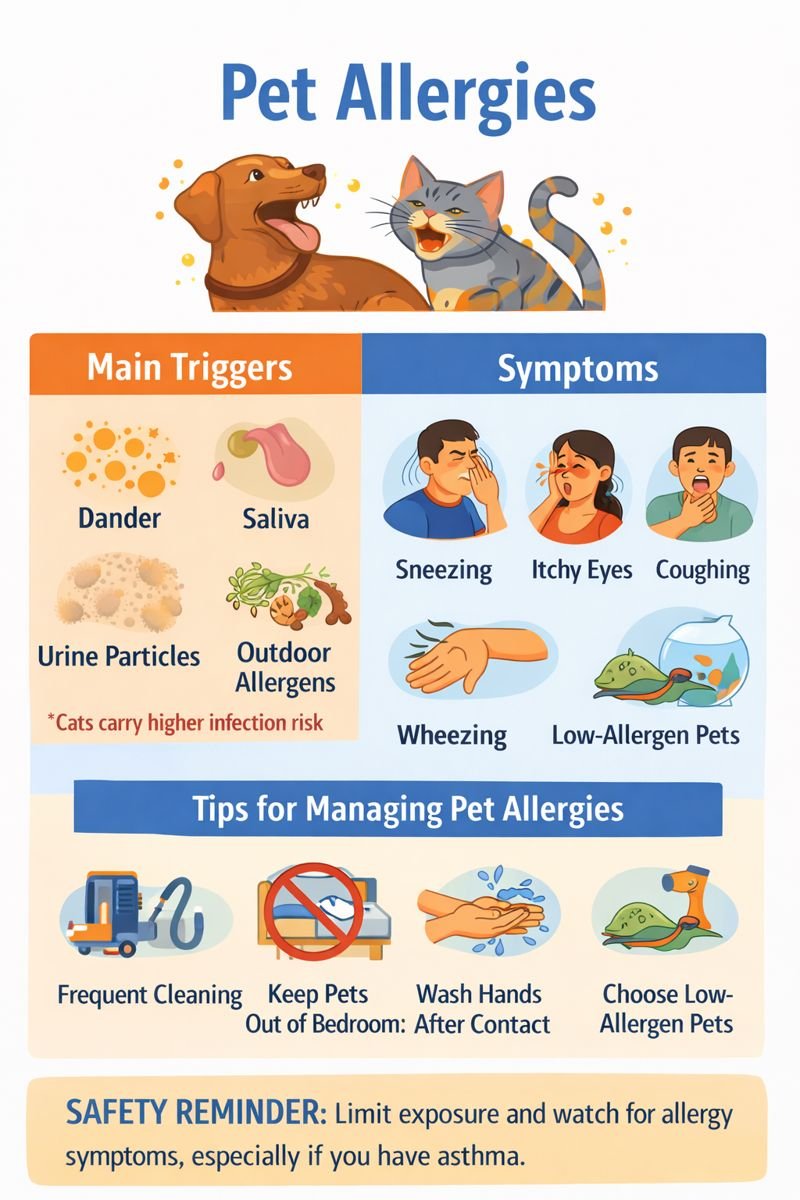 Pet allergies may cause:
-
Sneezing and nasal congestion
-
Itchy, watery, or red eyes
-
Coughing or throat irritation
-
Wheezing or shortness of breath
-
Skin irritation after contact
Some individuals experience symptoms only after prolonged exposure, while others react quickly. People with asthma may notice worsening breathing symptoms when exposed to pet allergens.
Adjustments for Households With Pets
For families who are emotionally attached to their pets, removal may be difficult. In some cases, exposure-reduction strategies are used.
Common approaches include:
-
Keeping pets out of bedrooms
-
Frequent cleaning, dusting, and vacuuming
-
Washing hands after animal contact
-
Using designated pet-free areas
Bathing pets regularly may reduce allergens temporarily, but it requires consistency and may not be practical long term. Even with these steps, allergens can remain in the environment.
Considerations Before Getting a New Pet
Bringing a furry pet into a home where allergies are known can increase health challenges.
Important considerations include:
-
Delaying pet ownership if a household member has confirmed allergies
-
Being cautious with infants and young children, who may be more sensitive
-
Allowing brief exposure to animals before making long-term decisions
-
Avoiding assumptions—symptoms may be caused by pollen or mold carried indoors by pets
A pet should not be blamed or removed without proper assessment, as symptoms may come from other environmental allergens.
Managing Pet Allergies
Managing pet allergies focuses on exposure reduction and awareness.
General strategies include:
-
Choosing pets that do not shed fur or dander
-
Maintaining good ventilation and cleanliness
-
Monitoring symptoms closely, especially in people with asthma
-
Understanding that some low-allergen pets, such as fish or reptiles, may have other health considerations
In some cases, long-term allergy treatments may be discussed by healthcare providers, but avoidance remains the most effective general strategy from a public health perspective.
Frequently Asked Questions
Is fur the main cause of pet allergies?
No. Most reactions are caused by proteins in dander, saliva, and urine rather than fur itself.
Are some dog breeds truly hypoallergenic?
No breed is completely hypoallergenic, and allergen levels can vary between individual animals.
Can pet allergens remain after the animal is gone?
Yes. Dander can stay in carpets, furniture, and air for long periods.
Can pets trigger asthma symptoms?
Yes. Pet allergens can worsen asthma symptoms in some individuals.
Do non-furry pets cause allergies?
Fish, reptiles, and amphibians usually do not cause airborne allergies, though they may carry other health risks.
Educational Note
This article is intended for general public education and first aid awareness in Canada. It does not replace medical evaluation or individualized allergy management.
About The Author

Mark Kascha
Certified First Aid Instructor Trainer with 30+ years of real-world experience, including lifeguarding, workplace emergency response, and first aid program development across Canada. Has worked with WorkSafeBC, WSIB, and Manitoba Health.
👉 [View full credentials]🔗 View LinkedIn Profile
Last reviewed: March 2026