What Is Boric Acid?
 Boric acid is a naturally occurring compound derived from boron-containing minerals. It has mild antimicrobial and antifungal properties, which is why it has historically appeared in some household products, pesticides, and limited health-related applications. Despite this, boric acid is toxic if misused or ingested and can cause harm when applied incorrectly or in inappropriate concentrations.
Because of these risks, boric acid is not considered a general first aid treatment and should only be used in very specific contexts under professional guidance.
Why Boric Acid Awareness Matters in Canada
In Canadian workplaces and homes, boric acid may be encountered in pest-control products, older remedies, or online health advice. First aid and safety training emphasize recognizing substances that may pose a poisoning or irritation risk—especially in environments with children, shared facilities, or food preparation areas. Understanding what boric acid is (and what it is not) supports safer handling and better decision-making.
A Simple, Realistic Scenario
A daycare supervisor notices a container of boric acid powder stored in a staff washroom cabinet, intended for pest control. Because of basic safety awareness training, the supervisor recognizes the potential risk, secures the product in a locked storage area, and ensures it is clearly labelled and kept out of reach of children.
Common Situations Where Boric Acid Is Mentioned
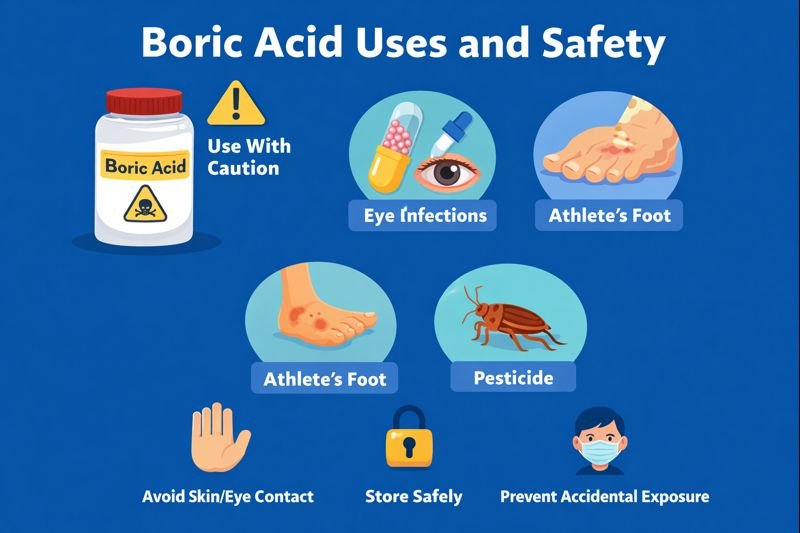
Boric acid is sometimes discussed in relation to several conditions, though its use is limited and carries important safety considerations.
Yeast Infections
Boric acid has been referenced in some medical contexts for recurrent or treatment-resistant yeast infections. However, its use involves strict controls and professional oversight due to toxicity risks. It is not appropriate for self-treatment or general first aid use.
Eye Irritation or Infection
Historically, diluted boric acid solutions appeared in some eye-care products. Today, eye irritation and infection management relies on regulated, sterile products. Improper eye exposure to boric acid can cause irritation or injury, making unsupervised use unsafe.
Acne and Skin Conditions
Boric acid has appeared as an ingredient in certain topical products because of its antibacterial properties. However, it may irritate the skin, and its use has largely declined in favour of safer alternatives.
Fungal Infections (e.g., Athlete’s Foot)
Boric acid has been mentioned in connection with fungal skin conditions due to its effect on skin pH. Still, direct application without guidance can irritate skin and increase the risk of exposure, especially in shared or workplace environments.
Insect Control
Boric acid is commonly used as a pesticide in homes and workplaces to control insects such as cockroaches. While it is generally less toxic to humans than some chemical pesticides, it can still be harmful if inhaled, ingested, or contacted repeatedly. Safe storage and clear labelling are essential.
First Aid and Safety Considerations
From a first aid and workplace safety perspective, boric acid should be treated as a potentially hazardous substance:
-
Avoid direct skin, eye, or mouth contact
-
Do not use as a home remedy for infections or irritation
-
Store securely, especially in environments with children or pets
-
Follow workplace hazard communication and WHMIS practices
-
Seek guidance if accidental exposure occurs
First aid training focuses on recognizing exposure risks and preventing misuse rather than encouraging treatment applications.
Prevention and Workplace Considerations
-
Keep boric acid–containing products clearly labelled
-
Store chemicals away from food and personal-care areas
-
Use safer, approved alternatives where available
-
Educate staff on chemical awareness and safe handling
-
Follow manufacturer instructions and workplace safety policies
Frequently Asked Questions About Boric Acid
Is boric acid safe for general first aid use?
No. Boric acid is toxic if misused and is not recommended as a general first aid treatment.
Can boric acid be harmful if swallowed?
Yes. Ingesting boric acid can be dangerous and requires prompt medical attention.
Why is boric acid still found in some products?
It is used in controlled amounts for pest control and in certain regulated applications due to its antimicrobial properties.
Is boric acid suitable for eye care?
Modern eye care relies on sterile, regulated products. Improper eye exposure to boric acid can cause irritation or injury.
What should workplaces do if boric acid is present on site?
Ensure proper labelling, secure storage, staff awareness, and compliance with Canadian safety standards.
Educational Note
This article is intended for general public and workplace safety education in Canada. It supports chemical awareness and first aid knowledge but does not replace guidance from healthcare or safety professionals.
About The Author

Mark Kascha
Certified First Aid Instructor Trainer with 30+ years of real-world experience, including lifeguarding, workplace emergency response, and first aid program development across Canada. Has worked with WorkSafeBC, WSIB, and Manitoba Health.
👉 [View full credentials]🔗 View LinkedIn Profile
Last reviewed: March 2026