
 What Is Sudden Neck Pain in Children?
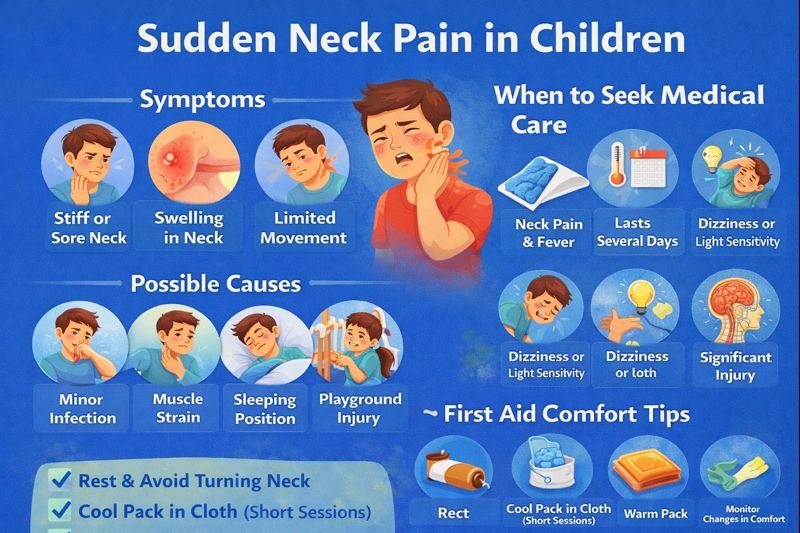
Sudden neck pain in children can feel alarming for parents and caregivers, but many cases are linked to minor muscle strain, awkward sleeping positions, or mild infections that cause temporary discomfort. The neck contains muscles, ligaments, and joints that support head movement, so even small strains can feel significant to a child. While most situations are not serious, ongoing or worsening symptoms should always be checked by a qualified healthcare professional.
Why Neck Pain Awareness Matters in Canadian First Aid and Childcare Settings
In Canada, teachers, daycare staff, coaches, and workplace caregivers may be the first to notice a child holding their neck or avoiding movement. First aid awareness focuses on recognizing discomfort early, helping the child stay comfortable, and knowing when further assessment is important. The goal is reassurance and monitoring rather than diagnosis.
A Simple, Realistic Scenario
During a school day, a child tells their teacher that their neck feels sore after playing on the playground. The teacher encourages the child to sit comfortably, avoid sudden movements, and informs the school office so the caregiver can be notified. The child’s discomfort improves after rest and gentle positioning.
Common Signs and Symptoms
Sudden neck discomfort in children may include:
-
Soreness or stiffness when turning the head
-
Mild swelling or tenderness in the neck area
-
Difficulty looking up, down, or side to side
-
Holding the neck in a tilted or guarded position
-
Irritability or reduced activity
These signs often relate to muscle strain but should still be monitored.
Possible Causes
Several everyday factors can contribute to sudden neck pain:
-
Muscle strain or awkward movement during play or sports
-
Poor sleeping position or unsupportive pillows
-
Minor infections that cause temporary swelling of neck glands
-
Carrying heavy backpacks or prolonged device use
-
Direct bumps or falls affecting the neck area
Most causes are minor, but awareness is key to identifying changes that require attention.
When to Seek Further Assessment
From a first aid awareness perspective, certain signs suggest the need for prompt professional evaluation:
-
Neck pain accompanied by fever
-
Persistent pain lasting several days without improvement
-
Complaints of dizziness, numbness, or tingling
-
Severe headache or unusual light sensitivity
-
Difficulty moving the neck at all
-
Recent significant fall or injury
These situations do not automatically indicate a serious issue, but they warrant timely follow-up.
First Aid Awareness and Comfort Measures
General comfort-focused steps may help reduce mild strain:
-
Encourage the child to rest and avoid sudden neck movements
-
Use a cool pack wrapped in cloth for short periods if swelling is present
-
Alternate with gentle warmth to relax muscles if the child finds it soothing
-
Support upright posture while sitting or reading
-
Monitor changes in comfort rather than forcing movement
First aid awareness emphasizes gentle support and observation, not forceful stretching or manipulation.
Prevention and Childcare / Workplace Considerations
-
Ensure backpacks are appropriately sized and not overloaded
-
Promote regular posture breaks during screen use
-
Provide supportive seating and rest areas in classrooms or childcare spaces
-
Encourage safe play and supervised physical activity
-
Maintain open communication with caregivers when discomfort is noticed
These habits support overall musculoskeletal comfort in growing children.
Frequently Asked Questions About Sudden Neck Pain in Children
Is sudden neck pain always serious?
No. Many cases relate to minor muscle strain or posture issues, but monitoring is still important.
Why might a child tilt their head to one side?
This can happen when muscles are tight or sore, making certain movements uncomfortable.
Can infections cause neck discomfort?
Yes. Swollen glands during mild illnesses can sometimes lead to temporary soreness.
Should a child be encouraged to “stretch it out”?
Gentle movement is fine if comfortable, but forcing range of motion is not recommended.
When should caregivers be notified?
Any persistent pain, visible swelling, or additional symptoms should be shared with a caregiver promptly.
Educational Note
This article is intended for general public and workplace childcare education in Canada. It supports awareness of musculoskeletal discomfort and first aid recognition but does not replace evaluation or care from qualified healthcare professionals.
About The Author

Mark Kascha
Certified First Aid Instructor Trainer with 30+ years of real-world experience, including lifeguarding, workplace emergency response, and first aid program development across Canada. Has worked with WorkSafeBC, WSIB, and Manitoba Health.
👉 [View full credentials]🔗 View LinkedIn Profile
Last reviewed: March 2026