 What Are Eye Injuries?
Eye injuries can happen at work, during sports, at home, or while travelling. They include irritation, bruising, chemical exposure, or objects entering the eye. Even mild injuries can affect comfort and vision, so basic first aid awareness is useful for workplaces and families across Canada.
Why This Matters for First Aid & the Workplace
Many Canadian work settings—construction, manufacturing, food service, laboratories, healthcare, and retail—use tools, chemicals, or tasks that pose eye hazards. First aid awareness can support early responses, reinforce protective eyewear practices, and help guide decisions about when someone should seek professional medical assessment.
Scenario: Mild, Realistic
During a warehouse cleaning shift, a small splash of diluted cleaning solution entered a worker’s eye. A coworker helped them move to a sink, kept them calm, and rinsed the eye with clean water while ensuring the other eye stayed protected. The worker later had the injury checked to confirm nothing more serious was going on. The incident led to a review of eyewear and storage practices.
Common Types of Eye Injuries
Chemical Exposure and Irritants
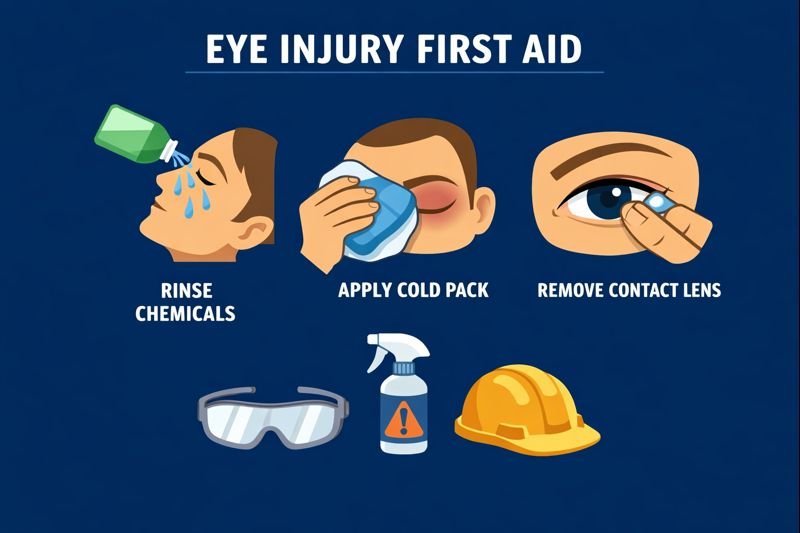
Chemical splashes and airborne cleaning products can irritate eye tissue. First aid training in Canada typically teaches that the priority is to gently rinse the affected eye with clean, lukewarm water. Keeping the eyelids open can allow the water to reach the surface, and tilting the head toward the affected side can help prevent the chemical from reaching the other eye. After rinsing, the individual should be assessed by a healthcare professional to rule out deeper injury or lingering irritation, especially when chemicals are involved.
Bruising (“Black Eye”)
A blow to the area around the eye can cause swelling and bruising. A cold compress wrapped in a clean cloth may help reduce swelling and discomfort. If bruising is severe, pain increases, or vision seems affected, a healthcare provider can assess for underlying injury.
Contact Lenses and Minor Irritation
If a person wearing contact lenses experiences an eye injury that does not involve bleeding or an object penetrating the eye, lenses may need to be gently removed to prevent trapping irritants. Removal techniques vary; trained contact lens wearers often slide the lens to the outer edge of the cornea and lift it away. If removal is difficult, uncomfortable, or vision is affected, a healthcare provider should assess the situation rather than attempting repeated removal attempts.
Causes & Mechanisms
-
Blunt impact (sports, falls, workplace tools)
-
Chemical splashes or residues
-
Airborne particles (dust, metal filings, food particulates)
-
Foreign objects and debris
-
Contact lens irritation or dryness
Symptoms That May Occur
Symptoms depend on the type of injury and may include:
-
Redness or tearing
-
Irritation or burning sensation
-
Swelling or bruising around the eye
-
Light sensitivity
-
Blurred vision or difficulty focusing
-
Feeling like something is “in” the eye
These symptoms vary widely; a healthcare professional can determine the severity.
First Aid Awareness & Management
Public first aid programs in Canada focus on:
-
Gentle eye rinsing for irritants and chemicals
-
Protecting the uninjured eye
-
Avoiding rubbing the eye
-
Avoiding pressure on bruised tissue
-
Reinforcing when professional assessment is appropriate
-
Applying clean dressings without pressure if needed
-
Using protective eyewear to prevent further exposure
Prevention & Workplace Considerations
-
Use CSA-approved safety glasses or face shields where required
-
Store and dilute cleaning products safely
-
Label containers clearly
-
Perform workplace hazard assessments
-
Promote first aid training for supervisors and workers
-
Encourage contact lens users to carry lens cases and solution when practical
FAQ — Eye Injuries
1. Can a small chemical splash cause long-term problems?
Even mild chemical irritation can be uncomfortable. Professional assessment helps determine whether deeper structures were affected and ensures appropriate follow-up.
2. Should someone with a black eye still work?
It depends on comfort, light sensitivity, and vision. A healthcare provider can assess whether the injury affects safety in the workplace.
3. What if debris feels stuck in the eye?
Avoid rubbing or pressing on the eye. A healthcare professional can examine it and safely remove debris if necessary.
4. Do contact lenses make eye injuries worse?
Not always, but they can trap irritants. If removal is uncomfortable or difficult, a healthcare provider can assist and check the eye for irritation.
5. Are safety glasses enough in chemical environments?
Safety glasses help but face shields or goggles may be recommended in certain workplaces based on risk assessments and chemical exposure potential.
Educational Note
This article supports public learning about first aid awareness and workplace safety for eye injuries. It is not a substitute for training or professional assessment.
About The Author

Mark Kascha
Certified First Aid Instructor Trainer with 30+ years of real-world experience, including lifeguarding, workplace emergency response, and first aid program development across Canada. Has worked with WorkSafeBC, WSIB, and Manitoba Health.
👉 [View full credentials]🔗 View LinkedIn Profile
Last reviewed: March 2026