What Is a Food Allergy?
A food allergy occurs when the immune system mistakenly identifies a specific food protein as harmful. The body produces immunoglobulin E (IgE) antibodies, and when that food is eaten again, the immune system releases histamine and other chemicals. These substances cause allergy symptoms, which can affect the skin, digestive system, respiratory system, or the whole body.
Food allergies can affect both children and adults and range from mild reactions to severe, life-threatening responses.
Why This Matters for First Aid and Workplaces in Canada
Food allergies are a significant public health and workplace safety concern across Canada. Allergens are common in shared kitchens, cafeterias, catered meetings, schools, childcare centres, and remote work settings. First aid awareness helps people recognize symptoms early, reduce exposure, and respond appropriately while activating emergency plans when required.
A Realistic Scenario
At a workplace potluck, an employee eats a homemade dish without realizing it contains nuts. Within minutes, they develop hives and start coughing. A colleague trained in first aid recognizes these as possible allergy symptoms, helps stop further exposure, and follows workplace procedures to get medical assistance. Early recognition helps prevent delays and confusion.
Common Symptoms of Food Allergies
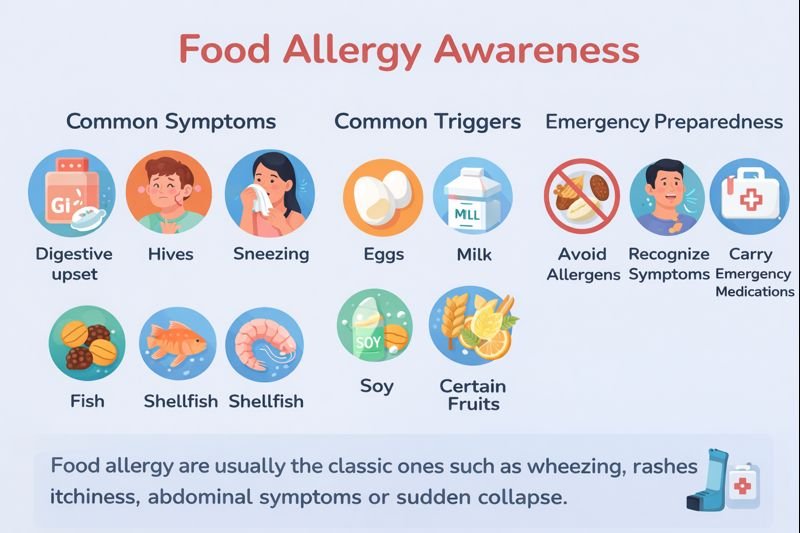 Food allergy symptoms vary depending on the individual and the severity of the reaction. They may appear within minutes or be delayed for several hours after eating.
Common symptoms include:
-
Digestive: Abdominal pain, nausea, vomiting, diarrhea
-
Skin: Itching, hives, redness, swelling
-
Respiratory: Sneezing, runny nose, wheezing, coughing
-
Systemic symptoms: Dizziness, confusion, or collapse in severe cases
Because symptoms can involve multiple body systems, food allergies are taken seriously in first aid education.
Common Food Allergy Triggers
Some foods are more likely to trigger allergic reactions. Common triggers include:
-
Eggs
-
Milk
-
Nuts and seeds
-
Fish
-
Shellfish
-
Soy
-
Wheat
-
Certain fruits, such as kiwi and citrus
Even very small amounts of an allergen can trigger a reaction in sensitive individuals.
Severe Reactions and Anaphylaxis Awareness
A severe allergic reaction, known as anaphylaxis, affects multiple body systems at once. It may include breathing difficulty, throat swelling, severe digestive symptoms, and a sudden drop in blood pressure. Anaphylaxis is a medical emergency.
First aid training focuses on recognizing early warning signs, responding quickly, and activating emergency medical services rather than diagnosing or treating the condition.
Managing Food Allergies: Awareness and Preparedness
Food allergy management is often described in three key phases:
-
Identifying and avoiding known triggers
-
Recognizing the signs of an allergic reaction
-
Being prepared to respond if a reaction occurs
From a workplace and public safety perspective, preparedness is critical.
Practical Safety Strategies
-
Using medical alert bracelets or necklaces
-
Informing family, friends, coworkers, and supervisors about the allergy
-
Avoiding all known trigger foods, even in small amounts
-
Keeping an allergy response plan accessible
-
Knowing where emergency medications are stored, if applicable
-
Ensuring coworkers understand emergency procedures
Clear communication and planning reduce risks in shared environments.
Other Types of Food Reactions
Not all adverse food reactions involve IgE antibodies. Some individuals experience non-IgE–mediated reactions, which may cause delayed and usually less severe symptoms. These reactions can still lead to ongoing digestive discomfort, especially in children, and should be taken seriously from an awareness and monitoring standpoint.
Frequently Asked Questions (FAQ)
How quickly do food allergy symptoms appear?
Symptoms often begin within minutes but can sometimes be delayed for several hours, depending on the type of reaction.
Are food allergies common in workplaces?
Yes. Because food is often shared or catered, food allergies are an important workplace safety consideration in Canada.
Can small amounts of food cause a reaction?
Yes. For some individuals, even trace amounts of an allergen can trigger symptoms.
Is a food allergy the same as a food intolerance?
No. Food allergies involve the immune system, while intolerances usually involve digestion and do not cause immune reactions.
Why is first aid training important for food allergies?
Training helps people recognize symptoms early, respond calmly, and activate emergency procedures when necessary.
Educational Note
This article is intended for general first aid and workplace safety education in Canada. It supports awareness and preparedness but does not replace individualized medical assessment or emergency care.
About The Author

Mark Kascha
Certified First Aid Instructor Trainer with 30+ years of real-world experience, including lifeguarding, workplace emergency response, and first aid program development across Canada. Has worked with WorkSafeBC, WSIB, and Manitoba Health.
👉 [View full credentials]🔗 View LinkedIn Profile
Last reviewed: March 2026