Chickenpox is a common childhood illness caused by the varicella-zoster virus (VZV). Most Canadian children encounter the virus at some point, and while the condition is usually mild, it can be uncomfortable and easily spread to others.
What Chickenpox Looks Like
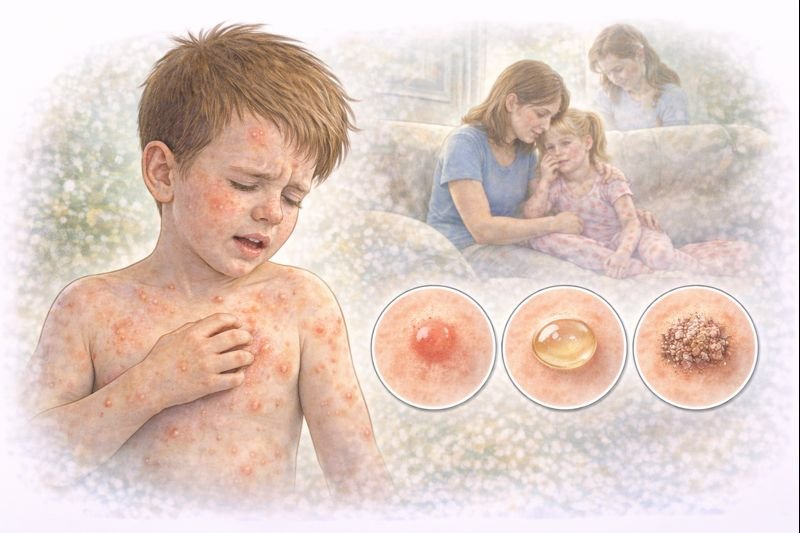 The condition typically begins with:
-
Mild fever
-
Tiredness or irritability
-
Itchy red spots that become fluid-filled blisters
After several days, blisters form scabs that dry and fall off naturally. Some children develop only a few spots, while others may have hundreds covering the face, scalp, chest, back, arms, and legs.
How Chickenpox Spreads
Varicella spreads easily through:
-
Coughing
-
Sneezing
-
Direct contact with blister fluid
-
Shared surfaces or objects
Children are contagious 1–2 days before the rash appears and remain infectious until all blisters have crusted (typically 5–6 days after rash onset). Because of this, most children should remain home from school or daycare during this period.
Caring for a Child with Chickenpox
Chickenpox often resolves on its own within 1–2 weeks. Supportive care may include:
-
Hydration: small frequent sips of fluids
-
Fever relief: acetaminophen as directed (avoid ASA in children)
-
Itch relief: cool baths, calamine, or physician-recommended anti-itch products
-
Skin protection: encourage gentle scratching prevention to reduce infection risk
There is no specific antiviral treatment for most children with mild infection.
When to Contact a Healthcare Provider
While chickenpox is usually mild, medical attention is recommended if:
-
Breathing difficulty or chest pain develops
-
Blisters appear infected (warm, red, swollen, or pus-filled)
-
Fever is prolonged or returns after improving
-
The child seems unusually unwell or very drowsy
-
Symptoms occur in infants, teens, or children with weakened immune systems
Chickenpox in Adults
Adults can still get chickenpox if they were never infected or vaccinated. Illness tends to be more severe and carries a higher risk of complications. Adults with chickenpox should avoid work and seek care promptly—antiviral medication may be recommended if started early.
Prevention in Canada
Many Canadian children are vaccinated against chickenpox as part of routine immunization. Vaccination helps reduce spread and lowers the likelihood of severe disease.
First Aid & Safety Context
While chickenpox itself is not a first aid emergency, parents, caregivers, and workplace daycare staff benefit from knowing when symptoms warrant medical attention and how to prevent unnecessary spread. Courses in first aid and CPR/AED training help Canadians recognize when a child’s symptoms may require urgent care or emergency assistance.
Educational Disclaimer
This article is for general learning only and does not replace medical assessment, diagnosis, or treatment. If you have concerns about chickenpox or complications, consult a qualified healthcare professional or seek urgent care if necessary.
About The Author

Mark Kascha
Certified First Aid Instructor Trainer with 30+ years of real-world experience, including lifeguarding, workplace emergency response, and first aid program development across Canada. Has worked with WorkSafeBC, WSIB, and Manitoba Health.
👉 [View full credentials]🔗 View LinkedIn Profile
Last reviewed: March 2026