
Understanding Angioedema
Angioedema is a condition that causes sudden swelling beneath the skin, and sometimes on the skin’s surface as well. The swelling often affects areas such as the face, lips, eyes, hands, feet, and limbs. In some cases, angioedema occurs alongside hives, while in others it appears on its own. Because swelling can occasionally involve the throat or airway, awareness and early recognition are important parts of first aid education.
First Aid & Workplace Relevance in Canada
In Canadian workplaces and public settings, angioedema may appear unexpectedly after exposure to allergens, environmental triggers, or stress. First aid awareness helps coworkers recognize swelling early, encourage calm monitoring, and seek additional help if breathing or swallowing becomes difficult. A supportive response can help reduce anxiety and prevent complications.
A Short Realistic Scenario
During a late summer workday, an employee notices swelling around their lips and eyelids after spending time outdoors. A colleague trained in first aid awareness suggests moving indoors, avoiding further exposure, and monitoring breathing. The swelling remains mild, and the employee later follows up with a healthcare professional to better understand potential triggers.
Causes of Angioedema
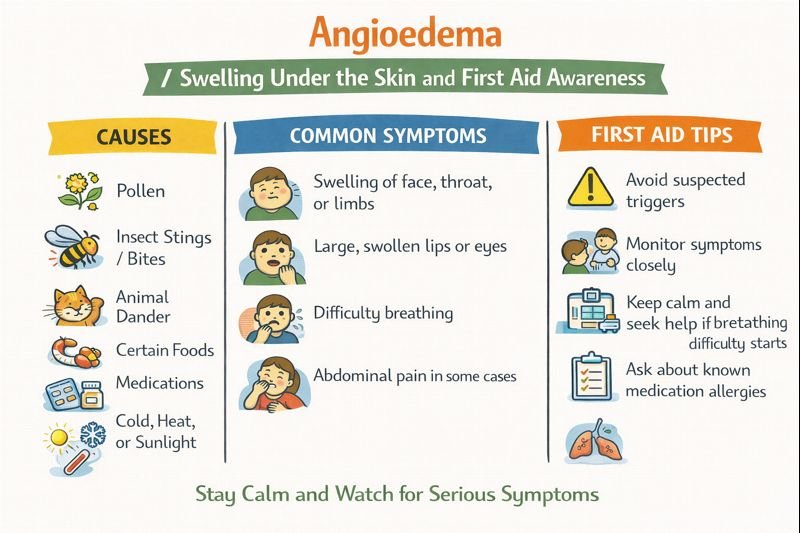
Angioedema is often linked to allergic or sensitivity reactions, though the exact cause is not always clear. Potential triggers vary widely between individuals.
 Common Triggers
-
Pollen
-
Insect bites or stings
-
Animal dander
-
Certain foods
-
Medications
-
Exposure to cold, heat, or sunlight
-
Physical pressure or stress in some cases
For many people, no single trigger can be clearly identified.
Who May Be at Risk
Angioedema can occur:
-
Alongside allergies or autoimmune conditions
-
After certain infections
-
In people with a family history of the condition
Hereditary Angioedema
When angioedema runs in families, it is known as hereditary angioedema (HAE). This form is linked to changes in a protein involved in controlling swelling in the body. Hereditary angioedema differs from allergy-related angioedema in its triggers, symptoms, and management.
Common Symptoms
The main feature of angioedema is swelling beneath the skin. It may:
-
Appear suddenly
-
Affect one area or several areas
-
Develop with or without hives
Commonly affected areas include:
-
Lips and mouth
-
Eyelids and eyes
-
Hands and feet
-
Arms and legs
-
Throat or tongue
Other Possible Symptoms
Depending on severity and cause, additional symptoms may include:
-
Swelling inside the mouth
-
Difficulty breathing or swallowing
-
Abdominal cramping or discomfort
-
A feeling of tightness in affected areas
In hereditary angioedema, swelling may also affect the airway or digestive tract.
First Aid Awareness and General Management
For mild swelling without breathing difficulty:
-
Encourage the person to remain calm and avoid suspected triggers.
-
Monitor symptoms closely.
-
Avoid pressure or friction on swollen areas.
If breathing, swallowing, or speech is affected, this is considered a medical emergency and urgent help is required. First aid awareness focuses on recognizing these warning signs early and acting promptly.
How Angioedema Is Assessed
Assessment may include:
-
Reviewing recent exposures or triggers
-
Observing swelling patterns
-
Listening to breathing sounds if the throat is involved
When hereditary angioedema is suspected, specific blood tests may be used to evaluate certain proteins involved in swelling control.
Prevention and Workplace Considerations
-
Encourage awareness of personal triggers where known
-
Support fragrance-free or allergen-aware workplace policies when possible
-
Promote early reporting of facial or throat swelling
-
Avoid sharing food when allergies are known
-
Include allergic reaction awareness in workplace first aid training
Frequently Asked Questions
Is angioedema the same as hives?
No. Angioedema affects deeper layers of the skin, while hives appear on the surface. They can occur together or separately.
Can angioedema happen without allergies?
Yes. Some forms, including hereditary angioedema, are not caused by allergic reactions.
Why is throat swelling concerning?
Swelling in the throat can affect breathing, which is why it requires immediate attention.
Does angioedema always itch?
Not always. Swelling may feel tight or uncomfortable without itching.
How can coworkers help?
By staying calm, monitoring symptoms, and seeking urgent help if breathing or swallowing becomes difficult.
Educational Note
This information is provided for general public education and first aid awareness. Angioedema can vary in cause and severity, and understanding early warning signs supports calm, informed responses in everyday situations.
About The Author

Mark Kascha
Certified First Aid Instructor Trainer with 30+ years of real-world experience, including lifeguarding, workplace emergency response, and first aid program development across Canada. Has worked with WorkSafeBC, WSIB, and Manitoba Health.
👉 [View full credentials]🔗 View LinkedIn Profile
Last reviewed: March 2026