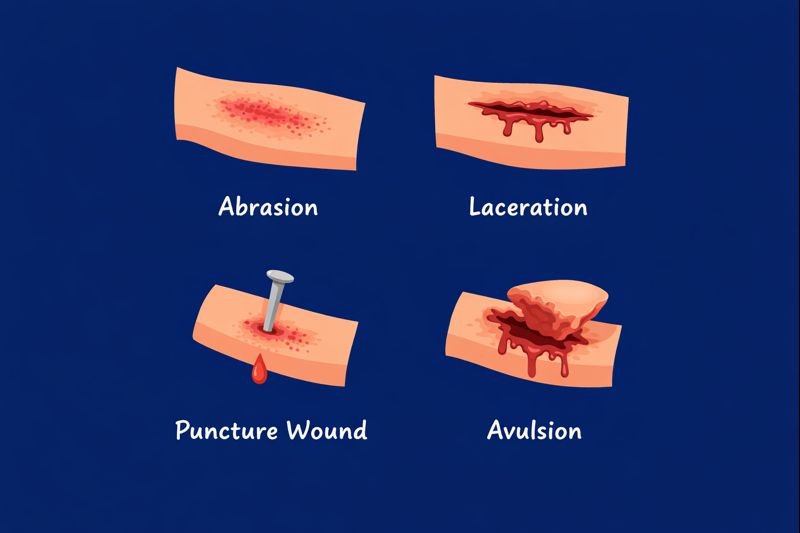
 A wound is an injury that disrupts the skin or underlying tissues. Wounds may range from mild surface scrapes to more severe injuries where tissue is torn or removed.
First Aid & Workplace Relevance (Canada)
Wounds are among the most common injuries in Canadian workplaces, childcare settings, and community environments. Awareness of wound types can help workers, caregivers, and first aid responders recognize when a situation is mild and manageable versus when medical care is appropriate. Many companies in Canada include basic wound care awareness in Occupational Health and Safety training.
Scenario (Mild & Realistic)
During outdoor break time at a warehouse, an employee slipped on loose gravel and scraped their forearm. A co-worker helped rinse the area, added a simple adhesive bandage, and the employee returned to lighter duties for the rest of the shift without further concerns.
Abrasions
Abrasions—often called scrapes—occur when the outer skin layer rubs against a rough surface. These injuries are typically shallow and may feel sore or sting. Cleaning the affected area helps remove debris and lowers the chance of irritation or infection. As the body heals, a dry scab may form and later fall away naturally.
Lacerations
Lacerations are cuts produced by sharp objects such as a knife, tool, or piece of glass. Lacerations can vary from surface-level cuts to deeper injuries that pass through multiple layers of skin. Deeper lacerations can bleed more heavily and may require medical assessment to determine closure options and reduce infection risk.
Puncture Wounds
A puncture wound is caused by a pointed object such as a nail, needle, tooth, or piece of metal. These wounds may extend deep into tissue while leaving only a small opening at the surface. Because punctures may trap debris and may not bleed much, they can carry a higher risk of infection. Medical assessment may be recommended if foreign material is present, if the wound is deep, or if there are concerns due to the source of the injury.
Avulsions
Avulsions occur when skin or tissue is torn away from the body. More severe avulsions may involve removal of a body part (amputation). These injuries can bleed significantly and usually require urgent medical care. Pain and functional limitations may accompany avulsion injuries due to the extent of tissue involvement.
Prevention & Workplace Considerations
Workplace strategies that can reduce wound risk include:
-
Wearing appropriate personal protective equipment (e.g., gloves suited for the task)
-
Good housekeeping to reduce hazards such as loose debris or sharp edges
-
Safe tool handling and storage
-
Regular maintenance of machinery and cutting tools
-
Training in hazard recognition and first aid awareness
FAQ (Educational)
What is the difference between an abrasion and a laceration?
Abrasions remove only the outer skin layer and are usually shallow, while lacerations are cuts that can extend deeper into the tissue.
Why do puncture wounds have a higher risk of infection?
Punctures can introduce debris and bacteria deep into the skin while producing limited bleeding, which makes it harder for the body to naturally flush the area.
Are all lacerations considered emergencies?
Not necessarily. Some are minor, while deeper or gaping lacerations may require medical closure to help protect the tissue and reduce infection risk.
What makes avulsion injuries more serious?
Avulsions involve tearing tissue from the body, which can cause significant bleeding and functional limitations. Medical assessment is typically required.
Educational Note
This article supports general first aid learning and workplace safety awareness. Wound severity varies, and individuals may seek health assessment depending on symptoms, depth of injury, and personal concern.
About The Author

Mark Kascha
Certified First Aid Instructor Trainer with 30+ years of real-world experience, including lifeguarding, workplace emergency response, and first aid program development across Canada. Has worked with WorkSafeBC, WSIB, and Manitoba Health.
👉 [View full credentials]🔗 View LinkedIn Profile
Last reviewed: March 2026