
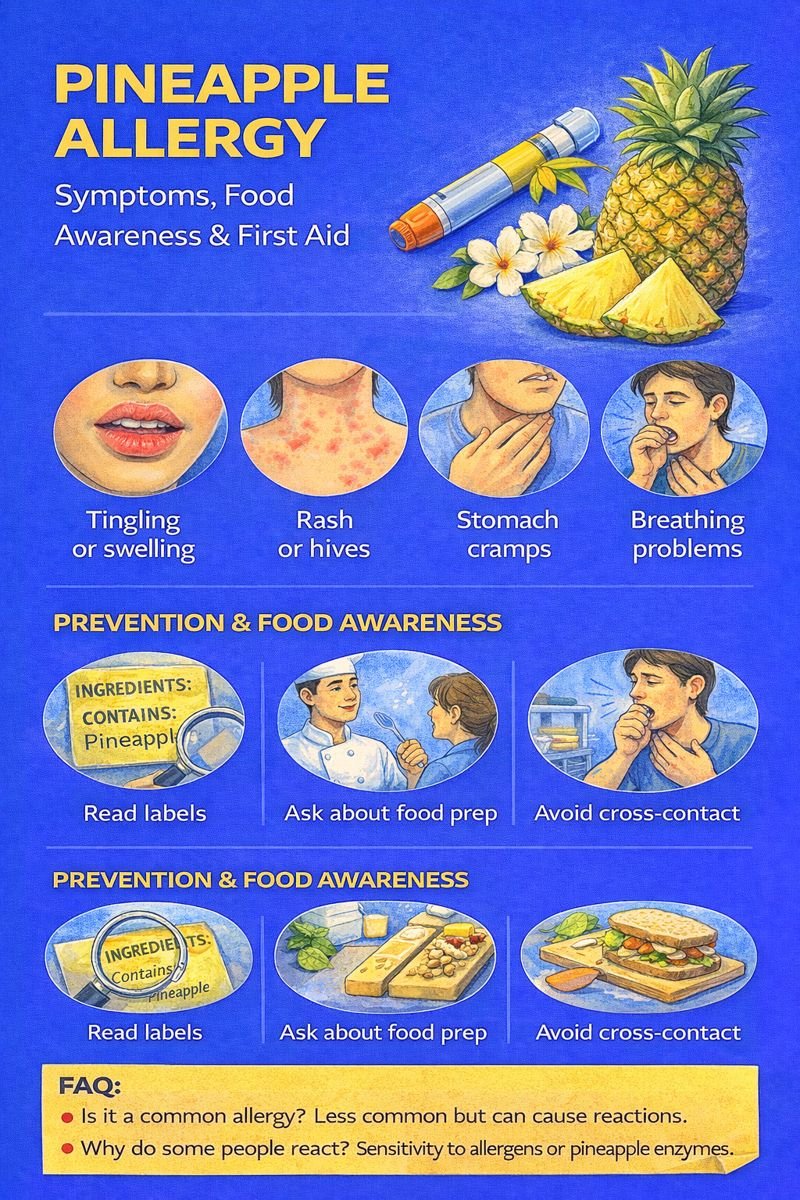
 Some individuals experience allergic reactions when eating pineapple. Like other food allergies, symptoms can vary from mild to more significant. Although pineapple is less commonly discussed than nuts or seafood, it can still trigger noticeable reactions in sensitive people.
Public & workplace relevance (Canada)
Food allergies matter in households, restaurants, cafeterias, schools, and workplace lunchrooms. Good communication around food ingredients and sensitivity awareness supports safety and reduces uncertainty for those who are affected.
Scenario story
During a summer gathering, Chloe ate a fruit salad containing pineapple. Within minutes she felt a tingling sensation on her lips and mild itching in her mouth. She stopped eating the salad, drank some water, and the symptoms eased. Later, she mentioned the reaction to her healthcare provider during a routine visit.
Common symptoms of pineapple allergy
Symptoms may involve the skin, mouth, or digestive system. People may experience:
-
Tingling or itching in the mouth or lips
-
Mild swelling around the lips or face
-
Patchy red skin or hives
-
Stomach discomfort or cramping
-
Nausea or vomiting
Symptoms may appear quickly after eating pineapple or may take longer in some individuals.
Skin reactions
Skin irritation is one of the most common allergy-related symptoms. Red, itchy patches or hives may appear near the mouth or on other areas of skin. These rashes can last from several hours to a few days.
Digestive system reactions
The digestive system may respond with:
-
Stomach cramps
-
Nausea
-
Vomiting
-
Loose stools
Persistent or severe gastrointestinal symptoms should be assessed by a healthcare professional, particularly in young children or older adults.
Breathing-related reactions
Some individuals may experience swelling, tightness, or discomfort involving the throat or airway. Breathing difficulty, widespread hives, or rapid progression of symptoms require emergency care, as they may indicate a significant allergic reaction such as anaphylaxis.
Anaphylaxis awareness
Anaphylaxis is a severe allergic reaction that involves multiple body systems. Food allergies are a common trigger. Symptoms may include:
-
Sudden swelling of the lips, face, or throat
-
Breathing difficulty or wheezing
-
Dizziness or faintness
-
Widespread skin rash or hives
Emergency medical care is required for suspected anaphylaxis.
Prevention & food awareness
Individuals with confirmed food allergies may:
-
Read ingredient labels
-
Ask about food preparation methods
-
Communicate dietary needs in social or workplace settings
Cross-contact in food service environments can occur if utensils or cutting boards are shared during preparation.
FAQ
Is pineapple a common food allergen?
Less common than nuts or seafood, but still reported in allergy clinics and among people with food sensitivities.
Can pineapple allergy start in adulthood?
Yes. Some food allergies begin later in life, even after years of eating a food without issue.
Why do some people feel tingling from pineapple?
This may relate to allergens or to the fruit’s natural enzymes. Reactions vary from person to person.
How long do symptoms last?
Mild reactions may resolve within hours. Persistent or worsening symptoms should be medically evaluated.
Should a person avoid pineapple if they suspect an allergy?
Avoidance is often recommended until a healthcare provider assesses the situation and confirms the sensitivity.
Educational note
This resource supports food allergy awareness for home and workplace settings and does not replace diagnosis, testing, or individualized medical guidance.
About The Author

Mark Kascha
Certified First Aid Instructor Trainer with 30+ years of real-world experience, including lifeguarding, workplace emergency response, and first aid program development across Canada. Has worked with WorkSafeBC, WSIB, and Manitoba Health.
👉 [View full credentials]🔗 View LinkedIn Profile
Last reviewed: March 2026