 Oysters are a type of shellfish enjoyed cooked or raw in many cuisines. Shellfish allergies—including reactions to shrimp, crab, lobster, clams, and oysters—are among the more common food allergies worldwide. Although reactions vary widely, awareness is important for homes, schools, restaurants, and workplaces where food is shared.
Relevance in Schools, Homes & Workplaces (Canada)
Food allergies affect many Canadians and can influence meal planning, potlucks, cafeteria offerings, and food handling. People with allergies often rely on accurate labelling, communication, and avoidance strategies to prevent accidental exposure.
Scenario: Mild, Realistic & Non-Dramatic
At a workplace lunch event, an employee tried a seafood pasta dish and later noticed itching around the mouth and mild stomach discomfort. They checked the ingredient list, realized oysters were included, and later spoke with a healthcare provider for evaluation and guidance about food allergies.
What Is a Food Allergy? (Awareness)
A food allergy occurs when the immune system reacts to proteins in a particular food. Shellfish proteins are recognized as potential allergens, and reactions can range from mild to more intense. Reactions may also vary from person to person and from exposure to exposure.
Possible Symptoms (Awareness Only)
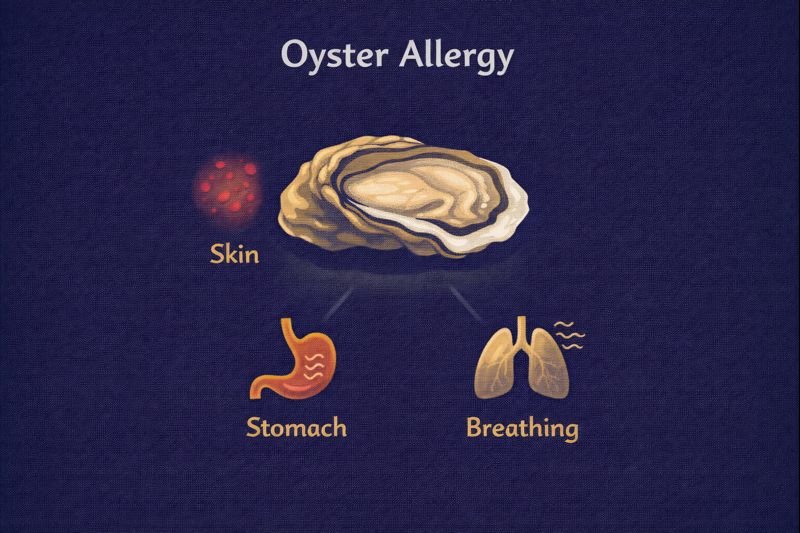
Symptoms of oyster allergy may involve one or more body systems.
Skin-Related Symptoms
May include:
-
Redness or itching
-
Raised bumps (hives)
-
Puffy or swollen areas around the lips, face, or hands
Gastrointestinal Symptoms
May include:
-
Nausea
-
Vomiting
-
Stomach discomfort
-
Diarrhea
These may appear shortly after eating or handling oysters.
Respiratory Symptoms
Some individuals may experience:
-
Congestion or sneezing
-
Coughing or wheezing
-
Throat tightness or breathing difficulty
Respiratory symptoms warrant prompt medical attention as they may indicate a more serious reaction.
Severe Reactions
Some food allergies can lead to anaphylaxis, a serious and potentially life-threatening reaction that can develop quickly. Symptoms may include difficulty breathing, swelling of the throat or tongue, dizziness, or loss of consciousness. Individuals with known severe allergies may carry emergency medications prescribed by a healthcare professional.
Other Considerations
Food allergies can also affect:
-
Eyes (itching or watering)
-
Nose (sneezing or congestion)
-
Overall energy level (fatigue during or after reaction)
Severity varies and may change over time. Only healthcare professionals can assess, test, and confirm food allergies.
FAQ
1. Are oyster allergies common?
Shellfish allergies are relatively common. Some people react to multiple shellfish, while others react to only one type.
2. Can someone react to handling oysters without eating them?
Some individuals experience symptoms when touching or inhaling vapours during cooking.
3. Do reactions always happen immediately?
Most reactions occur quickly after eating, but timing can vary.
4. Do children outgrow shellfish allergies?
Shellfish allergy is less likely to be outgrown compared to some childhood food allergies, but healthcare assessment is needed to know for sure.
5. Can labels help prevent exposure?
Yes. Label reading, asking questions at restaurants, and awareness in shared spaces help reduce accidental exposure.
Educational Note
This article provides public education about oyster allergy awareness and symptom recognition. It does not diagnose or recommend treatment. Healthcare professionals determine appropriate evaluation and management for food allergies.
About The Author

Mark Kascha
Certified First Aid Instructor Trainer with 30+ years of real-world experience, including lifeguarding, workplace emergency response, and first aid program development across Canada. Has worked with WorkSafeBC, WSIB, and Manitoba Health.
👉 [View full credentials]🔗 View LinkedIn Profile
Last reviewed: March 2026