 As people age, the body undergoes natural changes in the joints and spine. One possible change is the development of bone spurs—small bony projections that form along the edges of bones. Many bone spurs cause no symptoms and may go unnoticed. However, when they press on nearby nerves, muscles, or structures in the neck, they can contribute to discomfort or neurological symptoms.
Relevance in Aging, Workplace & Canadian Context
Neck discomfort and reduced mobility are common concerns for older adults and for people in occupations involving repetitive head movement, desk work, lifting, or prolonged posture. Awareness of spine-related symptoms can help individuals decide when to seek healthcare assessment, rather than ignoring persistent issues or assuming they are “just aging.”
Scenario: Mild & Realistic
A 62-year-old office worker noticed increasing stiffness in the neck over several months, especially after long days at a computer. Eventually, they developed tingling in one arm during heavy lifting at home. A physiotherapist recommended medical imaging, which identified age-related bone spurs contributing to nerve irritation. After exercises and posture adjustments, symptoms improved.
How Bone Spurs Form in the Cervical Spine
Bone spurs in the neck often develop due to:
-
Natural aging and joint wear
-
Degenerative disc changes
-
Long-term posture habits
-
Previous injuries or arthritis
-
Repetitive mechanical stress
These bony changes are part of a broader category of musculoskeletal aging and are not always harmful.
Possible Symptoms (Awareness Only)
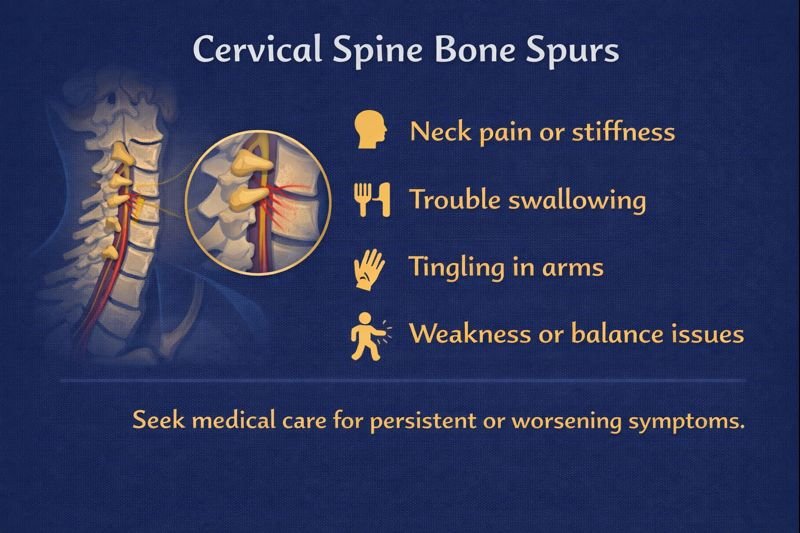
Symptoms vary depending on whether bone spurs press against nerves, soft tissues, or the esophagus. Not everyone with bone spurs has symptoms.
Neck Pain or Stiffness
-
Dull, localized pain
-
Aggravation during standing, walking, or certain motions
-
Pain may radiate toward the shoulder or upper back
-
Some people also report tension headaches
Difficulty Swallowing (Dysphagia)
If bone spurs press against the esophagus, swallowing may feel uncomfortable or restricted.
Breathing or Throat Sensations
Pressure on nearby structures may create a sensation of tightness in the throat or cause discomfort when breathing.
Arm Symptoms
Because nerves supplying the arms travel through the cervical spine, pressure or irritation may lead to:
-
Tingling or numbness
-
“Electric” or radiating pain
-
Reduced grip strength or coordination
-
Limited range of motion
Spinal Canal Narrowing (Spinal Stenosis)
When bone spurs contribute to narrowing of the spinal canal, symptoms may involve:
-
Leg or arm weakness
-
Numbness or reduced sensation
-
Coordination or balance changes
Symptom severity can vary and may progress slowly over time.
Who May Be at Higher Risk?
-
Older adults (age-related spine changes)
-
Individuals with arthritis or degenerative disc disease
-
People in jobs requiring repetitive neck posture (computers, trades, driving)
-
Athletes who load the neck or upper spine
-
Individuals with previous neck injuries
Assessment & Management (Awareness)
Healthcare professionals may use:
-
Clinical assessment
-
Imaging (when appropriate)
-
Physical therapy or exercise programs
-
Activity modifications
-
Posture or ergonomic strategies
Treatment decisions are individualized and depend on symptoms and function.
When to Seek Medical Assessment
Assessment may be appropriate when:
-
Symptoms persist or interfere with daily activities
-
Pain radiates into the shoulder, arm, or upper back
-
Numbness, tingling, or weakness develops
-
Swallowing or breathing feels restricted
-
Balance or coordination changes occur
These symptoms may have multiple possible causes—bone spurs are just one.
Prevention & Workplace/Sport Considerations
Strategies that may support spine health include:
-
Ergonomic desk setups
-
Breaks from prolonged sitting or driving
-
Strength and flexibility exercises guided by professionals
-
Safe lifting techniques in workplaces
-
Early reporting of workplace discomfort
-
Helmet use and technique coaching in contact sports
FAQ
1. Are bone spurs always painful?
No. Many bone spurs are symptomless and found incidentally during imaging.
2. Do bone spurs mean someone has arthritis?
Bone spurs can accompany arthritis, but not everyone with bone spurs has symptomatic arthritis.
3. Can bone spurs pinch nerves?
Yes. Nerve compression can cause radiating pain, tingling, or weakness in the arms.
4. Are these symptoms always caused by bone spurs?
No. Multiple neck and neurological conditions produce overlapping symptoms. Healthcare assessment distinguishes between them.
5. Can lifestyle or ergonomics make symptoms better?
For some people, posture, strengthening, or ergonomic adjustments improve comfort, guided by professionals.
Educational Note
This article supports public education on cervical spine bone spurs and symptom awareness. It does not diagnose, treat, or recommend specific medical interventions. Healthcare professionals determine appropriate evaluation and management.
About The Author

Mark Kascha
Certified First Aid Instructor Trainer with 30+ years of real-world experience, including lifeguarding, workplace emergency response, and first aid program development across Canada. Has worked with WorkSafeBC, WSIB, and Manitoba Health.
👉 [View full credentials]🔗 View LinkedIn Profile
Last reviewed: March 2026