 What Is Neck Arthritis?
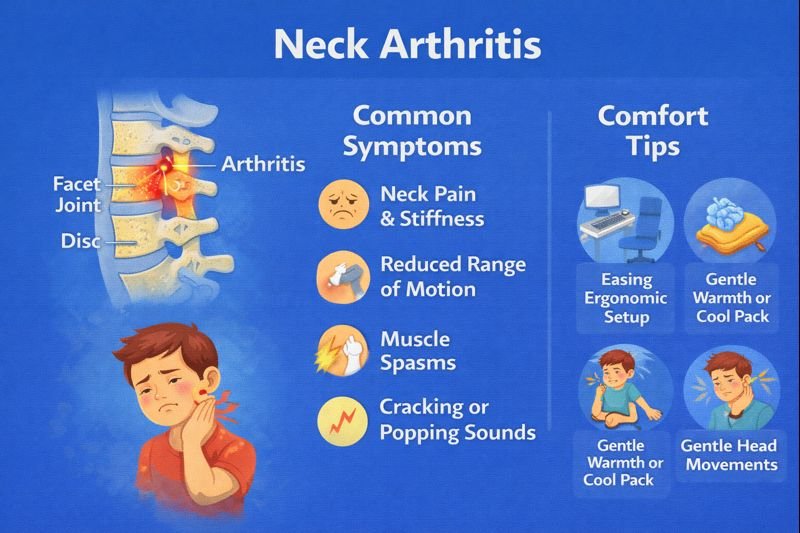
Neck arthritis—often called cervical arthritis—is a wear-and-tear condition that affects the small joints and discs in the neck portion of the spine. Over time, the smooth cartilage that helps joints glide comfortably can thin, leading to stiffness, soreness, and reduced movement. Because the neck supports the head and allows turning, bending, and looking up or down, discomfort in this area can noticeably affect daily routines.
Why Neck Arthritis Awareness Matters in Canadian Workplaces and Communities
In Canada, many people spend long hours at desks, on devices, or performing repetitive tasks. First aid and workplace awareness focus on recognizing early discomfort, supporting posture, and encouraging safe movement habits rather than diagnosing a medical condition. Awareness can help individuals adjust activities and seek appropriate follow-up if symptoms begin to limit comfort or safety.
A Simple, Realistic Scenario
An office employee notices increasing neck stiffness after extended computer work. Remembering basic ergonomic awareness from a workplace safety session, they adjust their chair height, take regular stretch breaks, and inform their supervisor that they may need a more supportive workstation setup.
Common Signs and Symptoms
Neck arthritis symptoms often develop gradually and may vary in intensity:
-
Ongoing neck pain or tenderness
-
Stiffness when turning the head side to side
-
Reduced range of motion or “tight” feeling
-
Occasional muscle spasms in the neck, shoulders, or upper back
-
Popping or grinding sounds during movement (sometimes called crepitus)
-
Headaches or upper-back discomfort in some individuals
What’s Happening in the Neck (Simple Anatomy)
The neck contains stacked bones called vertebrae, separated by cushioning discs and connected by small facet joints. These structures allow smooth motion while supporting the head’s weight. With time and repeated use, joint surfaces can become rougher and discs may lose some flexibility, which contributes to stiffness and soreness during movement.
Reduced Range of Motion
As joint surfaces change and surrounding tissues tighten, turning or tilting the head may feel restricted. Everyday actions—checking blind spots while driving, looking down at a phone, or reaching overhead—can feel less comfortable if mobility decreases.
Muscle Spasms and Nerve Irritation
When neck joints are irritated, nearby muscles may tense in response. Some people notice brief spasms or tightness in the neck, shoulders, or upper arms. This tension is often the body’s way of protecting sensitive areas, but it can add to discomfort if it persists.
Popping or Cracking Sounds
Occasional clicking or cracking noises can occur when joint surfaces move. These sounds are common in many joints and are not always painful. However, if they are accompanied by soreness or limited motion, it’s helpful to monitor changes.
First Aid Awareness and Comfort-Focused Strategies
From a first aid and public-education standpoint, the emphasis is on comfort, posture, and gentle movement, not medical treatment:
-
Take regular posture breaks during desk or device use
-
Use supportive seating and keep screens at eye level
-
Apply gentle warmth or a cool pack (wrapped in cloth) for short periods if soothing
-
Perform light, comfortable range-of-motion movements—never forceful stretching
-
Monitor symptoms and seek further guidance if discomfort increases or interferes with daily tasks
Prevention and Workplace Considerations
-
Set up ergonomic workstations (chair height, monitor level, keyboard position)
-
Rotate tasks to reduce repetitive strain
-
Schedule micro-breaks for stretching and posture resets
-
Maintain overall physical activity and flexibility
-
Use hands-free options for phones when possible
These habits can help support neck comfort in offices, vehicles, and physically demanding roles across Canada.
Frequently Asked Questions About Neck Arthritis
Is neck stiffness always arthritis?
No. Temporary stiffness can also result from muscle strain, poor posture, or sleeping position.
Why does movement sometimes cause cracking sounds?
Joint surfaces and surrounding tissues can create small sounds during motion; this is common in many joints.
Can workstation setup affect neck comfort?
Yes. Screen height, chair support, and keyboard placement all influence posture and strain.
Should stretching be forceful to improve motion?
No. Movements should be gentle and within a comfortable range.
When should persistent neck discomfort be checked further?
If pain or stiffness continues, worsens, or affects daily safety—such as driving or lifting—further assessment is advisable.
Educational Note
This article is intended for general public and workplace education in Canada. It supports awareness of musculoskeletal comfort and first aid recognition but does not replace evaluation or care from qualified healthcare professionals.
About The Author

Mark Kascha
Certified First Aid Instructor Trainer with 30+ years of real-world experience, including lifeguarding, workplace emergency response, and first aid program development across Canada. Has worked with WorkSafeBC, WSIB, and Manitoba Health.
👉 [View full credentials]🔗 View LinkedIn Profile
Last reviewed: March 2026