
What Are Citrus or Fruit Sensitivities?
Some people experience discomfort after eating or handling fruits that contain natural acids—such as oranges, lemons, limes, pineapples, melons, or plums. These reactions can be due to food sensitivity (intolerance) or a true food allergy. Sensitivities usually involve digestive or skin irritation, while allergies involve the immune system and can sometimes progress quickly. Symptoms may appear right away or several hours later.
Why Awareness Matters in Canadian Homes, Schools, and Workplaces
Across Canada, citrus fruits and fruit-based ingredients appear in lunches, snacks, beverages, and workplace events. First aid awareness focuses on recognizing early signs, avoiding known triggers, and responding calmly to changes, rather than diagnosing the condition. Early recognition helps reduce discomfort and limits the chance of more serious reactions.
A Simple, Realistic Scenario
At a team potluck, an employee notices tingling on their lips shortly after tasting a fruit salad with citrus dressing. Remembering basic first aid awareness, they stop eating the dish, drink water, and inform the organizer about their sensitivity so labels can be added next time.
Common Signs and Symptoms
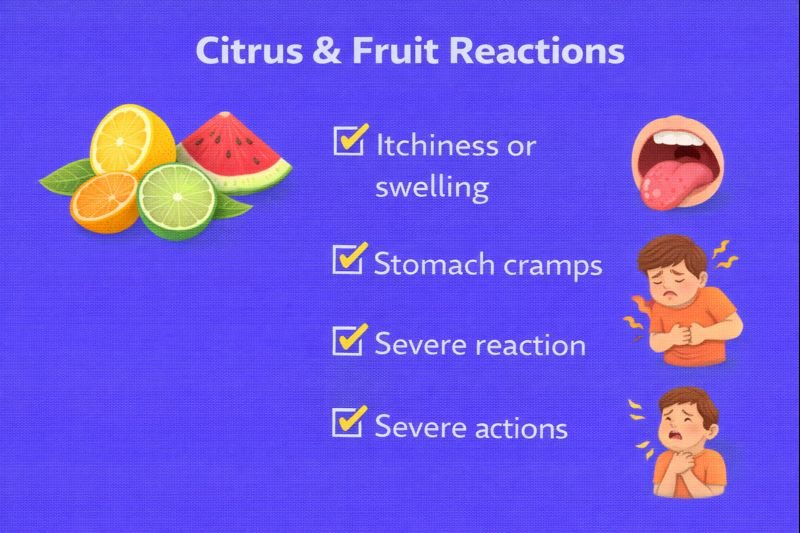
Itchiness or Tingling
-
Often begins around the lips, tongue, or throat
-
May also involve the ears or roof of the mouth
-
Can feel like mild prickling or warmth
Swelling or Hives
-
Puffiness of the lips, eyelids, or face
-
Raised, red, itchy bumps on the skin (hives)
-
Tight feeling in the throat or difficulty swallowing in more intense reactions
Digestive Discomfort
-
Stomach cramps or bloating
-
Nausea, vomiting, or diarrhea
-
Symptoms may be delayed and depend on the amount consumed
Severe Allergic Reactions (Anaphylaxis)
A small number of people may experience a rapid, severe allergic reaction. Warning signs can include:
-
Difficulty breathing or wheezing
-
Dizziness or faintness
-
Rapid heartbeat sensations
-
Widespread swelling or intense hives
-
Sudden weakness or confusion
These symptoms require immediate emergency assistance. Quick recognition and action are critical.
First Aid Awareness and General Comfort Measures
 From a public-education perspective, the emphasis is on avoidance, observation, and communication:
-
Stop eating the suspected food immediately
-
Rinse the mouth and drink water if irritation is mild
-
Check ingredient labels at gatherings or restaurants
-
Inform coworkers, teachers, or event organizers about known sensitivities
-
Keep personal snacks available if triggers are common
-
Monitor for escalating symptoms and seek urgent help if breathing or swallowing becomes difficult
First aid awareness supports early recognition and calm response rather than medical diagnosis.
Prevention and Everyday Considerations in Canada
-
Label shared foods at workplace or school events
-
Wash hands and utensils after handling citrus fruits
-
Use separate cutting boards for fruit preparation when sensitivities are known
-
Encourage open communication about food triggers in group settings
-
Maintain balanced hydration and nutrition to support general well-being
Frequently Asked Questions About Citrus and Fruit Reactions
Is a mild lip tingle always an allergy?
Not necessarily. It can also be a temporary sensitivity, but recurring reactions should be monitored.
Why do symptoms sometimes appear later?
Digestive responses can be delayed and depend on quantity and individual sensitivity.
Can touching fruit cause irritation?
Yes. Some people notice skin redness or itching after handling acidic fruits.
Are all citrus fruits equally likely to cause reactions?
Sensitivity varies by person and by fruit type.
When should urgent help be sought?
If there is breathing difficulty, throat tightness, faintness, or rapid swelling, emergency assistance is needed immediately.
Educational Note
This article is intended for general public and workplace education in Canada. It supports awareness of food sensitivities and allergic reactions and promotes early recognition and safe response, but it does not replace evaluation or care from qualified healthcare professionals.
About The Author

Mark Kascha
Certified First Aid Instructor Trainer with 30+ years of real-world experience, including lifeguarding, workplace emergency response, and first aid program development across Canada. Has worked with WorkSafeBC, WSIB, and Manitoba Health.
👉 [View full credentials]🔗 View LinkedIn Profile
Last reviewed: March 2026