 What Are Transparent Film Dressings?
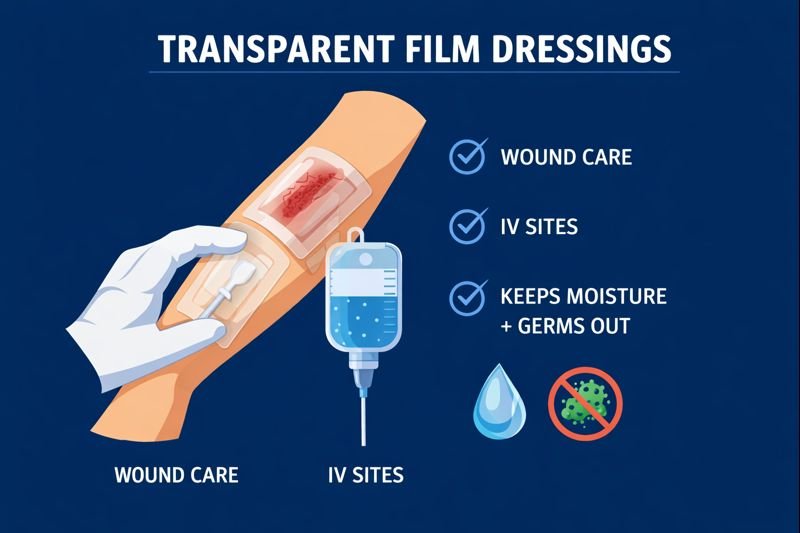
Transparent film dressings (commonly known by brands like Tegaderm) are thin, flexible dressings used to protect wounds and cover IV sites. They create a barrier that helps keep out water and microorganisms while maintaining a moist environment that supports normal healing. Because they are clear, healthcare teams can observe the site without removing the dressing.
Why This Matters for First Aid & Workplaces
These dressings are most common in healthcare settings, but Canadians may encounter them after medical procedures or when managing minor post-procedure dressings at home. Workplaces with on-site health services or occupational health programs may also use film dressings for IV access or wound protection under healthcare direction. Awareness of what these dressings do can help individuals understand follow-up instructions after healthcare visits.
Scenario: Mild & Realistic
A kitchen worker received a small burn on the forearm that was later assessed at a clinic. A transparent film dressing was applied so the staff nurse could monitor the healing area without removing the cover. The dressing also protected the wound from moisture during shifts and reduced irritation from clothing.
Features & Benefits
Transparent film dressings are valued for:
-
Barrier protection — impermeable to microorganisms and moisture
-
Flexibility — conforms to curved body areas
-
Visibility — allows viewing of the site without removal
-
Secure framing — structured edges help reduce wrinkling and improve placement
-
Comfort — low profile under clothing or equipment
These properties make them useful for wound care and infusion therapy sites.
Situations Where Transparent Film Dressings Are Used
Healthcare professionals may use them for:
-
IV catheter sites
-
Minor post-procedure wounds
-
Superficial abrasions or burns (after assessment)
-
Areas that need protection from moisture and friction
They are not intended for all wound types; deeper, infected, or heavily draining wounds require medical assessment and different dressing approaches.
General Considerations & Best Practices (Education-Focused)
Public first aid learning emphasizes that proper wound care involves matching dressing type to the situation. For transparent film dressings, healthcare guidance typically includes:
-
Cleaning and drying the skin before application
-
Avoiding placement over heavily draining or infected wounds unless supervised by a healthcare professional
-
Monitoring the site for changes in healing, drainage, redness, or discomfort
-
Replacing dressings according to medical instructions or product specifications
Healthcare providers sometimes use hair clipping (not shaving) to improve adhesion, and gloves are often worn to maintain cleanliness. Disposal of used dressings follows clinical protocols in healthcare settings.
When to Seek Healthcare Assessment
Individuals are encouraged to seek medical advice if:
-
Redness, irritation, or heat increases around the site
-
The wound enlarges or healing stalls
-
Drainage increases or becomes foul-smelling
-
Film dressings repeatedly detach or cannot stay in place
-
The dressing was applied for an IV site and care instructions are unclear
These signs help determine when professional care may be appropriate.
Safety & Time Limits
Transparent film dressings are not meant to remain indefinitely. Healthcare instructions may recommend changing them within a specific timeframe, including for IV catheter protection. Infected wounds should not be managed with film dressings without healthcare oversight.
Prevention & Workplace Considerations
-
Promote hand hygiene for wound care
-
Maintain appropriate first aid supplies for workplace risks
-
Understand that some dressings require healthcare selection and monitoring
-
Support return-to-work considerations when clothing, equipment, or moisture may affect wounds
FAQ — Transparent Film Dressings
1. Why do clinicians prefer clear dressings for IV sites?
The transparency allows ongoing observation without repeated removal, helping healthcare staff watch for irritation or displacement.
2. Do transparent dressings speed healing?
They help maintain a moist environment, which supports normal skin healing. Healing depends on wound type and overall health.
3. Can film dressings handle draining wounds?
Light drainage may be acceptable, but heavier drainage often requires different dressings and clinical assessment.
4. Why can’t they stay on indefinitely?
Extended wear increases the chance of skin irritation or moisture buildup. Healthcare instructions typically specify change intervals.
5. Are they safe for infected wounds?
Management of infected wounds should be directed by healthcare professionals who select appropriate dressings based on assessment.
Educational Note
This article supports public learning about wound care awareness and workplace safety. Wounds vary, and healthcare professionals can assess which dressings are appropriate for individual situations.
About The Author

Mark Kascha
Certified First Aid Instructor Trainer with 30+ years of real-world experience, including lifeguarding, workplace emergency response, and first aid program development across Canada. Has worked with WorkSafeBC, WSIB, and Manitoba Health.
👉 [View full credentials]🔗 View LinkedIn Profile
Last reviewed: March 2026