 Knee pain linked to gout, arthritis, injury or sport can disrupt daily living—from playing pickup hockey or soccer to performing physical work duties or simply walking comfortably. While there is no definitive medical proof that diet alone worsens knee pain, many Canadians report symptom flare-ups after eating certain foods. For individuals with workplace roles involving movement, standing or lifting, understanding triggers may help reduce discomfort and improve performance.
Before eliminating any major food groups, always speak with a healthcare professional or registered dietitian in Canada.
Possible Foods Linked to Knee Pain Flare-Ups
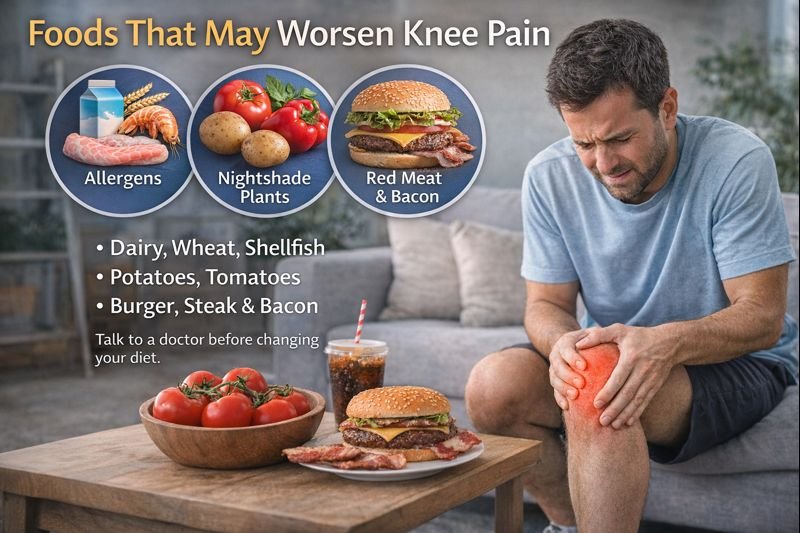
1. Food Allergens
Common food allergens may contribute to inflammation or joint discomfort in some individuals.
Common allergens include:
-
Wheat & gluten products
-
Cow’s milk & dairy
-
Soy
-
Fish & shellfish
-
Peanuts & tree nuts
If an allergic reaction occurs, symptoms may extend beyond joint pain and include:
-
Hives
-
Nasal symptoms
-
Digestive upset
-
Breathing difficulties
Those working in the food service & hospitality sector should be familiar with allergen recognition and emergency first aid response. Training such as Food Safety Certification or Workplace Standard First Aid & CPR teaches early symptom recognition and when to activate emergency care.
2. Nightshade Vegetables
Nightshades include:
-
Tomatoes
-
Potatoes
-
Peppers (bell and spicy)
-
Eggplant
Although nutrient-dense, some individuals with arthritis report increased joint stiffness or swelling after consuming nightshades.
Tobacco also belongs to the nightshade family, and smoking can further increase inflammation and pain—another reason to avoid it for joint health.
3. Animal Protein (Red Meat)
Red meat can contribute to inflammatory processes in some people, especially those with autoimmune disorders or gout. Certain cuts contain high purine levels, which may worsen gout flares.
Reducing red meat intake and substituting with:
-
Legumes
-
Tofu
-
Fish
-
Poultry
may assist in reducing inflammatory discomfort for some individuals.
Prevention & Management Tips
-
Keep a food diary to track symptom patterns
-
Modify serving sizes rather than fully eliminating foods
-
Stay hydrated (important for gout management)
-
Combine diet management with proper joint care
-
Stop activity and seek assessment if pain persists
Individuals participating in sport or physically demanding work may also benefit from Occupational First Aid or Sports First Aid knowledge. Proper assessment helps differentiate diet-triggered symptoms from injury-related knee pain.
When to Seek Medical Assessment in Canada
Consult a doctor, physiotherapist, or arthritis specialist if:
-
Pain persists more than a few days
-
Swelling or heat develops around the joint
-
Walking becomes difficult
-
Pain interrupts sleep or work duties
Persistent knee pain can also increase the risk of workplace injuries if untreated.
Related training Canadians often take:
➡ Standard First Aid & CPR – Level C
➡ Emergency First Aid & CPR – Level C
➡ Workplace First Aid (OHS Approved)
➡ Food Safety Certification (Provincial Approved)
Disclaimer
This content is for general informational purposes only. It is not a substitute for professional medical assessment, diagnosis or treatment. If knee pain is new, worsening, or accompanied by other symptoms, consult a licensed healthcare provider in Canada.
About The Author

Mark Kascha
Certified First Aid Instructor Trainer with 30+ years of real-world experience, including lifeguarding, workplace emergency response, and first aid program development across Canada. Has worked with WorkSafeBC, WSIB, and Manitoba Health.
👉 [View full credentials]🔗 View LinkedIn Profile
Last reviewed: March 2026