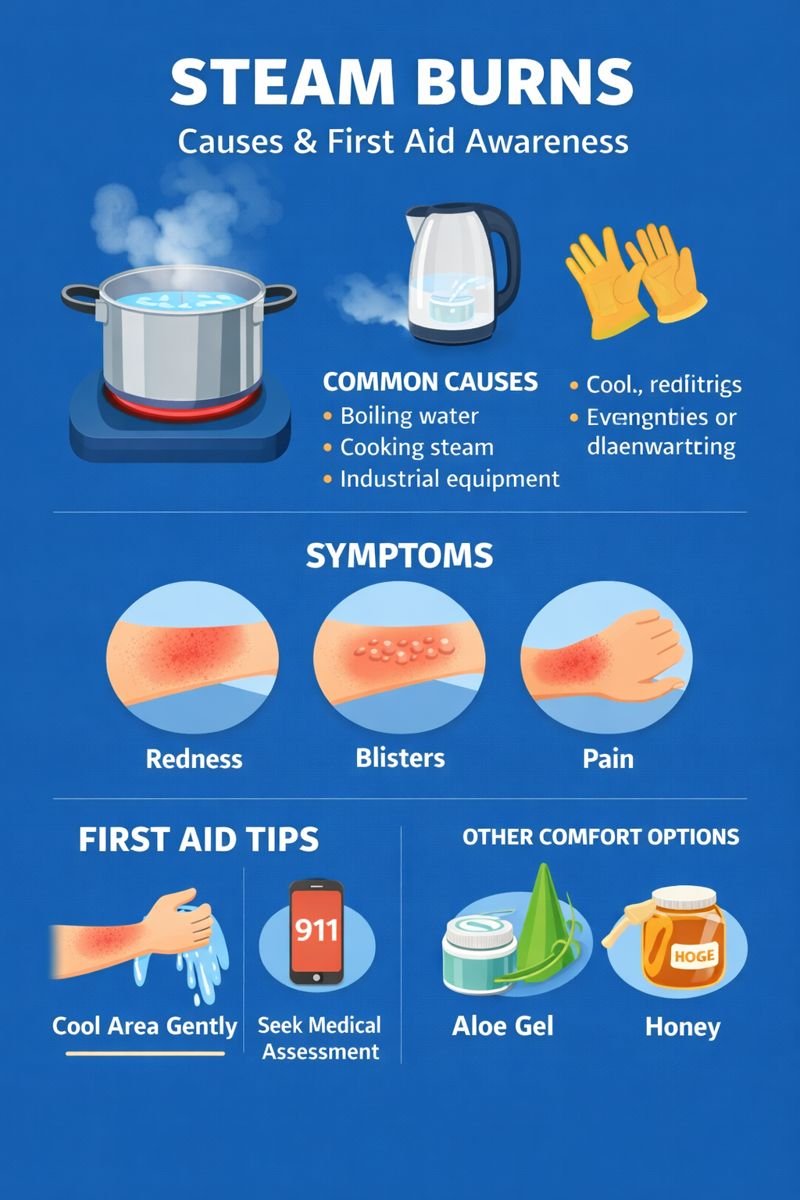
 A steam burn occurs when rising steam from boiling water, cooking equipment, kettles, or industrial processes makes contact with the skin. Steam transfers heat quickly and can cause discomfort, redness, or blistering depending on the exposure.
Workplace and first aid relevance (Canada)
Steam-related burns are common in kitchens, food service environments, canning operations, and certain industrial settings. Awareness of safe handling practices and early first aid measures can help reduce the likelihood of complications.
Scenario story
While preparing pasta at home, Jamie accidentally lifted a pot lid too quickly and hot steam hit the wrist and forearm. The skin turned red and sore. Jamie cooled the area under running tap water and kept the arm clean and elevated. The discomfort gradually eased, and Jamie later used oven mitts and pot lids angled away to avoid future steam exposure.
How steam burns happen
Steam burns often occur when:
-
Boiling water or cooking equipment releases steam
-
Lids are removed abruptly
-
Kettles, rice cookers, or steamers vent unexpectedly
-
Food service or industrial equipment uses pressurized steam
These burns are most common in kitchens but can also occur outdoors or in workplace settings where hot liquids or equipment are handled.
Severity and symptoms
Steam burns may vary in severity depending on duration of contact and temperature. Symptoms may include:
-
Redness
-
Warmth and irritation
-
Pain or tenderness
-
Blister formation in deeper partial-thickness burns
Deep burns may appear pale or waxy and may not be as painful if nerve endings are affected.
First aid awareness for steam burns
Initial steps focus on safety, severity assessment, and cooling the burned area:
-
Move away from the heat source
-
Cool the area gently with cool (not cold) running water
-
Avoid direct ice application, which may worsen tissue damage
-
Keep the burned area clean and protected
Burns that appear deep, cover a larger area, or involve blistering should be assessed by a healthcare professional or emergency services when appropriate.
Blister considerations
Blisters can increase infection risk if they break or are opened. If blisters develop:
-
Keep the area clean and avoid breaking or popping blisters
-
Protect with a clean, dry dressing if recommended by a trained provider
-
Seek medical assessment, especially if signs of infection or larger areas are affected
Home comfort measures (non-prescriptive)
Some people explore soothing options for minor superficial burns. Examples often discussed include cooling gels such as aloe and other household comfort measures. Evidence varies, and individuals with allergies, deeper burns, or concerns should seek advice from a regulated healthcare provider before applying products to damaged skin.
Prevention and workplace considerations
Good safety habits can reduce the frequency of steam burns:
-
Use oven mitts or heat-resistant gloves when lifting lids
-
Angle lids away to vent steam safely
-
Keep pot handles turned inward on stoves
-
Avoid overcrowding workspaces in kitchens
-
Provide burn risk training in food service and industrial settings
FAQ
Are steam burns different from flame burns?
Steam burns can transfer heat rapidly and may cause partial-thickness injuries even without visible flame contact.
How do I know if a steam burn is serious?
Deep or widespread burns, burns with blisters, or burns that affect sensitive areas (hands, face, groin) should be assessed by a healthcare professional.
Do steam burns need special dressings?
Minor superficial burns may only require gentle cleaning and protection. More significant burns may require specific dressing approaches recommended by trained providers.
Can children be more sensitive to steam burns?
Children have thinner skin and can sustain deeper burns more easily. Safety precautions are important in household and daycare settings.
Where do steam burns commonly occur?
Most involve kitchen settings (home or workplace), but also occur in industrial environments using steam-powered equipment.
Educational note
This content supports public first aid learning and workplace safety awareness and does not replace professional assessment or emergency care when needed.
About The Author

Mark Kascha
Certified First Aid Instructor Trainer with 30+ years of real-world experience, including lifeguarding, workplace emergency response, and first aid program development across Canada. Has worked with WorkSafeBC, WSIB, and Manitoba Health.
👉 [View full credentials]🔗 View LinkedIn Profile
Last reviewed: March 2026