Headaches are a common symptom after a concussion or mild traumatic brain injury. Some people experience discomfort for days or weeks as the brain recovers. If a person has sustained a head injury and experiences persistent symptoms—such as nausea, dizziness, confusion, or memory issues—medical assessment is recommended.
Relevance in First Aid & Canadian Settings
Concussions occur in sports, recreation, workplaces, and home environments. Awareness helps people recognize when a head injury may require rest or medical care, and helps supervisors, parents, coaches, and coworkers respond appropriately. First aid courses teach recognition and referral, not diagnosis or treatment.
Scenario: Mild & Realistic
During an indoor soccer game, a player fell and struck the side of their head. They felt a mild headache and slight dizziness afterward. A coach who recently completed first aid training asked them to stop playing and arranged a ride home. Later that day, the parent booked an appointment with a healthcare provider to check symptoms. The headache improved over several days with rest.
Understanding Post-Concussion Headaches
 After a concussion, the brain may be more sensitive to:
-
Light
-
Noise
-
Screens
-
Physical exertion
-
Cognitive load (school, work tasks)
Symptoms vary between individuals and do not always appear immediately.
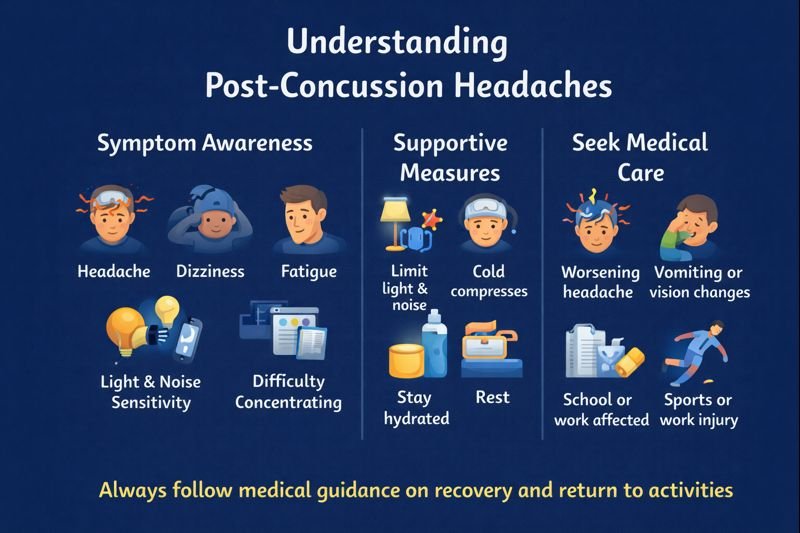
Symptom Awareness
Commonly reported post-concussion symptoms include:
-
Headache or pressure in the head
-
Dizziness or balance changes
-
Difficulty concentrating
-
Fatigue
-
Light or noise sensitivity
-
Nausea
-
Slower processing or irritability
If symptoms worsen, persist, or newly appear, a healthcare professional can determine next steps.
Supportive Measures (Non-Prescriptive Awareness)
Healthcare professionals may recommend general supportive strategies for recovery, such as:
-
Reducing visual and auditory strain: Soft lighting, quiet environments, and screen breaks may reduce headache sensitivity.
-
Cold compresses: A cool washcloth on the forehead or temples may help some individuals feel more comfortable.
-
Hydration: Drinking water regularly may help reduce headache discomfort, especially if dehydration contributes.
-
Rest: Adequate rest—both physical and cognitive—supports recovery following concussion.
-
Gradual return: Return to work, school, or sports is typically guided by healthcare recommendations and cleared once symptoms have improved.
Medication decisions should be guided by a healthcare provider. Some products are not suitable after head injuries, and dosing should not be advised without medical oversight.
When to Seek Medical Care
Medical assessment is important if:
-
Symptoms worsen rather than improve
-
Headache becomes severe or persistent
-
Confusion, vomiting, vision changes, or behaviour changes appear
-
School or work functioning is significantly affected
-
The person has a history of concussion or neurological conditions
-
The injury occurred during sports or a workplace incident
Return-to-sport and return-to-work decisions are typically made with medical clearance.
Prevention & Workplace / School Context
Reducing concussion risk can involve:
-
Protective equipment in relevant sports and trades
-
Safe play and coaching practices
-
Ladder and fall prevention at work and home
-
Slip and trip reduction in workplaces and schools
-
Reporting and documenting head injuries promptly
Awareness reduces stigma and encourages early reporting—important for youth, athletes, and workers.
FAQ
1. How long do headaches last after a concussion?
Duration varies widely. Some people recover within days; others have symptoms that last weeks. Healthcare providers can assess ongoing symptoms.
2. Are screens bad for concussion recovery?
Screen use may worsen headaches or dizziness for some individuals. Reducing screen time early in recovery can be helpful, based on healthcare guidance.
3. Can someone return to sports while still having headaches?
Return-to-play decisions are guided by medical clearance. Continuing activity while symptomatic may worsen recovery.
4. Is it normal to feel tired after a concussion?
Fatigue is common. Rest and reduced cognitive load are often recommended during recovery.
5. When should adults or teens go to the doctor for a concussion?
If symptoms persist, worsen, or interfere with daily functioning, medical evaluation is recommended.
Educational Note
This article supports public education on concussion awareness and first aid recognition. It does not provide medical treatment instructions, diagnosis, or medication guidance. Healthcare professionals should guide concussion recovery.
About The Author

Mark Kascha
Certified First Aid Instructor Trainer with 30+ years of real-world experience, including lifeguarding, workplace emergency response, and first aid program development across Canada. Has worked with WorkSafeBC, WSIB, and Manitoba Health.
👉 [View full credentials]🔗 View LinkedIn Profile
Last reviewed: March 2026