
Over time, the skin is exposed to friction, pressure, movement, and contact with the environment. This can lead to scrapes, cuts, and blisters. When wounds extend beyond the very surface layers of skin, some degree of scarring may occur as part of the natural healing process.
First Aid & Workplace Relevance (Canada)
Blisters and minor wounds are common in workplaces that involve manual tools, sport, repetitive movement, footwear friction, or outdoor activity. Awareness of how skin heals helps workers and caregivers understand why wounds may look different over time and why some leave faint marks.
Scenario (Mild & Realistic)
A retail employee developed a small blister on the heel after a long shift in new shoes. Over several days, the fluid settled, the skin dried, and a faint mark slowly faded.
Skin Structure Basics
To understand scarring, it helps to recognize the two main layers of the skin:
-
Epidermis – the outer layer made of keratinocytes
-
Dermis – the deeper layer containing blood vessels, nerves, and fibroblasts
Fibroblasts produce collagen, the protein that provides structure during healing and later becomes part of scar tissue.
The Healing Process After a Blister or Wound
1. Inflammation (Early Stage)
After injury, the body sends signals that attract protective cells to the area. Blood flow increases and tissues may swell. This prepares the site for healing and helps clear damaged tissue.
2. Collagen Production and Scar Formation
Fibroblasts in the dermis produce collagen to fill the injured space. New skin cells gradually reorganize along this collagen matrix. In small or shallow blisters, scarring is often minimal or hardly visible.
3. Remodelling and Maturation
Scar tissue continues changing long after the visible wound closes. Collagen may reorganize, flatten, or shrink slowly. This remodelling can last months or longer depending on depth and size. Mature scars may look smoother or paler than earlier stages.
Scarring and Variation
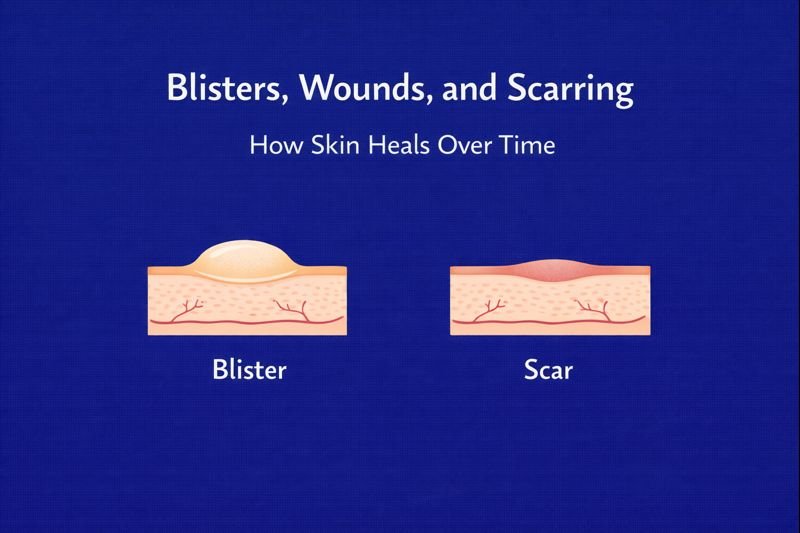 Scar appearance varies due to:
-
Depth of injury
-
Amount of friction or pressure during healing
-
Individual differences in skin type and collagen production
-
Age and health factors
Most small blisters and surface wounds heal with little to no noticeable scarring.
FAQ (Educational)
Why do some blisters leave marks while others don’t?
Shallow blisters affect mainly the epidermis, while deeper injury reaches the dermis where collagen forms scar tissue.
Do scars fade over time?
Many scars lighten and flatten with maturation, though their appearance varies among individuals.
Is blister healing faster in children?
Children often have faster skin turnover, though healing varies based on activity, friction, and care.
Why is collagen important?
Collagen provides structure during healing and becomes part of the scar.
Educational Note
This information supports first aid and public health education. Skin healing and scarring vary widely among individuals and depend on wound depth, friction, and time.
About The Author

Mark Kascha
Certified First Aid Instructor Trainer with 30+ years of real-world experience, including lifeguarding, workplace emergency response, and first aid program development across Canada. Has worked with WorkSafeBC, WSIB, and Manitoba Health.
👉 [View full credentials]🔗 View LinkedIn Profile
Last reviewed: March 2026