
Flu Symptoms: What to Watch For and First Aid Awareness in Canada
Understanding the Flu
Influenza, commonly known as the flu, is a contagious respiratory illness that tends to circulate seasonally in Canada, usually during the fall and winter months. Preparing for flu season often includes preventive measures such as vaccination, hand hygiene, and staying home when ill. Despite prevention efforts, many people still develop the flu each year.
Flu symptoms can vary from person to person, ranging from mild to more intense. Early recognition is important for personal recovery and for reducing spread to others.
Why This Matters for First Aid and Workplaces in Canada
The flu can significantly affect attendance, productivity, and safety in workplaces, schools, healthcare settings, and public environments. First aid awareness helps people recognize flu symptoms early, distinguish them from milder illnesses like the common cold, and understand when medical assessment and workplace accommodations may be needed.
A Realistic Scenario
An employee arrives at work feeling extremely tired, achy, and chilled, with a developing headache and cough. A coworker trained in first aid recognizes these as possible flu symptoms rather than a minor cold and encourages the employee to follow workplace illness protocols and seek medical guidance, helping limit exposure to others.
Common Symptoms of the Flu
Most people with the flu experience several symptoms at once, often starting suddenly rather than gradually.
Fever and Chills
Fever is one of the most common flu symptoms and often begins abruptly. As body temperature rises, individuals may experience chills and feel unusually cold, even in warm environments. Bundling up excessively during a fever can increase body temperature and discomfort rather than provide relief.
Extreme Fatigue
Flu-related exhaustion is typically more severe than ordinary tiredness. Many individuals feel drained and may struggle with routine daily activities. This level of fatigue is often much greater than what is experienced with a common cold.
Muscle Aches and Body Pain
Generalized aches and muscle soreness are frequently reported with the flu. Moving around may feel uncomfortable, and the body can feel sore overall. These aches are a hallmark symptom that helps distinguish the flu from milder respiratory infections.
Cough
A cough associated with the flu is often dry but may vary. If a cough becomes productive (producing mucus) and is accompanied by persistent fever, medical assessment is recommended, as this may indicate complications.
Headache
Headaches are common with the flu and can be quite intense. The inflammatory response affecting the rest of the body can also contribute to head pain and pressure.
Nasal Congestion
Although congestion is more typical of the common cold, some individuals with the flu may still experience a stuffy or runny nose.
Vomiting and Diarrhea
Digestive symptoms are not typical flu symptoms for most adults. However, vomiting and diarrhea can occur, particularly in children. When these symptoms are the main concern, the illness may be viral gastroenteritis (“stomach flu”), which is different from influenza.
First Aid Awareness and Response
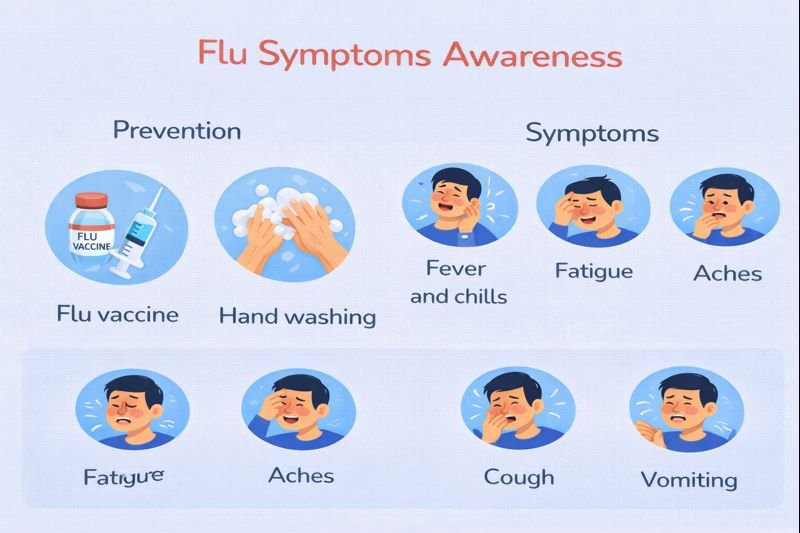 From a first aid and workplace perspective, flu awareness focuses on recognition, rest, and prevention of spread:
-
Recognize sudden onset of fever, aches, and fatigue
-
Encourage rest and limiting contact with others
-
Support workplace policies for staying home when ill
-
Monitor symptoms that worsen or persist
-
Seek medical assessment when symptoms are severe or concerning
Prompt recognition helps reduce complications and transmission.
Prevention and Workplace Considerations
-
Annual flu vaccination as recommended
-
Hand hygiene and respiratory etiquette
-
Cleaning shared surfaces regularly
-
Encouraging sick individuals to stay home
-
Supporting flexible attendance policies during flu season
Preparedness helps protect individuals and communities during peak flu activity.
Frequently Asked Questions (FAQ)
How is the flu different from a common cold?
The flu usually starts suddenly and causes more severe fatigue, body aches, and fever than a cold.
Are headaches common with the flu?
Yes. Headaches are a frequent and sometimes severe flu symptom.
Does everyone with the flu have a fever?
Most people do, but symptom patterns can vary, especially in older adults.
Are vomiting and diarrhea normal flu symptoms?
They are uncommon in adults but can occur more often in children.
Why is first aid awareness important during flu season?
Early recognition helps reduce spread, supports recovery, and promotes safer workplaces.
Educational Note
This article is intended for general first aid and workplace safety education in Canada. It supports flu awareness and preparedness but does not replace medical assessment or professional care.
About The Author

Mark Kascha
Certified First Aid Instructor Trainer with 30+ years of real-world experience, including lifeguarding, workplace emergency response, and first aid program development across Canada. Has worked with WorkSafeBC, WSIB, and Manitoba Health.
👉 [View full credentials]🔗 View LinkedIn Profile
Last reviewed: March 2026