 A well-prepared first aid kit makes it easier to respond to both minor injuries and more serious emergencies. Kits don’t need to be large, but they should be organized, portable, and accessible. Many households and workplaces benefit from having more than one kit—for example, one at home and one in a vehicle.
First Aid & Workplace Relevance
Workplaces, vehicles, schools, camps, and households across Canada maintain first aid kits as part of basic safety planning. Kits support early care while waiting for emergency medical services or while dealing with common everyday injuries.
Scenario
During a weekend soccer game in a local park, a player scraped their knee during a slide. A trained first aid rescuer opened the team’s field first aid kit, cleaned the wound with wipes, and applied a bandage. Having a stocked kit nearby prevented a delay in care and allowed the game to continue.
Choosing a First Aid Kit
Kits can be commercially purchased or assembled from clean storage containers. Good kits are:
-
Portable (easy to carry to the scene)
-
Organized (items visible and labelled)
-
Weather-appropriate (vehicle kits should tolerate cold/heat)
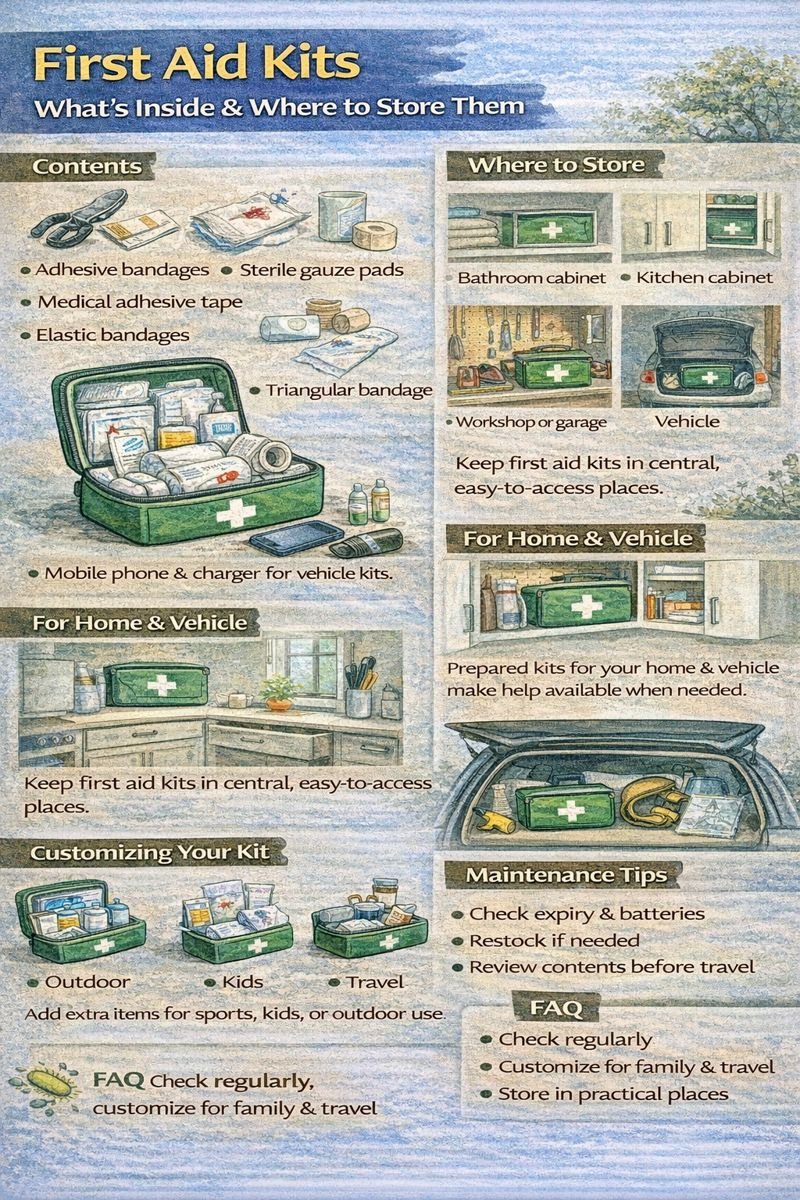
Where to Store First Aid Kits
Ideal locations are central and easy to access, such as:
-
Kitchen or utility cabinet
-
Bathroom or laundry area
-
Workshop or garage
-
Vehicle glove compartment or cargo area
-
Office or shared workspace
Having more than one kit increases the chance one will be nearby when needed.
Contents of a General First Aid Kit (Public-Safe List)
Common items include:
-
Adhesive bandages (various sizes)
-
Sterile gauze pads & dressings
-
Medical adhesive tape
-
Elastic bandages
-
Triangular bandage
-
Wound cleaning wipes
-
Hand cleanser or sanitizer
-
Tweezers & small scissors
-
Disposable gloves
-
Antibiotic ointment packets
-
Barrier device for CPR
-
Instant cold pack
-
Insect bite swabs
-
Flashlight & batteries (for emergencies)
Vehicle kits may also include:
-
Mobile phone or charger for emergency calls
-
Emergency blanket
-
List of emergency contacts
Individuals with health conditions often keep medical information nearby for paramedics.
Customizing for Family & Workplace Needs
Kits can be tailored for:
-
Outdoor sports (extra cold packs, tape)
-
Children (additional bandages, wipes)
-
Allergies (awareness of personal allergy plans)
-
Remote travel (more comprehensive supplies)
Maintenance & Readiness Tips
To keep kits ready for use:
-
Check expiry dates twice a year
-
Restock after items are used
-
Ensure flashlights & devices have power
-
Review contents before travel or camping
FAQ
Do first aid kits expire?
Some items do (e.g., wipes, ointments, batteries). Regular checks help keep kits functional.
Should first aid kits include medications?
Non-prescription items such as pain relievers may be included based on household needs. Individuals use medications according to their own healthcare guidance.
Why keep a kit in a vehicle?
Travel can separate people from home supplies. Weather, breakdowns, and minor injuries can all make a vehicle kit helpful.
Do workplaces require first aid kits?
Many Canadian workplaces do. Requirements vary by province and job setting.
Should kits include medical information?
It can be helpful for responders, especially for individuals with allergies or chronic health conditions.
Educational Note (end of post body)
This information supports public preparedness and first aid awareness. It encourages households and workplaces to maintain basic supplies and review emergency plans.
About The Author

Mark Kascha
Certified First Aid Instructor Trainer with 30+ years of real-world experience, including lifeguarding, workplace emergency response, and first aid program development across Canada. Has worked with WorkSafeBC, WSIB, and Manitoba Health.
👉 [View full credentials]🔗 View LinkedIn Profile
Last reviewed: March 2026