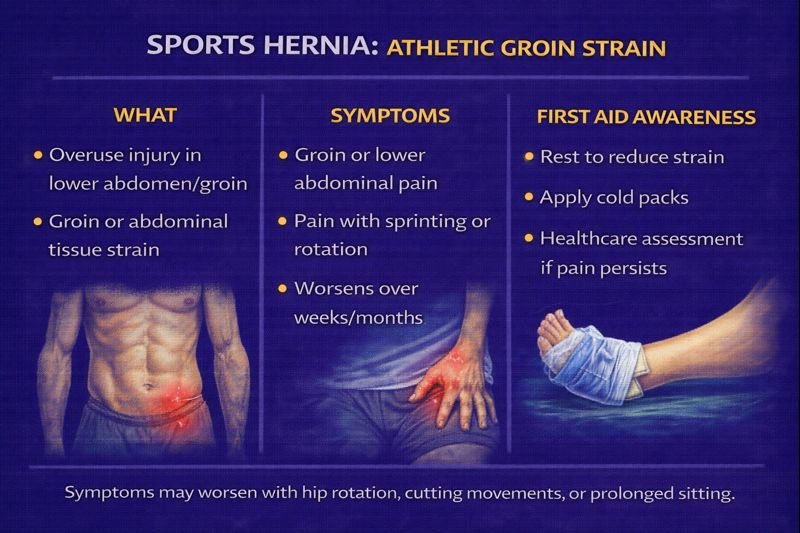
 A sports hernia is a term used to describe pain in the lower abdomen or upper groin. Despite its name, it does not always involve a visible hernia. Instead, the injury often affects the deep tissues, muscles, and tendons in the pelvic and abdominal region.
Why this matters for Canadians & workplaces
Active workplaces, recreational sports leagues, and youth athletics frequently report groin and abdominal strain injuries. Early awareness and proper first aid can help limit aggravation and support a safe return to activity.
Scenario example
During recreational hockey, a player felt sharp groin pain after twisting to take a shot. They stopped playing, applied ice at the rink, and arranged follow-up assessment. The injury turned out to be a sports hernia strain rather than a visible groin tear.
What is a sports hernia?
A sports hernia is considered an overuse or strain injury involving the lower abdominal wall, pelvic floor, or groin musculature. Unlike an inguinal hernia—where part of the intestine pushes through the abdominal wall—a sports hernia does not protrude outward, but can still cause significant discomfort and mobility limitations.
Diagnosing can be challenging because the symptoms resemble:
-
groin pulls
-
abdominal muscle strains
-
pelvic tendon injuries
Imaging tests may be used to rule out fractures, muscular tears, or other soft-tissue conditions.
Causes & mechanisms
Sports hernias are typically linked to repeated forceful movements, especially those involving:
-
twisting and rotation
-
sprinting or acceleration
-
abrupt change in direction
-
sit-ups or trunk flexion
-
kicking motions
These movements may strain or tear soft tissues at the base of the abdomen or groin.
Who is at higher risk?
Sports that require cutting, twisting, and acceleration may increase the likelihood of injury, including:
-
hockey
-
tennis
-
soccer
-
hurdling
-
running
-
skiing
Although more common in men, any athlete can develop sports hernias.
Symptoms
Possible symptoms include:
-
groin, testicular, or lower abdominal pain
-
pain on one side of the groin
-
discomfort during twisting or sprinting
-
pain that persists for weeks or months
-
increased discomfort with coughing, sneezing, lifting, or core exercises
Symptoms may develop slowly among endurance athletes or appear more abruptly during fast-paced sports.
First aid & management
Initial first aid focuses on reducing irritation and preventing further injury:
-
rest from aggravating movements
-
ice or cold compress for 15–20 minutes, 3–4 times per day
-
avoid rotation, sprinting, or abdominal exercises until reassessed
A health care professional may evaluate whether the pain is muscular, pelvic, or associated with other groin conditions. In some cases, surgery may be recommended, particularly for recurrent or long-standing symptoms.
Prevention & workplace considerations
-
gradual conditioning of core muscles
-
warm-up and flexibility exercises before activity
-
proper technique in cutting and rotational movements
-
allowing adequate recovery between training sessions
-
in workplaces with high physical demands, rest breaks and safe lifting practices reduce strain
FAQ (Sports Hernia)
Is a sports hernia the same as a regular hernia?
No. A sports hernia does not protrude outward through the abdominal wall, though it affects similar tissues and can be painful.
Can sports hernias heal without surgery?
Rest and rehabilitation can help some individuals, though long-standing cases may be referred for surgical options.
Which activities tend to aggravate symptoms?
Twisting, sprinting, cutting, core work, coughing, or sneezing may increase discomfort.
How long does recovery take?
Recovery varies and depends on severity, activity level, and response to rehabilitation.
Educational note
This article is for general public and first aid awareness. Learning basic first aid and understanding when to rest, modify activity, and seek medical assessment can support safe participation in sport and daily life.
About The Author

Mark Kascha
Certified First Aid Instructor Trainer with 30+ years of real-world experience, including lifeguarding, workplace emergency response, and first aid program development across Canada. Has worked with WorkSafeBC, WSIB, and Manitoba Health.
👉 [View full credentials]🔗 View LinkedIn Profile
Last reviewed: March 2026