 Most spider bites cause mild, localized reactions such as redness, swelling, or discomfort. Many bites improve on their own within a week. Serious reactions are uncommon, and spiders typically bite only when trapped or threatened.
Relevance in Canadian First Aid & Outdoor Activities
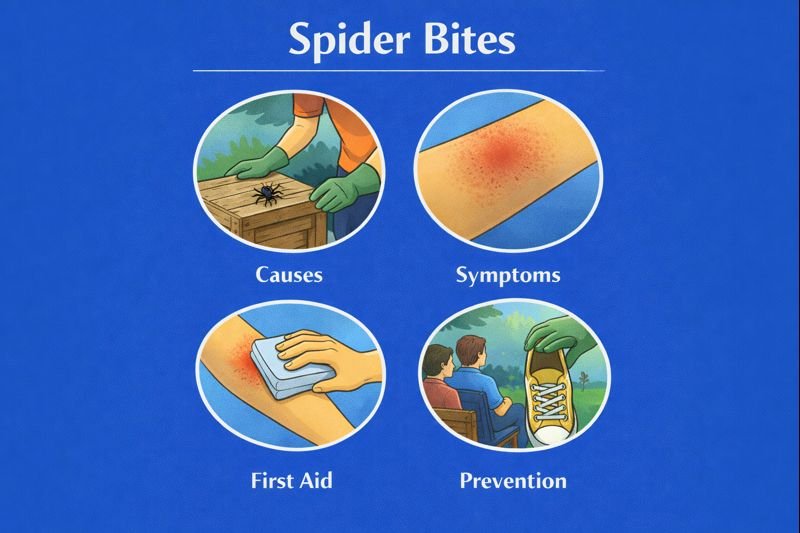
Spider bites may occur during gardening, outdoor work, camping, cleaning storage areas, or moving boxes. First aid awareness of bites helps differentiate mild reactions from situations where a health assessment may be helpful.
Scenario (Mild & Realistic)
While reorganizing the garage, Alex felt a small prick on the wrist and noticed a red welt forming. They washed the area with water, avoided scratching, and kept an eye on the spot over the next few days. The redness faded without issue.
Symptoms of Common Mild Spider Bites
Most non-venomous spider bites can cause:
-
Redness or slight swelling
-
Itching or irritation
-
Mild pain or tenderness
-
Small raised bumps
-
Localized skin warmth
These reactions often resolve without complication.
Black Widow & Brown Recluse Awareness (Rare in Canada)
In North America, black widow and brown recluse bites are the types discussed most in media; however, they are rarely encountered in Canada. When they do occur, symptoms can vary and may include more pronounced pain, spreading redness, or muscle discomfort.
Potential Local Symptoms
-
Pain at the bite site
-
Swelling or redness
-
Itching or burning
Less Common Body Symptoms
-
Nausea
-
Fatigue
-
Muscle discomfort
Many skin conditions can mimic spider bites, and bites are often misidentified when a spider is not seen.
Who Is at Higher Risk?
Spider encounters may be more likely when:
-
Working in sheds, garages, basements, or wood piles
-
Doing yard work or gardening
-
Travelling or camping in warmer climates
-
Handling stored boxes or seasonal items
Spiders prefer avoiding humans and usually bite only when pressed against the skin.
First Aid & Comfort Measures (Awareness)
For mild symptoms, people often:
-
Avoid scratching the bite area
-
Gently clean the skin with soap and water
-
Use cool cloths to support comfort and reduce swelling
-
Monitor the bite for changes over several days
Individuals with worsening symptoms, spreading skin changes, or concerns about allergic reactions may seek medical assessment.
Prevention & Outdoor Safety Considerations
Helpful strategies include:
-
Wearing gloves during gardening or storage cleanouts
-
Shaking out shoes, clothing, and gear stored in garages or sheds
-
Keeping living and storage areas clean and clutter-free
-
Avoiding trapping spiders directly against the skin
Workplaces may include spider awareness as part of outdoor, forestry, or warehouse safety briefings.
FAQ
Are spider bites dangerous?
Most spider bites are mild. Severe reactions are rare and often involve specific species or individual sensitivity.
How long do spider bites last?
Many improve over several days to a week. Healing time varies with scratching, skin sensitivity, and the local reaction.
Do spiders bite on purpose?
Spiders generally avoid humans and bite only when startled or trapped.
Do all bites come from spiders?
No. Many skin irritations from insects, plants, and allergies are mistaken for spider bites.
Educational Note
This article provides public and workplace education about spider bite awareness. Reactions vary, and trained health professionals can assess concerns that affect skin healing, comfort, or daily activities.
About The Author

Mark Kascha
Certified First Aid Instructor Trainer with 30+ years of real-world experience, including lifeguarding, workplace emergency response, and first aid program development across Canada. Has worked with WorkSafeBC, WSIB, and Manitoba Health.
👉 [View full credentials]🔗 View LinkedIn Profile
Last reviewed: March 2026