 Salmonella food poisoning is an infection of the small intestine caused by bacteria from the Salmonella family. It is one of the most common causes of food-borne illness and can affect children and adults. Because many cases occur from contaminated food during warm weather or in busy kitchens, it is relevant both at home and in Canadian workplaces where food handling, childcare, recreation, and summer operations are common.
Scenario Example (Mild & Realistic)
A family prepares chicken at home for a summer barbecue. Hours later, two people start having stomach cramps, loose stool, and chills. They rest at home, drink fluids, and symptoms resolve over several days. A review of the food preparation finds that cutting boards were shared for raw poultry and salad—highlighting how cross-contamination can occur.
How Salmonella Spreads
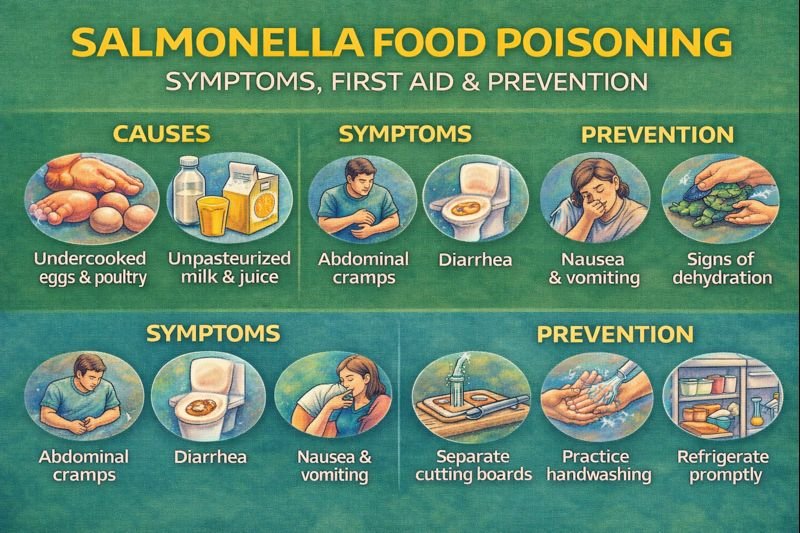
Salmonella bacteria commonly spread through:
-
Undercooked eggs or poultry (chicken, turkey)
-
Unpasteurized milk or juice
-
Raw fruits, vegetables, or nuts exposed to contaminated water or soil
-
Cross-contamination in the kitchen (shared cutting boards or utensils)
-
Poor handwashing after using the toilet or handling animals
-
Contact with pet birds or reptiles
-
Travel to regions with limited sanitation or food safety controls
The bacteria originate in the intestines of animals and can transfer to food during production, transport, or preparation.
Common Symptoms
Symptoms often appear within 6–72 hours and can last 1–7 days:
-
Diarrhoea (sometimes with mucus or small amounts of blood)
-
Abdominal pain or cramps
-
Chills
-
Nausea and vomiting
-
Muscle aches
-
Headache
-
Fatigue
-
Signs of dehydration (dry mouth, decreased urination, dizziness)
Young children, older adults, and those with weakened immune systems are more likely to become dehydrated.
Diagnosis
A doctor may diagnose foodborne illness based on symptoms and exposure history. In certain cases, tests such as a stool sample or blood work may be used to identify Salmonella or rule out other conditions.
First Aid & Supportive Care
Most healthy individuals recover at home with supportive care:
-
Rest
-
Adequate fluids (water, diluted juices, oral rehydration solutions)
-
Easily digested foods such as rice, toast, banana, apple sauce
-
Avoiding heavy, spicy, or dairy-based foods if they worsen symptoms
For toddlers and young children, oral rehydration solutions are often recommended to prevent dehydration.
Seek medical care if:
-
dehydration is suspected
-
the individual cannot drink fluids
-
symptoms persist or worsen
-
the individual is very young, older, pregnant, or immunocompromised
Prevention & Food Safety Tips
To help reduce the risk of Salmonella food poisoning:
-
Cook poultry and eggs thoroughly
-
Refrigerate foods promptly
-
Wash hands after using the toilet, changing diapers, or handling animals
-
Keep separate cutting boards for raw and ready-to-eat foods
-
Wash kitchen counters before and after preparing food
-
Use gloves or wash hands after handling birds or reptiles
-
When travelling, be cautious with untreated water, raw produce, and street foods
FAQ
Is salmonella contagious?
It can spread when infected individuals do not wash their hands after using the washroom, especially in childcare settings, homes, and food environments.
Can salmonella be serious?
Most cases are mild to moderate, but dehydration can become serious, especially in infants, young children, and older adults.
How long does it last?
Symptoms typically improve in 2–7 days, but bacteria may remain in the bowel for weeks.
Do antibiotics help?
Antibiotics are not required for most healthy individuals. They may be used in select cases based on a doctor’s assessment.
Educational Note
This content is for public first aid and food safety education. It encourages awareness, prevention, and early recognition but does not replace assessment by a regulated healthcare professional.
About The Author

Mark Kascha
Certified First Aid Instructor Trainer with 30+ years of real-world experience, including lifeguarding, workplace emergency response, and first aid program development across Canada. Has worked with WorkSafeBC, WSIB, and Manitoba Health.
👉 [View full credentials]🔗 View LinkedIn Profile
Last reviewed: March 2026