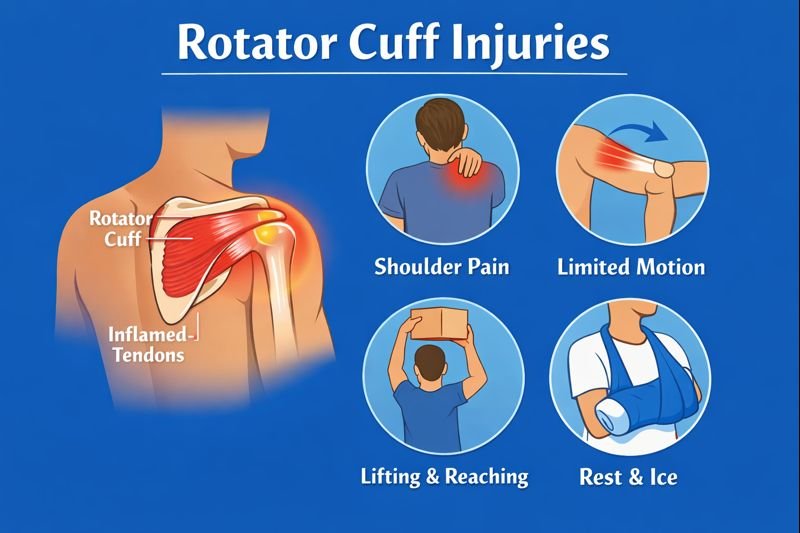
 The rotator cuff is a group of four muscles and tendons that help stabilize the shoulder and support movements such as lifting, reaching, and rotating the arm. Injuries to the rotator cuff can include tendinitis, bursitis, strains, and tears. These injuries are common in activities that involve repetitive arm use, overhead motion, or sudden strain.
Relevance in Canadian First Aid & Workplaces
In Canada, rotator cuff injuries are frequently seen in sports, manual labour, food service, and health care roles that require lifting or repetitive overhead tasks. First aid awareness for rotator cuff injuries can help identify symptoms early, encourage rest and safe movement, and reduce the chance of worsening an injury during work or recreation.
Scenario
During a community volunteer shift, Alex spent the afternoon unloading donation boxes. After several hours of overhead lifting, Alex noticed an achy shoulder and difficulty reaching up for the next box. A coworker suggested taking a break and avoiding further overhead lifting for the day. Over the next week, Alex modified activities and monitored symptoms while gradually returning to normal tasks.
Symptoms of a Rotator Cuff Injury
Not all shoulder injuries cause immediate symptoms. Some develop gradually over months or years due to wear and tear. Common symptoms can include:
-
Pain or tenderness when reaching overhead
-
Difficulty reaching behind the back
-
Reduced range of shoulder motion
-
Shoulder pain during or after activity
-
Discomfort when lying on the affected side
-
Progressive weakness in the shoulder
Causes & Mechanisms
Rotator cuff injuries can be acute (from sudden force) or degenerative (from long-term use). Common types include:
Tendinitis
Often related to repetitive use, leading to inflammation of the tendons.
Bursitis
Inflammation of the shoulder bursa (small fluid-filled sacs that aid smooth movement). May develop from repetitive irritation or gradual degenerative changes.
Strains or Tears
Can result from acute force such as slips, falls, or lifting heavier-than-usual items. Degenerative tears can also develop over time due to long-term repetitive use.
People at higher risk include:
-
Individuals over 40 (degenerative changes are more common)
-
Workers performing repetitive lifting or overhead tasks
-
Athletes in throwing or racquet sports
-
People returning to strenuous activity after periods of inactivity
Management, First Aid, and Recovery Awareness
Approaches to managing rotator cuff injuries can vary depending on severity. Many mild injuries improve with time, rest, and gradual return to activity. General first aid awareness may include:
-
Resting or modifying activities that irritate the shoulder
-
Using warm or cold packs to support comfort
-
Gentle, controlled movement when tolerated
-
Seeking assessment from a health professional if symptoms limit function
Some individuals may benefit from strengthening or mobility exercises guided by trained professionals. Severe or persistent injuries may require further medical assessment to determine next steps.
Prevention & Workplace Considerations
Prevention strategies can include:
-
Taking regular breaks during repetitive overhead tasks
-
Using step stools or ladder aids instead of reaching excessively overhead
-
Strengthening shoulder and upper-back muscles
-
Avoiding sudden increases in activity intensity
-
Using proper lifting techniques
Workplaces can support shoulder health by:
-
Rotating repetitive tasks
-
Using mechanical aids for lifting
-
Encouraging ergonomic practices and early reporting of discomfort
FAQ
Is a rotator cuff injury always painful?
Not necessarily. Some injuries develop gradually and may not cause noticeable pain right away. Stiffness or weakness can be the first sign.
How long can a rotator cuff injury take to improve?
Recovery varies widely depending on severity, age, and activity level. Mild cases may improve over weeks, while more significant injuries may take longer and require assessment.
Can rotator cuff injuries happen without sports?
Yes. Many occur during work tasks, home projects, or everyday lifting—especially activities requiring repetitive or overhead reaching.
Who should consider seeking an assessment?
People experiencing persistent weakness, reduced range of motion, or discomfort that interferes with daily tasks may benefit from a health evaluation.
Educational Note
This article is for public and workplace education about shoulder injuries and first aid awareness. Individual recovery and care options vary, and trained health professionals can help assess concerns when symptoms interfere with daily activities.
About The Author

Mark Kascha
Certified First Aid Instructor Trainer with 30+ years of real-world experience, including lifeguarding, workplace emergency response, and first aid program development across Canada. Has worked with WorkSafeBC, WSIB, and Manitoba Health.
👉 [View full credentials]🔗 View LinkedIn Profile
Last reviewed: March 2026