 Understanding Cold-Water Drowning on Ice
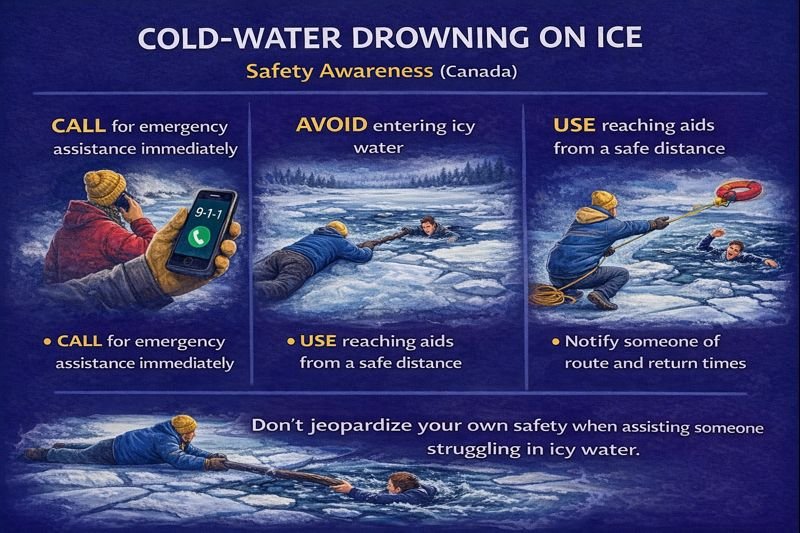
Cold-water drownings can occur during winter recreation, ice fishing, skating, walking on frozen lakes, or workplace tasks near bodies of water. Icy water rapidly drains heat from the body, increasing the risk of hypothermia and unconsciousness. Awareness of safe response practices can reduce danger to both the victim and would-be rescuers.
Why This Matters for First Aid & Workplaces
In Canada, winter recreation and seasonal work often take place around frozen rivers, ponds, reservoirs, and lakes. Ice thickness varies with weather, current, and snow cover. Public education emphasizes calling emergency services and avoiding risky rescue attempts when ice stability and water temperature are unknown.
Scenario: Mild & Realistic
During an early-spring walk, a dog ran onto a partially thawed pond and an adult followed, causing the ice to break. Bystanders called 911 immediately, reached for a nearby flotation ring, and encouraged the person to stay calm until firefighters arrived with proper rescue gear.
Risks to Both Victims & Bystanders
Cold-water incidents are dangerous not only for the person in the water, but for helpers. Risks include:
-
Thin or unstable ice
-
Cold shock response
-
Rapid heat loss
-
Fatigue and impaired decision-making
-
Secondary drowning or collapse
-
Additional victims if helpers enter unsafe areas
Emergency responders (fire, police, SAR teams) have equipment such as ice suits, throw lines, and flotation devices designed for this scenario.
Public Safety Awareness: What Bystanders Can Do
Public safety messaging in Canada often highlights:
-
Call for emergency assistance immediately
-
Avoid entering icy water
-
Avoid standing on thin or questionable ice
-
Use reaching or throwing tools if safe to do so (e.g., rope, branch, flotation device)
-
Keep a safe distance from unstable edges
-
Reassure the person and encourage calm breathing
Professional rescuers determine the safest approach once they arrive.
After the Person Is Out of the Water
Cold exposure may continue even once the person is on land. Public first aid programs emphasize:
-
Moving the person to a warmer environment if safe to do so
-
Removing wet clothing and insulating with dry blankets or layers
-
Understanding that CPR may be needed in some cases (training recommended)
Healthcare professionals assess for hypothermia, shock, or complications.
Community, Sport & Workplace Considerations
Cold-water incidents may involve:
-
Outdoor recreation (skating, skiing, snowmobiling)
-
Fishing, marinas, ferries, or docks
-
Construction or utilities near water
-
Winter festivals and tourism
-
Schools and youth recreation programs
Prevention strategies include:
-
Checking ice thickness and local advisories
-
Having throw-assist safety devices in recreation areas
-
Wearing flotation devices when appropriate
-
Notifying someone of route and return times in winter travel
-
Maintaining workplace safety plans for water-adjacent work sites
FAQ — Cold-Water & Ice Drowning Awareness
1. Why is cold water dangerous?
Cold water can quickly impair muscle function and breathing, leading to rapid fatigue and hypothermia.
2. Should bystanders jump in to rescue someone?
Emergency services recommend avoiding direct entry due to high risk of a second victim. Calling 911 and using safe reach-or-throw techniques is emphasized.
3. How fast can hypothermia develop?
Very quickly in icy water. Onset varies depending on temperature, clothing, and individual factors.
4. Does ice thickness matter?
Yes — ice stability can change hourly and varies by location. Currents, runoff, or thawing make ice unpredictable.
5. Why is CPR training recommended?
CPR is a life-saving skill in many emergencies, including drowning scenarios, and is commonly taught in first aid programs.
Educational Note
This article supports public learning about cold-water drowning awareness, ice safety, and first aid considerations. Emergency responders and healthcare professionals provide rescue, assessment, and medical care.
About The Author

Mark Kascha
Certified First Aid Instructor Trainer with 30+ years of real-world experience, including lifeguarding, workplace emergency response, and first aid program development across Canada. Has worked with WorkSafeBC, WSIB, and Manitoba Health.
👉 [View full credentials]🔗 View LinkedIn Profile
Last reviewed: March 2026