 A broken arm (arm fracture) can be painful and may limit movement, but it is typically not life-threatening. Knowing how to recognize a broken arm supports safer decisions in workplaces, sports, and community settings—especially after falls, collisions, or physical activity.
Relevance in Canadian First Aid & Workplaces
Broken arms are common in sports, recreation, and work environments involving ladders, lifting, slips, or uneven surfaces. Early recognition and basic first aid can help reduce discomfort and prevent further injury while arranging appropriate care.
Scenario (Mild & Realistic)
While stacking boxes at work, Jordan slipped and landed on an outstretched hand. The arm was painful and swollen right away, so teammates helped Jordan sit in a safe spot, supported the arm using a temporary sling, and arranged transportation for assessment. Jordan’s arm was later confirmed as a fracture and healed well over time.
Signs & Symptoms of a Broken Arm
Depending on the force of injury, symptoms can include:
-
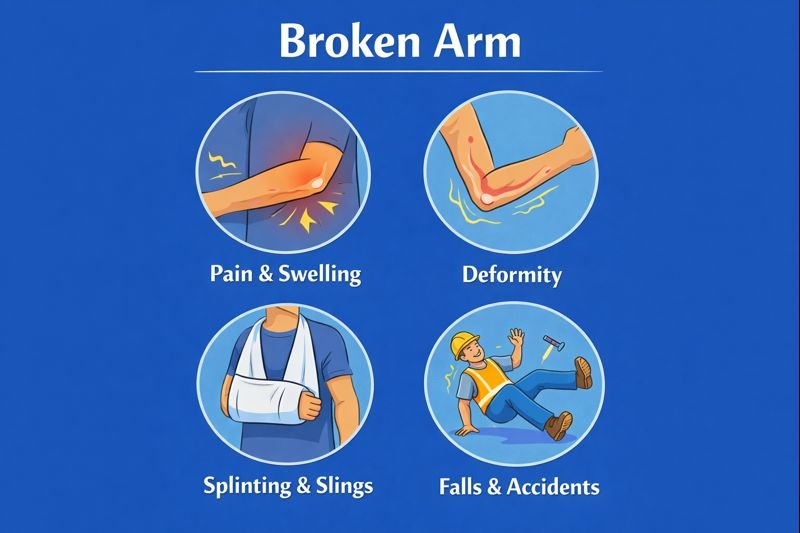
Pain or tenderness
-
Swelling or bruising
-
Difficulty moving the arm or hand
-
Visible deformity or abnormal shape
-
Tingling or numbness
-
Reduced strength or range of motion
-
Rarely, visible bone with associated skin injury
Not all fractures cause obvious deformity. If in doubt, assume the arm may be injured and minimize movement.
Causes & Mechanisms
Broken arms are often caused by:
-
Falls (onto an outstretched hand or directly onto the arm)
-
Contact or collision sports
-
Bicycle or recreational accidents
-
Motor vehicle incidents
-
Workplace slips, trips, or impact
First Aid & Immediate Care Awareness
Public first aid awareness focuses on comfort, safety, and avoiding further harm:
-
Help the person move to a safe location if possible
-
Support the injured arm to limit motion
-
Apply a cold pack wrapped in cloth to support comfort and reduce swelling
-
Avoid pushing, pulling, or attempting to straighten the limb
-
Encourage the person to seek medical assessment for suspected fractures
If the person has additional injuries or significant pain, or if the arm appears severely deformed, medical evaluation may be especially important.
Splints & Slings (Awareness)
Temporary splints or slings can help support the limb and limit movement until assessment occurs. These should be applied gently and without tight wrapping. Materials such as folded clothing, towels, or triangular bandages can provide basic support.
Workplace & Safety Considerations
To help reduce risk of arm fractures:
-
Maintain clean, dry walking surfaces
-
Use proper ladder and tool safety
-
Take caution during winter conditions
-
Encourage protective gear in sports and recreation
-
Report hazards such as cluttered walkways or unstable equipment
Recovery times vary depending on age, health, and fracture type.
FAQ
How can I tell if an arm is broken or just sprained?
Both can cause pain and swelling. Visible deformity or inability to move the arm may suggest a fracture, but only medical imaging can confirm.
Does a broken arm always swell right away?
Swelling may appear quickly or gradually. Pain with movement is common in both fractures and sprains.
Should the arm be straightened if it looks crooked?
No. Straightening attempts can worsen injury and are not part of lay first aid.
Can someone still move their arm if it’s broken?
Yes. Some fractures allow limited motion, which is why recognizing symptoms and minimizing movement is helpful.
Educational Note
This article supports public and workplace education about musculoskeletal injuries and basic first aid awareness. Injury severity and recovery vary, and trained health professionals can assess concerns that interfere with function, safety, or daily activities.
About The Author

Mark Kascha
Certified First Aid Instructor Trainer with 30+ years of real-world experience, including lifeguarding, workplace emergency response, and first aid program development across Canada. Has worked with WorkSafeBC, WSIB, and Manitoba Health.
👉 [View full credentials]🔗 View LinkedIn Profile
Last reviewed: March 2026