
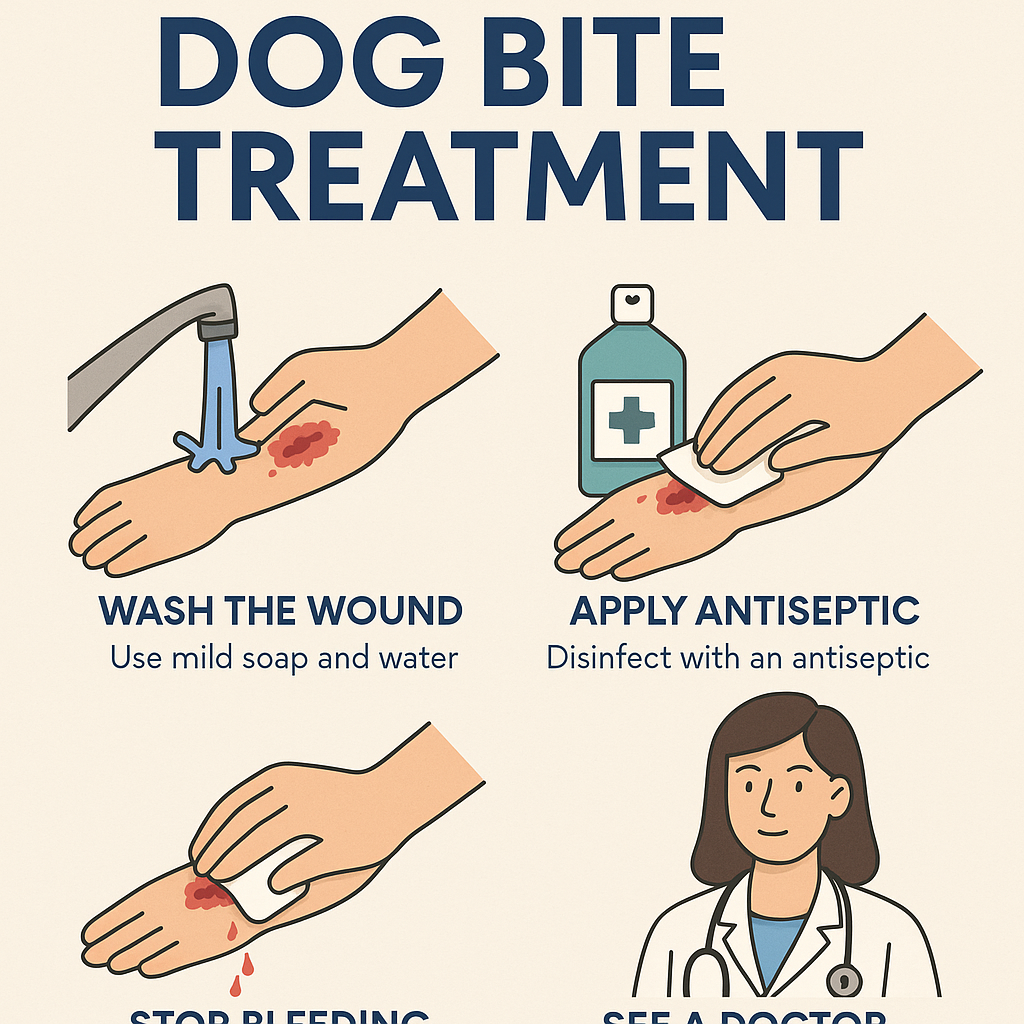
 Dog bites are common injuries, particularly among children. While many bites are minor, all dog bites should be taken seriously because of the risk of infection, tissue damage, and—rarely in Canada—rabies exposure.
From a first aid, CPR, and workplace safety perspective, managing a dog bite begins with scene safety, followed by prompt wound care and knowing when to seek medical help.
This article is provided for general education and first aid awareness only and does not replace medical care.
First Priority: Ensure Safety for Everyone
Before providing care:
-
Secure the dog to prevent further injury
-
If the owner is present, ask them to restrain the dog
-
If not, move the injured person to a safe area
-
-
Do not approach or attempt to restrain an aggressive animal
-
Ensure the scene is safe for the rescuer and bystanders
Dogs may bite again if they feel threatened, injured, or protective of territory.
Universal Precautions
When giving first aid:
-
Use gloves or barrier protection if available
-
Avoid direct contact with blood
-
Wash hands thoroughly after providing care
These precautions protect both the rescuer and the injured person.
Immediate First Aid for Dog Bites
1. Control Bleeding
-
Apply direct pressure with a clean cloth or dressing
-
Elevate the area if possible
-
Do not use a tourniquet unless bleeding is severe and life-threatening
2. Clean the Wound
Once bleeding is controlled:
-
Wash the wound thoroughly with soap and warm running water
-
Gently clean inside the wound, not just the surrounding skin
-
Rinse well to remove all soap, which can irritate tissue
Cleaning is one of the most important steps to reduce infection risk.
3. Cover the Wound
-
Apply a clean, dry dressing
-
An antibiotic ointment may be used, but it is not required
-
Keep the wound covered and clean
Monitor the area closely over the next several days.
Watch for Signs of Infection
Dog bites can become infected even with proper care. Seek medical attention if you notice:
-
Increasing redness
-
Swelling or warmth
-
Worsening pain
-
Pus or drainage
-
Fever
Infections may develop within 24–72 hours.
When to Seek Medical Care Immediately
Medical assessment is strongly recommended if:
-
The bite is deep or puncture-like
-
Bleeding cannot be controlled
-
The wound is on the hands, face, neck, or joints
-
There is tissue tearing or avulsion
-
The wound edges do not close naturally
-
The injured person has a weakened immune system
Rabies Considerations in Canada
Rabies is rare in domestic dogs in Canada, but it remains a serious disease.
Seek medical care if:
-
The dog is unknown or cannot be identified
-
The owner cannot provide proof of rabies vaccination
-
The bite was unprovoked
Rabies is almost always fatal once symptoms appear, but early treatment is highly effective.
Stitches and Wound Repair
Some dog bites may require:
-
Sutures (stitches)
-
Advanced wound care
-
Antibiotics
Bites to the hands or face require special attention due to:
-
Risk of infection
-
Potential loss of function
-
Scarring concerns
Prevention and Safety Tips
To reduce dog bite risk:
-
Supervise children around dogs at all times
-
Teach children not to approach unfamiliar dogs
-
Avoid disturbing dogs while eating, sleeping, or caring for puppies
-
Respect warning signs such as growling or stiff posture
Workplaces with animals should have clear safety protocols.
Key First Aid Takeaways for Canadians
-
Scene safety always comes first
-
Clean dog bite wounds thoroughly
-
Monitor closely for infection
-
Unknown dogs require medical assessment
-
Early care prevents complications
Educational Disclaimer
This article is provided for general education and first aid awareness only. It does not diagnose or treat injuries. Always seek medical care for serious dog bites or concerns about infection or rabies.
About The Author

Mark Kascha
Certified First Aid Instructor Trainer with 30+ years of real-world experience, including lifeguarding, workplace emergency response, and first aid program development across Canada. Has worked with WorkSafeBC, WSIB, and Manitoba Health.
👉 [View full credentials]🔗 View LinkedIn Profile
Last reviewed: March 2026