 What Is Burning Neck Pain?
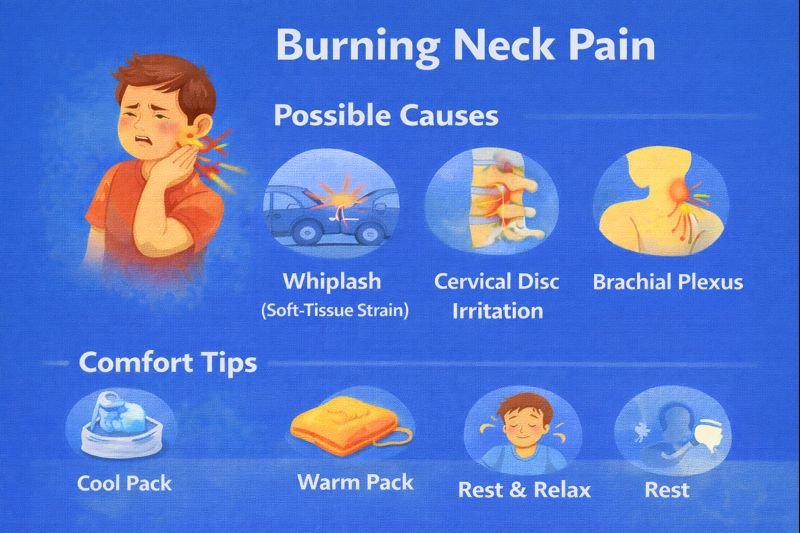
Burning neck pain is a sensation of heat, stinging, or sharp discomfort in the neck area. Unlike simple stiffness, this type of pain may feel intense or travel toward the shoulders or arms. The sensation can vary in severity depending on the tissues involved—such as muscles, joints, or nerves—and the activity that triggered it. Many causes are temporary strains, but persistent or spreading pain deserves attention.
Why Neck Pain Awareness Matters in Canadian Workplaces and Communities
In Canada, neck discomfort can arise from desk work, driving, sports, lifting tasks, or sudden movements. First aid awareness focuses on early recognition, reducing strain, and encouraging safe posture and movement, not diagnosing the condition. Prompt awareness can help prevent minor irritation from becoming a longer-lasting limitation.
A Simple, Realistic Scenario
After a long commute and several hours at a computer, an employee notices a burning sensation along one side of the neck when turning their head. Remembering basic ergonomic guidance, they adjust their chair and monitor height, take short stretch breaks, and avoid sudden twisting for the rest of the day.
Possible Causes of Burning Neck Pain
Whiplash (Soft-Tissue Strain)
Whiplash refers to a sprain or strain of the neck’s soft tissues after a rapid back-and-forth motion, such as during a vehicle collision or sudden stop. Common features can include burning or aching neck pain, stiffness, headaches, and occasional dizziness. Many people improve gradually with time and supportive care, though some notice lingering soreness.
Cervical Disc Irritation (Disc Herniation)
Between the neck bones are cushioning discs that help with movement. If a disc becomes irritated or bulges, nearby nerves may become sensitive. This can create a burning or shooting sensation that sometimes travels into the shoulder or arm, along with tingling or weakness during certain movements.
Brachial Plexus–Related Nerve Stretch
The brachial plexus is a network of nerves running from the neck into the shoulder and arm. A sudden sideways stretch of the head and neck—often discussed in contact sports—can temporarily irritate these nerves. Symptoms may include a sharp or burning feeling radiating down the arm with brief numbness or weakness.
First Aid Awareness and Comfort-Focused Strategies
From a public-education and workplace perspective, the emphasis is on comfort and strain reduction:
-
Pause or modify activities that trigger burning sensations
-
Use a cool pack wrapped in cloth for short periods if swelling is present
-
Try gentle warmth later if muscles feel tight
-
Maintain neutral posture when sitting or using devices
-
Avoid forceful neck twisting or heavy lifting while sore
-
Monitor changes and seek further guidance if symptoms persist or intensify
First aid awareness encourages listening to the body’s warning signs rather than pushing through discomfort.
Prevention and Workplace / Activity Considerations
-
Set up ergonomic workstations (screen at eye level, supportive chair)
-
Take micro-breaks to reset posture and stretch comfortably
-
Warm up before sports or physically demanding tasks
-
Use proper technique and protective equipment in contact activities
-
Limit prolonged device use with the head tilted downward
These habits help support neck comfort in offices, vehicles, sports, and physically demanding roles across Canada.
Frequently Asked Questions About Burning Neck Pain
Is a burning sensation different from stiffness?
Yes. Burning or shooting feelings often suggest nerve or soft-tissue irritation, while stiffness is usually muscular.
Can desk work contribute to burning neck pain?
Prolonged poor posture or screen positioning can increase strain on neck muscles and joints.
Why might the pain travel into the arm?
Nerves from the neck extend into the shoulder and arm, so irritation can radiate along these pathways.
Should stretching be forceful to relieve symptoms?
No. Movements should stay gentle and within a comfortable range.
When should further assessment be considered?
If pain follows a collision or fall, spreads with numbness or weakness, or continues without improvement, further evaluation is advisable.
Educational Note
This article is intended for general public and workplace education in Canada. It supports awareness of musculoskeletal discomfort and first aid recognition but does not replace evaluation or care from qualified healthcare professionals.
About The Author

Mark Kascha
Certified First Aid Instructor Trainer with 30+ years of real-world experience, including lifeguarding, workplace emergency response, and first aid program development across Canada. Has worked with WorkSafeBC, WSIB, and Manitoba Health.
👉 [View full credentials]🔗 View LinkedIn Profile
Last reviewed: March 2026