
What Is Swimmer’s Ear?
Swimmer’s ear, also known as otitis externa, is an infection of the outer ear canal. It develops when water becomes trapped inside the ear, creating a moist environment that allows bacteria to grow. While swimming pools are a common source, swimmer’s ear can also occur after bathing, boating, or swimming in lakes or rivers.
Unlike middle ear infections, swimmer’s ear affects the external ear and can often be seen or felt near the ear opening.
Why This Matters for First Aid and Workplaces in Canada
Swimmer’s ear is common during warmer months in Canada and can affect children, outdoor workers, lifeguards, camp staff, and anyone who spends time around water. Ear pain, itching, and swelling can interfere with concentration, communication, and safety. First aid awareness helps people recognize early symptoms and know when medical assessment is needed to prevent complications.
A Realistic Scenario
After a weekend at the lake, a child begins complaining of ear pain that worsens when the ear is touched. A caregiver trained in first aid recognizes this as a possible sign of swimmer’s ear and arranges a medical visit rather than trying home remedies, helping prevent worsening infection.
Conditions That Can Be Confused With Swimmer’s Ear
Not all ear discomfort is swimmer’s ear. Similar symptoms may be caused by:
-
Middle ear infections
-
Skin allergies affecting the ear
-
Fluid buildup behind the eardrum
If symptoms are unclear or worsening, medical assessment is important to confirm the cause.
Common Signs and Symptoms of Swimmer’s Ear
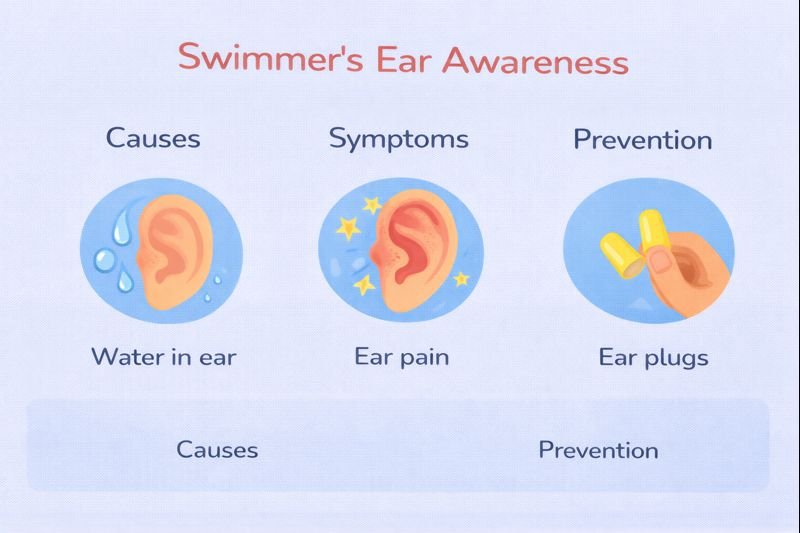 Swimmer’s ear often causes symptoms that affect the outer ear, including:
-
Ear pain that worsens when the ear is pulled or moved
-
Itching inside the ear canal
-
Swelling or redness of the outer ear
-
Tenderness around the ear opening
-
Discomfort that may increase over time
Pain with movement of the ear is a key feature that helps distinguish swimmer’s ear from middle ear infections.
When to Consult a Doctor
In most cases, medical assessment is recommended as soon as swimmer’s ear is suspected. Early treatment helps prevent complications, including more serious infections of surrounding tissue.
Medical care is especially important if:
-
Pain is severe or worsening
-
Swelling spreads around the ear or face
-
Hearing is affected
-
The person has diabetes or a weakened immune system
-
Symptoms do not improve
Home remedies should not be used if there has been recent ear surgery or if a ruptured eardrum is suspected, as this can lead to hearing damage.
Management and Treatment Overview (Educational)
Swimmer’s ear is commonly treated with prescribed ear drops, which may include antibiotics or other medications depending on severity. In some cases, oral medications are needed.
If excessive ear wax is present, it may need to be safely removed by a healthcare professional so treatment can work properly. Attempting to remove ear wax at home can worsen the condition or injure the ear.
Ear candling is not recommended and may be dangerous.
Pain Awareness
Swimmer’s ear can be quite painful, especially in children. Pain often increases when:
-
The ear lobe is touched or pulled
-
Pressure is applied around the ear
Swelling and itching can add to discomfort, making early care important for relief and recovery.
Prevention and Workplace Considerations
Swimmer’s ear tends to recur, especially with repeated water exposure. Preventive measures include:
-
Keeping ears as dry as possible after swimming or bathing
-
Gently drying ears with a towel
-
Using ear protection when swimming, where appropriate
-
Avoiding swimming in visibly contaminated water
-
Not inserting objects into the ear canal
Workplaces and recreational programs involving water should promote ear safety and early reporting of symptoms.
Frequently Asked Questions (FAQ)
Is swimmer’s ear the same as a middle ear infection?
No. Swimmer’s ear affects the outer ear canal, while middle ear infections occur behind the eardrum.
Why does swimmer’s ear hurt when the ear is touched?
The infection involves the outer ear canal, which moves when the ear is pulled or pressed.
Can swimmer’s ear go away on its own?
Some mild cases may improve, but medical treatment is often needed to prevent complications.
Is swimmer’s ear contagious?
No. It is an infection related to moisture and bacteria, not person-to-person spread.
Why is first aid awareness important for ear infections?
Early recognition helps prevent worsening pain, hearing issues, and more serious infections.
Educational Note
This article is intended for general first aid and workplace safety education in Canada. It supports awareness of swimmer’s ear and ear health but does not replace medical diagnosis or treatment.
About The Author

Mark Kascha
Certified First Aid Instructor Trainer with 30+ years of real-world experience, including lifeguarding, workplace emergency response, and first aid program development across Canada. Has worked with WorkSafeBC, WSIB, and Manitoba Health.
👉 [View full credentials]🔗 View LinkedIn Profile
Last reviewed: March 2026