Nasal Polyps: Symptoms, Causes, and First Aid Awareness in Canada
What Are Nasal Polyps?
Nasal polyps are soft, non-cancerous growths that develop when the lining of the nasal passages or sinuses becomes chronically swollen and inflamed. These growths can form deep inside the sinuses, extend into the nasal passages, or in severe cases be visible near the nostrils or toward the throat. When large enough, nasal polyps can partially or fully block airflow through the nose.
Nasal polyps are often long-lasting and may return even after treatment or surgical removal.
Why This Matters for First Aid and Workplaces in Canada
Chronic nasal congestion, reduced sense of smell, and breathing difficulty can affect work performance, safety, and quality of life. In Canadian workplaces—especially those involving dust, allergens, chemicals, or respiratory strain—first aid awareness helps recognize persistent symptoms that may need medical follow-up rather than simple allergy care.
A Realistic Scenario
An employee has ongoing nasal blockage and frequent sinus pressure that doesn’t improve with typical allergy medication. Over time, their sense of smell decreases, and they struggle to breathe comfortably during physical tasks. A first aid–trained supervisor recognizes these as possible signs of a chronic nasal condition and encourages the employee to seek medical assessment.
Conditions Commonly Linked With Nasal Polyps
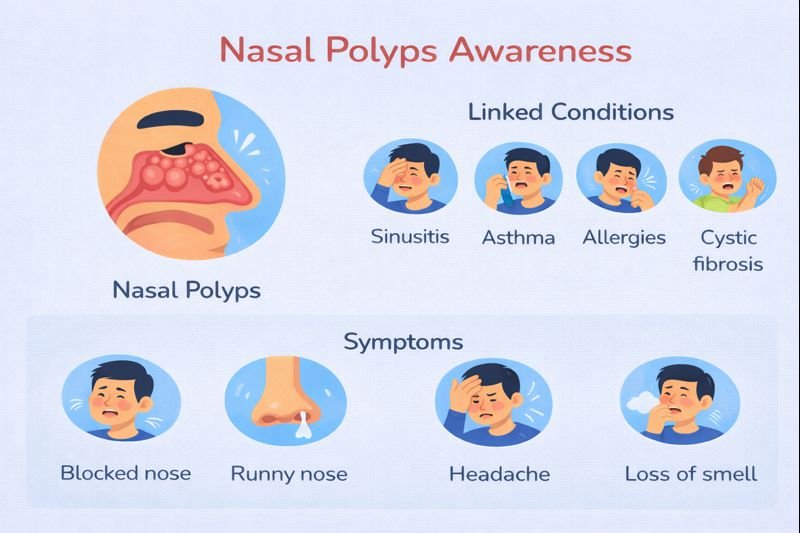 Nasal polyps are frequently associated with long-term inflammatory or respiratory conditions, including:
-
Chronic sinusitis
-
Non-allergic rhinitis
-
Aspirin sensitivity
Some medical conditions may also be linked to nasal polyps:
-
Children: nasal polyps can be a sign of cystic fibrosis
-
Certain immune system conditions, such as primary ciliary dyskinesia, common variable immunodeficiency (CVID), or selective IgA deficiency
Because of these associations, persistent symptoms should be medically assessed.
Signs and Symptoms of Nasal Polyps
The most common symptom is ongoing nasal congestion that does not improve with standard allergy treatments.
Other symptoms may include:
-
Constant stuffy or blocked nose
-
Headache
-
Runny nose with clear or coloured mucus
-
Sinus pressure or fullness
-
Reduced or lost sense of smell
-
Diminished sense of taste
Facial pain is more commonly linked to sinus infections than to nasal polyps alone. In severe cases, polyps may be visible inside the nostrils.
Diagnosis Awareness
Nasal polyps are typically identified during a medical examination of the nasal passages. This may involve:
-
Visual inspection of the nose
-
Nasal endoscopy using a small camera
-
Imaging studies such as CT scans
From a first aid and workplace perspective, awareness focuses on recognizing persistent symptoms rather than diagnosing the condition.
Management and Treatment Overview (Educational)
Nasal polyps are usually managed using a combination of medical and surgical approaches, depending on severity. Because polyps often return, treatment aims to reduce inflammation and minimize regrowth.
Common Management Approaches
-
Nasal steroid sprays or drops: help reduce inflammation and polyp size
-
Oral corticosteroids: sometimes used for more severe symptoms
-
Nasal saline irrigation: helps clear mucus and support sinus health, especially after sinus surgery
-
Antileukotriene medications: may help individuals with aspirin sensitivity
-
Allergy immunotherapy: may reduce inflammation in people with strong allergy triggers
-
Surgery: used in severe cases to remove polyps and improve airflow, usually followed by ongoing medical management
First aid education emphasizes awareness, not treatment decisions.
Prevention and Workplace Considerations
While nasal polyps cannot always be prevented, symptom impact may be reduced by:
-
Managing known allergies and asthma
-
Reducing exposure to irritants such as dust, smoke, and chemicals
-
Supporting clean indoor air quality
-
Encouraging early medical assessment for chronic nasal symptoms
Workplaces can support respiratory health through awareness and accommodation when symptoms affect breathing or safety.
Frequently Asked Questions (FAQ)
Are nasal polyps dangerous?
They are usually not dangerous but can cause significant breathing and sinus problems if untreated.
Can nasal polyps come back after treatment?
Yes. Recurrence is common, which is why long-term management is often needed.
Do nasal polyps cause facial pain?
Facial pain is more typical of sinus infections, though pressure or fullness may occur with polyps.
Are nasal polyps linked to asthma?
Yes. Nasal polyps are commonly associated with asthma and other inflammatory airway conditions.
Why is first aid awareness important for nasal polyps?
Persistent congestion and breathing difficulty may affect safety and require medical follow-up rather than routine allergy care.
Educational Note
This article is intended for general first aid and workplace safety education in Canada. It supports awareness of nasal polyps and related symptoms but does not replace medical diagnosis or treatment.
About The Author

Mark Kascha
Certified First Aid Instructor Trainer with 30+ years of real-world experience, including lifeguarding, workplace emergency response, and first aid program development across Canada. Has worked with WorkSafeBC, WSIB, and Manitoba Health.
Last reviewed: March 2026