 Back pain is a common concern in Canada and affects people of many ages and activity levels. Treatment varies depending on how long the pain has been present, how intense it is, and the individual’s goals and preferences. For most people, back pain improves over weeks to months.
Short-Term Back Pain (Often Less Than Six Weeks)
Many Canadians experience short-term or “acute” back pain due to strain, overuse, work demands, sport participation, or prolonged sitting.
Staying Active
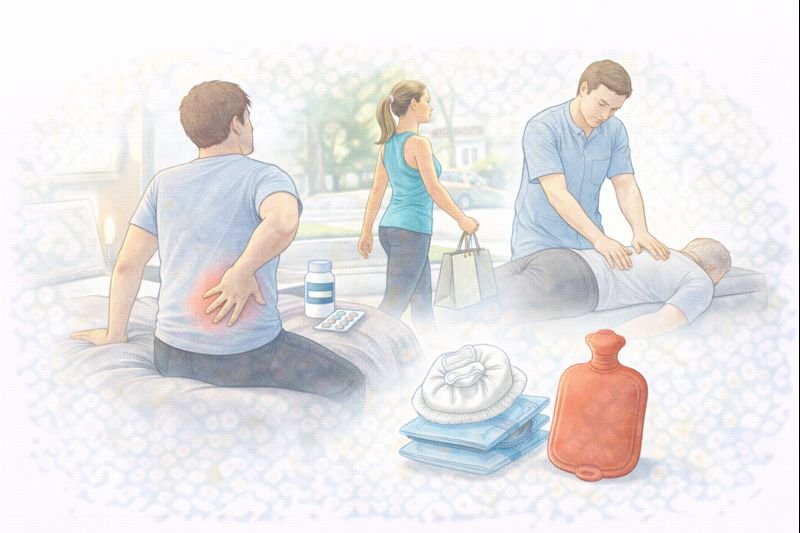
Current evidence suggests that gentle movement can support recovery. Simple activities such as walking around the home or neighbourhood, returning to light duties at work, or gradually resuming daily tasks can help keep joints and muscles from stiffening. People generally avoid movements that sharply worsen pain, but prolonged bed rest is rarely helpful.
Pain Relief Options
Over-the-counter pain relievers are commonly used for short-term symptoms in Canada. Pharmacists and healthcare providers can advise on options, suitability, and precautions based on personal medical history.
Lifestyle & Exercise Approaches
Movement-based activities such as swimming, walking, and yoga are often chosen for longer-term back health because they improve strength, flexibility, and posture. For many Canadians, choosing an activity that feels manageable and comfortable encourages consistency.
Heat and Cold
Some individuals find benefit from heat or cold applied to the lower back. Ice packs or bags of frozen vegetables are typically wrapped in a clean cloth before use; alternating warm and cool applications is also common. Responses vary from person to person.
Long-Term or Persistent Back Pain
Back pain that lasts more than six weeks is often referred to as persistent or chronic. Healthcare providers may recommend additional strategies such as:
-
Supervised exercise or physiotherapy focused on mobility, strength, and posture
-
Rehabilitation programs
-
Manual therapy (for example, mobilization, massage, or spinal manipulation performed by trained professionals)
-
Acupuncture as part of a broader pain-management plan
Surgery is generally considered only when other measures fail or when pain significantly disrupts daily function or sleep. The type of surgery, if recommended, depends on the underlying cause of symptoms.
Injury Awareness & First Aid Relevance
Back pain is not usually a medical emergency, but strains, lifting injuries, and workplace overexertion are common across Canadian industries. First aid education, including courses provided by St. Mark James Training, helps Canadians recognize when to seek medical care, understand workplace risk factors, and apply safe lifting practices and early injury awareness. CPR/AED training and broader workplace safety programs also contribute to healthier, safer environments.
Educational Disclaimer
This article provides general public health education for Canadians and is not intended as medical advice. Individuals with ongoing, worsening, or concerning back pain should speak with a licensed healthcare professional.
About The Author

Mark Kascha
Certified First Aid Instructor Trainer with 30+ years of real-world experience, including lifeguarding, workplace emergency response, and first aid program development across Canada. Has worked with WorkSafeBC, WSIB, and Manitoba Health.
👉 [View full credentials]🔗 View LinkedIn Profile
Last reviewed: March 2026