
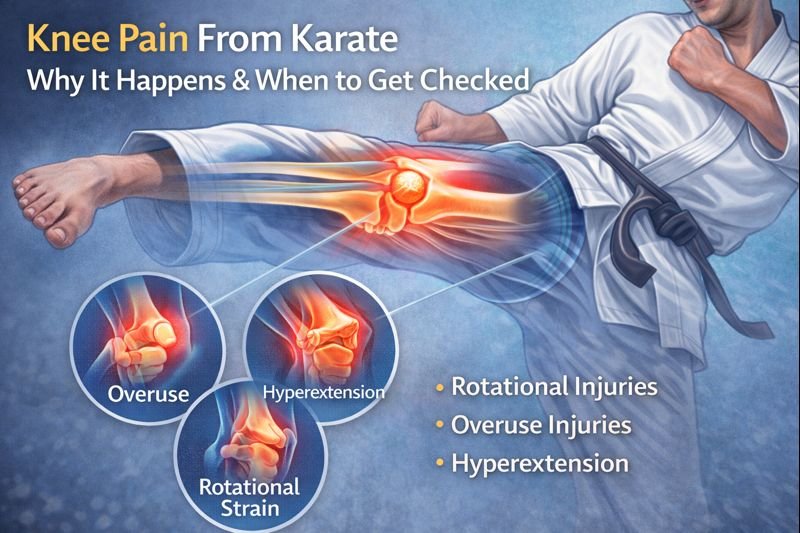
 Karate is a popular martial art in Canada for both kids and adults. While head impacts and bruises are often talked about, knee pain during or after training is also very common. The knees absorb repetitive force from kicks, pivots, stances, and explosive movements — all of which can irritate muscles, tendons, and ligaments if not balanced with proper strength, recovery, and form.
Understanding what may be causing the pain helps determine when rest is appropriate and when medical attention or rehabilitation is needed.
Common Causes of Karate-Related Knee Pain
1. Rotational Stress on the Knee
Rotational injuries often occur when balance or technique break down.
The knee functions like a hinge, but in karate it is frequently pushed to rotate during:
-
Pivots
-
Footwork transitions
-
Direction changes
-
Attempting new movements too quickly
If the foot stays planted while the body turns, significant torque is placed on ligaments and tendons. Practitioners should learn new techniques slowly to ensure balance, stability, and controlled mechanics.
2. Overuse & Repetitive Strain
Overuse is one of the most common explanations for knee pain in karate.
Two common overuse patterns include:
-
Patellofemoral pain syndrome – pain at the front of the knee
-
Iliotibial band irritation – pain along the outside of the knee
Both are common across sports involving impact and repetitive leg motions. Strengthening the quadriceps and hamstrings and correcting stance mechanics can significantly reduce flare-ups.
3. Hyperextension From Air Kicks
When kicking into empty space (especially front kicks), powerful movers such as the hips, core and quadriceps may overpower the knee joint. Without an object to interrupt the arc of motion, the leg can snap into hyperextension.
Severe hyperextension injuries may involve damage to ligaments — including the ACL — and require assessment by a healthcare professional.
When to Seek Medical or Professional Assessment
Consult a doctor or physiotherapist if knee pain is:
-
Sudden and severe
-
Accompanied by swelling or warmth
-
Persistent beyond a few days
-
Preventing walking or training
-
Accompanied by instability or “giving way”
For milder symptoms, rest and the RICE approach (rest, ice, compression, elevation) may help. Ibuprofen or similar medications may reduce swelling if appropriate for the individual.
Connection to First Aid, Fitness & Injury Prevention in Canada
Sports injuries — including knee strains — are common topics in first aid and workplace first aid training across Canada. Early recognition of swelling, limited motion, or severe pain helps prevent worsening injuries. Learning when to activate emergency help, when to rest, and when to refer to a healthcare provider aligns closely with Canadian first aid standards and safe-movement guidelines used in martial arts, sport settings, and community fitness programs.
Educational Disclaimer (Not Legal Advice)
This article is for education and awareness only. It does not diagnose injuries or replace medical assessment, first aid training, or emergency care. Anyone with severe, persistent, or worsening pain should seek care from a qualified healthcare professional.
About The Author

Mark Kascha
Certified First Aid Instructor Trainer with 30+ years of real-world experience, including lifeguarding, workplace emergency response, and first aid program development across Canada. Has worked with WorkSafeBC, WSIB, and Manitoba Health.
👉 [View full credentials]🔗 View LinkedIn Profile
Last reviewed: March 2026